One answer to that.
$$$$$$$$$$$$$$$$$$$$$$$$$$$$$
Yet another Sea King crash.
Moderators: sky's the limit, sepia, Sulako, lilfssister, North Shore, I WAS Birddog
-
CH124 Driver
- Rank 2

- Posts: 63
- Joined: Sat Mar 19, 2005 12:01 pm
- Location: 12 Wing
Good, because I'm not in the navy.monkeyspankmasterflex wrote:Why do you have to be so jerky? This isn't the navy.You ever landed on a ship with a Sea King? Didn't think so.
That has got to be the most incredibly blatant BS I've ever seen, where the hell did you find that tripe?
A little info from someone who has landed on a ship.....
I'm jerky because this is a hot button topic for me, all this criticism and arm chair general stuff about an aircraft that most of you have never seen in person, let alone got any stick time on.
If you want the facts, go to the source, don't regurgitate crap that your buddy's girlfriend's brother who's never been in a Sea King said.
The problem with our Sea Kings, is that for the past 20 years, a replacement was supposed to be on the way. It's only in the last 5 years that newer engines and main gearboxes have been put in.
-
. ._
- Top Poster

- Posts: 7374
- Joined: Fri Feb 20, 2004 5:50 pm
- Location: Cowering in my little room because the Water Cooler is locked.
- Contact:
Some of the SAR guys were nice enough to let me and some other Sault College guys have a tour of the Cormorant.
NICE chopper!
I think ALL of the forces should have this humming bird. Let's get rid of the antiques. I'll happily pay another ten bucks a year in taxes so our guys n gals will have some kick ass equipment.
-istp
NICE chopper!
I think ALL of the forces should have this humming bird. Let's get rid of the antiques. I'll happily pay another ten bucks a year in taxes so our guys n gals will have some kick ass equipment.
-istp
You might be willing to pay that, and I'm sure willing to pay that, but what about the 60% of people in Quebec, and 40% of people outside of Quebec that believe Canada should not have ANY MILITARY FORCES WHATSOEVER.
I have to say I was shocked when I heard those numbers. I had no idea Canadians were so apathetic when it comes to military matters.
I have to say I was shocked when I heard those numbers. I had no idea Canadians were so apathetic when it comes to military matters.

Blame the asshole seen here, on the right:Pygmie wrote:I had no idea Canadians were so apathetic when it comes to military matters.

I flew Twin Hueys, 1982-85. Should the Cold War have become a hot one, we were supposed to deploy to Norway to block the Soviet hordes pouring into Scandinavia.
Yeah right!
We were allowed to train on our "personal" weapons one day a year. You were issued 10 bullets, maybe 20 if you got lucky!
I'm retired now and my heart really goes out to those serving today.

-
monkeyspankmasterflex
- Rank 7

- Posts: 517
- Joined: Tue Jul 19, 2005 1:12 pm
My guess is jerky pilots...I joke I joke.In the civilian world we have Sea Kings, same vintage with more hours and cycles doing rig work in a salt air environment yet you don't see them falling out of the sky, only the military ones for some reason.
Good point.
Whats up with that?

And we are running out of tail rotor bits because the tail rotors have a nasty tendancy to crack every 2000 hours or so.istp wrote:Some of the SAR guys were nice enough to let me and some other Sault College guys have a tour of the Cormorant.
NICE chopper!
I think ALL of the forces should have this humming bird. Let's get rid of the antiques. I'll happily pay another ten bucks a year in taxes so our guys n gals will have some kick ass equipment.
-istp



Just some Cormorant clarification....
There is no correlation between hours and cracks...the cracked half hubs ranged from nearly new to hundreds of hours (can't recall the exact #...around 500 I believe, not 2000 though).
The visual inspection is every 2 hrs, not 2.5....this is a training restriction (one of many)...SAR cases become AC discretion.
Every 25 hrs the tail rotors are taken apart and inspected.
......still doesn't make things better.
There is no correlation between hours and cracks...the cracked half hubs ranged from nearly new to hundreds of hours (can't recall the exact #...around 500 I believe, not 2000 though).
The visual inspection is every 2 hrs, not 2.5....this is a training restriction (one of many)...SAR cases become AC discretion.
Every 25 hrs the tail rotors are taken apart and inspected.
......still doesn't make things better.



DO NOT attempt to compare the "mission profiles" of a military a/c with it's peer in the commercial civilan world. They are both "groomed" for different duties and to compare a military a/c to a commercial demonstrates ignorance of the duties of BOTH a/c. There was always good maintenance in the military without having a crew spend their careers with one a/c, for example. That statement is baloney band indicates that military maintenance does not equal civilian in it's quality. They are NOT the exact same becasue the bloody a/c aren't doing the same jobs and the same responsibilities.
The SeaKings were first bought in 1963 and I was there to see them fly down Halifax Harbour and I was in Grade XII. I am now 61 years old and they are still flying with the CAF. They were purchased for duties of that era for the foeseeable future.........and were one of the best a/c in the world for doing that THEN. Since the "esteemed gentlemen" in Ottawa who don't know "diddley" about the military anyway, decided to not buy newer ones or plan on it, they kept on adding and adding equipment and responsibilities onto the crews and a/c. Ergo, they weren't then and aren't now the a/c needed for those roles and struggle to meet them.
The RCN, RCAF, Canadian Army nor the CAF had before NOR do they have now a "Planned Retirement Life" for ANY of the equipment that they use or have used since their inception. We are the ONLY country in NATO that has never done that and therefore we pay the BIG price for that. When we decide that we actually should/need to replace equipment, we must have a White Paper, Green Paper, Yellow Paper and a host of Committee meetings. Then we ask for the miliatry input about which is the product they need for these new missions and then we totally ignore what input they give. Then we get bids from different manufacturers and the potential final cost is known. What happens next is what has been happening also since "day one".......it is now necessary for us to "talk it to death" for at least 10-20 years. At that point we make the decision, only to find out that in the ensuing years inflation has now increased the cost of the a/c we've now decided-on. Now we can't purchase as many as we wanted to, so we cut the number back and spread their purchase over 10-12 years. By the time the last a/c is purchased, it is no longer "state-of-the-art" and has now been supplanted by at least 2-3 Model "upgrades". We proceed to fly these new a/c anyway and within 6 mos to a year we have the normal maintenance problems and have to replace parts. We find then that there wasn't enough money in the purchase budget and there was a "cut-back" on spare parts. We therefore commence to "cannalbalize" one or more a/c to keep others flying. The aforementioned could all be eliminated by a planned retirement life where once a ship, tank, a/c is bought/purchased, it is known at that moment how long it will be before we replace them. With that known, we can then plan to put monies aside in budgets covering 10-20 years, so that when the replacement moment comes, the monies are in place and the public and the budgets don't have the "dollar shock" foisted upon them in one fell swoop and we don't have to start this whole God Dammned stupidity all over again.
By our "track-record", the new helicopters we are purchasing will have to last us until approximately 2046-2050. The new Frigates that we have will also have to last that long also and also based upon doing things "the Canadian way". If one considers what I just stated as an exaggeration then do the math. The SeaKings first arrived in 1963 and are expected to last until 2011 and then check-on when the RCN got it's first Tribal Class DE and how long we had them as our "state-of-the-art" ships.
Bottom line: You cannot expect NOR should you expect military crews, experienced or NOT type to "make chicken salad outta chicken shit". You do not purchase a 1/2 Ton truck to do a job it is ideally suited for and over 40+ years gradually expect it to take-on 3 Ton truck duties..........because you don't want to spend the money for spares or new a/c. Either do it right or contract the responsibility out to someone who will and can. So far all we've accomplished is to embarrass on more than one occasion, very good people that represent our country
The SeaKings were first bought in 1963 and I was there to see them fly down Halifax Harbour and I was in Grade XII. I am now 61 years old and they are still flying with the CAF. They were purchased for duties of that era for the foeseeable future.........and were one of the best a/c in the world for doing that THEN. Since the "esteemed gentlemen" in Ottawa who don't know "diddley" about the military anyway, decided to not buy newer ones or plan on it, they kept on adding and adding equipment and responsibilities onto the crews and a/c. Ergo, they weren't then and aren't now the a/c needed for those roles and struggle to meet them.
The RCN, RCAF, Canadian Army nor the CAF had before NOR do they have now a "Planned Retirement Life" for ANY of the equipment that they use or have used since their inception. We are the ONLY country in NATO that has never done that and therefore we pay the BIG price for that. When we decide that we actually should/need to replace equipment, we must have a White Paper, Green Paper, Yellow Paper and a host of Committee meetings. Then we ask for the miliatry input about which is the product they need for these new missions and then we totally ignore what input they give. Then we get bids from different manufacturers and the potential final cost is known. What happens next is what has been happening also since "day one".......it is now necessary for us to "talk it to death" for at least 10-20 years. At that point we make the decision, only to find out that in the ensuing years inflation has now increased the cost of the a/c we've now decided-on. Now we can't purchase as many as we wanted to, so we cut the number back and spread their purchase over 10-12 years. By the time the last a/c is purchased, it is no longer "state-of-the-art" and has now been supplanted by at least 2-3 Model "upgrades". We proceed to fly these new a/c anyway and within 6 mos to a year we have the normal maintenance problems and have to replace parts. We find then that there wasn't enough money in the purchase budget and there was a "cut-back" on spare parts. We therefore commence to "cannalbalize" one or more a/c to keep others flying. The aforementioned could all be eliminated by a planned retirement life where once a ship, tank, a/c is bought/purchased, it is known at that moment how long it will be before we replace them. With that known, we can then plan to put monies aside in budgets covering 10-20 years, so that when the replacement moment comes, the monies are in place and the public and the budgets don't have the "dollar shock" foisted upon them in one fell swoop and we don't have to start this whole God Dammned stupidity all over again.
By our "track-record", the new helicopters we are purchasing will have to last us until approximately 2046-2050. The new Frigates that we have will also have to last that long also and also based upon doing things "the Canadian way". If one considers what I just stated as an exaggeration then do the math. The SeaKings first arrived in 1963 and are expected to last until 2011 and then check-on when the RCN got it's first Tribal Class DE and how long we had them as our "state-of-the-art" ships.
Bottom line: You cannot expect NOR should you expect military crews, experienced or NOT type to "make chicken salad outta chicken shit". You do not purchase a 1/2 Ton truck to do a job it is ideally suited for and over 40+ years gradually expect it to take-on 3 Ton truck duties..........because you don't want to spend the money for spares or new a/c. Either do it right or contract the responsibility out to someone who will and can. So far all we've accomplished is to embarrass on more than one occasion, very good people that represent our country
-
Bullet Remington
- Rank 4

- Posts: 214
- Joined: Thu Dec 01, 2005 8:28 pm
- Location: Alberta
- Contact:
LH:
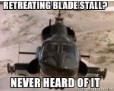
Excellent post! By looking at that photo, looks like we are going to have to replace the IBIS indicators, recharge the Blade Spars, change out the Rotary and Stationary siccors, and possibly the MGB and the two engines!!LOL
And the Pop -out floats will definitely have to be recharged and repacked as well!!
Think we should to a Tail Rotor drive shaft alignment too?
I'm not surprised at some of the posts on here! Those things are hard to get parts for, wanna bet they yank that sucker back to D or E hanger and rebuild it??
What was the Tail # of that one that went in just off Eastern Passage? Was that 424 0r 434? Not the Squadrons, the tail number? Anybody remember? That one was hauled back to Shearwater and they started rebuilding that one while I was there. They were still at it when I was drafted back to Greenwood!
I'm assuming they finished it??
Excellent post! By looking at that photo, looks like we are going to have to replace the IBIS indicators, recharge the Blade Spars, change out the Rotary and Stationary siccors, and possibly the MGB and the two engines!!LOL
And the Pop -out floats will definitely have to be recharged and repacked as well!!
Think we should to a Tail Rotor drive shaft alignment too?
I'm not surprised at some of the posts on here! Those things are hard to get parts for, wanna bet they yank that sucker back to D or E hanger and rebuild it??
What was the Tail # of that one that went in just off Eastern Passage? Was that 424 0r 434? Not the Squadrons, the tail number? Anybody remember? That one was hauled back to Shearwater and they started rebuilding that one while I was there. They were still at it when I was drafted back to Greenwood!
I'm assuming they finished it??
BR ------ let's put it this way. The Tribal Class DE's first arrived in Halifax well before I made Junior High there. They were there when I graduated High School.......they were still there years later when I got married.......I had three kids and they were still there........I became a grandfather and they were still there. I turned 45 before they finished with them. If it won't last for 40-50 years, it's no good to us and when we do buy it, it better be very, very, very good because its gotta last almost a generation.
-
CH124 Driver
- Rank 2
- Posts: 63
- Joined: Sat Mar 19, 2005 12:01 pm
- Location: 12 Wing
Are you talking about 425? I know it crashed and then was rebuilt only to explode over New Brunswick due to chaffing fuel lines, killed both pilots but the back enders survived.Bullet Remington wrote:I'm not surprised at some of the posts on here! Those things are hard to get parts for, wanna bet they yank that sucker back to D or E hanger and rebuild it??
What was the Tail # of that one that went in just off Eastern Passage? Was that 424 0r 434? Not the Squadrons, the tail number? Anybody remember? That one was hauled back to Shearwater and they started rebuilding that one while I was there. They were still at it when I was drafted back to Greenwood!
I'm assuming they finished it??
In total, there's been 15 crashes on 14 airframes since we bought the Sea Kings 43 years ago. 3 per decade ironically, so apparently age has very little to do with crashes.
A new article from Yahoo! News:
Military to allow Sea King choppers to fly after crash off Denmark
MICHAEL TUTTON
Mon Feb 6, 5:19 PM ET
HALIFAX (CP) - Canada's military cleared its fleet of aging Sea Kings to fly again Monday, declaring it has confidence in the choppers despite a crash off Denmark last week.
An "operational pause" was ordered Thursday after a helicopter approaching the deck of HMCS Athabaskan ditched in the ocean east of Denmark, flipped over and sank. Two boats from the destroyer rescued the five crewmen after they successfully exited the overturned helicopter.
On Monday afternoon, air force brass concluded the remaining 27 choppers in the four-decade-old fleet were fit to fly, basing their decision on preliminary research by the military's directorate of flight safety.
"A review of the information we have thus far gives us confidence that we are capable of resuming normal flight operations," said Col. Al Blair in a news release.
"The flight safety investigation is continuing and will take some time to complete."
There has been speculation that pilot error may have been a factor in the crash because the helicopter was on a training flight at the time.
Maj. Paul Dittmann, the lead investigator with the directorate of flight safety, wouldn't confirm that during an interview Monday evening from Denmark.
"You can sum it up by saying the investigation is continuing to look at mechanical aspects and we need to focus on human factors on the air crew side," he said.
The decision to bring the aging helicopters back to normal duty was viewed as questionable by some longtime observers of the helicopters.
Tory Senator Michael Forrestall, deputy chair of the Senate committee on national security, said he still has concerns about the reduced training crew have received.
"I think we have a whole signature of difficulties here, not the least of which is the general shortage of equipment, with the complementary shortage of training time because of a lack of availability of helicopters," he said.
There has been evidence over the last year that the Shearwater helicopter base in Nova Scotia is having difficulty keeping up pilot training.
For example, Shearwater officials expected to fly the helicopters a total of 660 hours in April, but they only managed 529 hours. In May, 910 hours of flying were planned but the aircraft flew 674 hours.
As availability of aircraft decreased, about 10 per cent of the 80 pilots at the base in Nova Scotia regularly fell behind in minimum flying requirements - 10 hours in the air for every 30 days, or 30 hours over three months.
Larry McWha, a retired colonel and former Sea King pilot, said there's little that can be read into the early investigation.
"It could be pilot error, but there can also be associated issues," he said.
It was revealed Monday that surveillance cameras on the ship weren't turned on to record the incident.
Cmdr. Chris Dickinson, in an interview from Athabaskan, said that even though the cameras are supposed to record all landings, someone forgot to turn on the video recording equipment.
"They're supposed to film all the landings," he said. "In this particular case, it failed for probably human error and they didn't get a video."
The same thing occurred three years ago in a crash aboard HMCS Iroquois, prompting investigators to recommend that procedures be changed to ensure it didn't occur again.
Athabaskan was cleared to leave Arhus, Denmark, as early as Monday to continue its mission with NATO.
Canada's Sea Kings have been involved in at least fourteen crashes over the years, four of them fatal.
Ottawa has ordered 28 Cyclones to replace the Sea Kings, but they aren't expected to be delivered for two more years, with the new helicopters in operation by 2009.
The last of Canada's Sea Kings are expected to retire in 2011.
Copyright © 2006 Canadian Press
Let's get something straight. Age of an a/c is NOT like the age of an automobile. By the time many a/c reach "senior" status, you'd be hard-pressed to find an original item on that airframe. I've flown before and do at present, a/c that are older than the pilots flying them and the one I fly now was built in 1967. "Age" is only important when the a/c in question can no longer meet or struggles to meet it's increasing demands over the years. At that point, regardless of age, the a/c has to be upgraded to a newer model or another generation of a/c to fulfill those extra duties. The Hercs are a perfect example also. It's still a great a/c, BUT the Models that the CAF have need to be upgraded to younger Models and for the previously stated reasons. Airframes also have a "time expiry" life on them and they also need to be "0 timed" at some point. can that be done....opf course it can, but at great cost and if that cost makes upgrading to newer models of the same a/c then it's smart to consider that avenue if you plan on using that type and/or manufacturer well into the future.
So what's the problem then? Maintenance not as good as decades ago perhaps? We therefore have to assume that the training and efforts of THIS generation aren't as good as those that came before then if one wants to accept that premise. Sorry, but that doesn't hold-up because in any area of aviation, the maintenance personnel and standards are higher than they were eons ago.There may well be those that do not measure-up, but they always existed, so that doesn't "fly" either. How about spares and budgets for those spares then? Once those with high foreheads decide that "upgrades" are needed or which way they are going is finalized, then they must also "talk that to death" also because the budgets for those spares are included in the overall budget for the CAF. If that budget conflicts with the National HealthCare budget, then it's the military who will loose, "hands-down" every time. Therefore, the "upgrades" happen, but exceedingly slow and those a/c awaiting those upgrades find their "servicabilty" percentage dropping like an anvil or their duties curtailed while waiting. Ottawa will make decisions on peace-keeping and other duites and expect those duties to be carried-out. Any one at NDHQ that chooses to "buck" that order and explain that the resources are not there in a fully functioning manner, will do so at the risk of causing their career aspirations great harm. The list of East Coast RCN Admirals who have been "retired" after speaking the truth to the government is very, very long.
The CAF bears their amont of blame for all this also. They have a budget like all others, but all one has to do is take a look at the number of General Staff and Flag Officers in the CAF compared to enlisted ranks. Once that's done, take a look at other NATO countries and see what there ratio is and then you see where an unnecessary part of the military budgets are going. Want to free-up large sums of money for the CAF?..........then the FIRST place you go is to NDHQ and give it an "enema" because we don't need that big of a "crowd" to run the CAF......AND any idiot knows it.
So what's the problem then? Maintenance not as good as decades ago perhaps? We therefore have to assume that the training and efforts of THIS generation aren't as good as those that came before then if one wants to accept that premise. Sorry, but that doesn't hold-up because in any area of aviation, the maintenance personnel and standards are higher than they were eons ago.There may well be those that do not measure-up, but they always existed, so that doesn't "fly" either. How about spares and budgets for those spares then? Once those with high foreheads decide that "upgrades" are needed or which way they are going is finalized, then they must also "talk that to death" also because the budgets for those spares are included in the overall budget for the CAF. If that budget conflicts with the National HealthCare budget, then it's the military who will loose, "hands-down" every time. Therefore, the "upgrades" happen, but exceedingly slow and those a/c awaiting those upgrades find their "servicabilty" percentage dropping like an anvil or their duties curtailed while waiting. Ottawa will make decisions on peace-keeping and other duites and expect those duties to be carried-out. Any one at NDHQ that chooses to "buck" that order and explain that the resources are not there in a fully functioning manner, will do so at the risk of causing their career aspirations great harm. The list of East Coast RCN Admirals who have been "retired" after speaking the truth to the government is very, very long.
The CAF bears their amont of blame for all this also. They have a budget like all others, but all one has to do is take a look at the number of General Staff and Flag Officers in the CAF compared to enlisted ranks. Once that's done, take a look at other NATO countries and see what there ratio is and then you see where an unnecessary part of the military budgets are going. Want to free-up large sums of money for the CAF?..........then the FIRST place you go is to NDHQ and give it an "enema" because we don't need that big of a "crowd" to run the CAF......AND any idiot knows it.
-
shitdisturber
- Rank 10

- Posts: 2165
- Joined: Tue Feb 17, 2004 3:38 pm
- Location: If it's Monday it's got to be somewhere shitty
Ok, stick with me for a moment as I walk through this situation.
Firstly, let me say that I absolutely agree that the DND/CF is way too top-heavy.
Now, that said I may have a bit of an explaination. (Let me clarify, that is an explaination, not a justification):
Canada is the 2nd largest country in the world, by land mass / area
It means this: We have a huge country, but a reletively small population to draw from for personnel, resources and taxes. Our economy makes Canada a relatively rich nation on the world stage, and we are therefore expected to pay our way with the other rich nations. This includes our (military) participation in NORAD, NATO, the UN etc. However we are also expected to participate in a similar way in non-military ways (international aid, etc.).
Now, it's direct effect on our armed forces is this:
> We are expected to have modern / quality (read expensive) equipment that is in-line with other large / rich nations
> We are expected to provide personnel to international activities, in numbers that are in-line with other large / rich nations
> We are expected to exchange personnel with our allies
Again, so what? Well, this means that in order to "keep up appearances", the DND/CF has chosen to concentrate on our overseas / international obligations. The size of our entire regular force is about what we "should" be sending to meet these international obgliations. We likely have alot of "brass", because these are the types of people you are expected to exchange with allied forces. The people you send to NORAD HQ, to embassies / consulates as military attaches etc, are all senior officers.
I see our current CF as two chunks. There is the largely-for-show component of the reg force that is made up of a few ships, a couple of batallions, some good support units and a couple of fighter and transport squadrons. Then there is the "lets go and play with the others", mostly senior positions, HQ chunk of the forces. This 2nd chunk is for sending on exchange, and to conferences / summits.
Well, that's just my attempt at an explaination, not a justification. Really, if you look at our Economy vs. Population vs. Land mass; Canada has a serious challenge. Our situation would be like asking Spain to raise (pay for and equip) an armed forces from the population of Kenya to defend the land mass of Russia; or South Korea or India to raise an armed forces from the population of Morocco to defend the land mass of the United States.
Until we (our politicians) realize that we ar not one of the "big boys", and therefore can't play with the big boys (at least not on an equal footing) - the problems of our armed forces won't ever get fixed. G7 / G8 member or not, we just aren't on a level playing field with the others. That said, our guys & gals in uniform do a damn fine job of fitting in as best they can!
Again, just a possible explaination, not a justification... and as always, its "Just my 2 cents worth".
Firstly, let me say that I absolutely agree that the DND/CF is way too top-heavy.
Now, that said I may have a bit of an explaination. (Let me clarify, that is an explaination, not a justification):
Canada is the 2nd largest country in the world, by land mass / area
Canada is the 35th largest country in the world, by population1 Russia 17,075,200.00 Sq Kms
2 Canada 9,976,140.00 Sq Kms
3 United States of America 9,629,091.00 Sq Kms
4 China 9,596,960.00 Sq Kms
(Source: WorldAtlas.com)
Canada has the 9th largest GDP (nominal) as rated by both the IMF and World bank30 Sudan 40,187,500
31 Argentina 39,537,900
32 Poland 38,635,100
33 Tanzania 36,766,400
34 Kenya 33,829,600
35 Canada 32,805,000
36 Morocco 32,725,800
37 Algeria 32,531,900
38 Afghanistan 29,929,000
39 Peru 27,925,600
40 Nepal 27,676,500
(Source: WorldAtlas.com)
So, you may ask - what does all of this mean, and what difference does it make to the CF, and to the CF being top-heavy with "brass"?IMF List:
1 United States 11,734,300
2 Japan 4,671,198
3 Germany 2,754,727
4 People's Republic of China 2,225,700 1
5 United Kingdom 2,133,019
6 France 2,046,292
7 Italy 1,680,112
8 Spain 1,041,338
9 Canada 993,443
10 South Korea 680,409
World Bank List:
1 United States 11,667,515
2 Japan 4,623,398
3 Germany 2,714,418
4 People's Republic of China 2,225,700 1
5 United Kingdom 2,140,898
6 France 2,002,582
7 Italy 1,672,302
8 Spain 991,442
9 Canada 979,764
10 India 691,876
Information includes data from the International Monetary Fund and the World Bank.
Data is for the year of 2004, with figures in millions of United States dollars.
Note: we are even further down the list (11th and 13th) based on purchasing power parity (PPP) calculations.
(Source: Wikipedia)
It means this: We have a huge country, but a reletively small population to draw from for personnel, resources and taxes. Our economy makes Canada a relatively rich nation on the world stage, and we are therefore expected to pay our way with the other rich nations. This includes our (military) participation in NORAD, NATO, the UN etc. However we are also expected to participate in a similar way in non-military ways (international aid, etc.).
Now, it's direct effect on our armed forces is this:
> We are expected to have modern / quality (read expensive) equipment that is in-line with other large / rich nations
> We are expected to provide personnel to international activities, in numbers that are in-line with other large / rich nations
> We are expected to exchange personnel with our allies
Again, so what? Well, this means that in order to "keep up appearances", the DND/CF has chosen to concentrate on our overseas / international obligations. The size of our entire regular force is about what we "should" be sending to meet these international obgliations. We likely have alot of "brass", because these are the types of people you are expected to exchange with allied forces. The people you send to NORAD HQ, to embassies / consulates as military attaches etc, are all senior officers.
I see our current CF as two chunks. There is the largely-for-show component of the reg force that is made up of a few ships, a couple of batallions, some good support units and a couple of fighter and transport squadrons. Then there is the "lets go and play with the others", mostly senior positions, HQ chunk of the forces. This 2nd chunk is for sending on exchange, and to conferences / summits.
Well, that's just my attempt at an explaination, not a justification. Really, if you look at our Economy vs. Population vs. Land mass; Canada has a serious challenge. Our situation would be like asking Spain to raise (pay for and equip) an armed forces from the population of Kenya to defend the land mass of Russia; or South Korea or India to raise an armed forces from the population of Morocco to defend the land mass of the United States.
Until we (our politicians) realize that we ar not one of the "big boys", and therefore can't play with the big boys (at least not on an equal footing) - the problems of our armed forces won't ever get fixed. G7 / G8 member or not, we just aren't on a level playing field with the others. That said, our guys & gals in uniform do a damn fine job of fitting in as best they can!
Again, just a possible explaination, not a justification... and as always, its "Just my 2 cents worth".
This problem is hardly unique to the military. Rather, it is a problem with any bureaucracy. You give more money to health care and education, and precious little of those funds end up in the hospital or the classroom - rather, the administrators spend it on themselves.we don't need that big of a "crowd" to run the CAF
It is odd that the Canadian taxpayer has no problem with this - spending money and getting no return.
As I recall, in Ontario, the Harris gov't, hated and despised widely by lefties everywhere, tried to get around this problem by mandating a student-teacher ratio, to try to force the education administration to spend money on the classroom.
Similarly, one might ponder if a legislated enlisted-to-officer ratio might help or hurt the military. Personally, given a choice between a sergeant and a general, I'll take the sergeant 99% of the time - he should have some useful knowledge or skills.
A new article on the subject...
Now they are trying to figure out if they need to get a replacement onto that ship, and if so - how to do it!
Original Article: Defence officials trying to arrange transport of replacement Sea King
Now they are trying to figure out if they need to get a replacement onto that ship, and if so - how to do it!
Original Article: Defence officials trying to arrange transport of replacement Sea King
Yahoo! News wrote:Defence officials trying to arrange transport of replacement Sea King
ALISON AULD
Fri Feb 10, 10:19 PM ET
HALIFAX (CP) - Defence officials are trying to arrange the overseas transport of a Sea King helicopter to replace one that crashed in the ocean off Denmark more than a week ago.
A Defence spokeswoman said Friday that discussions were underway to determine if another chopper is needed by a Canadian destroyer involved in a NATO mission and how they would get it to a European port.
Heather Brunner said officials were considering sending the Sea King by air or sea to meet up with HMCS Athabaskan, the flagship for a multinational squadron conducting training exercises in Europe.
In an interview from the destroyer, Cmdr. Chris Dickinson said he had been told the vessel would be getting another Sea King when it arrived in the Spanish port of Malaga around March 8.
"We have been told there's a new helicopter coming," he said Friday as Athabaskan began heading south along the eastern European coast.
"In March, we're going into a major exercise as part of NATO reaction force buildup. That's when we're going to want to have that helicopter."
The destroyer lost its Sea King on Feb. 2 while it was practising night landing on the stern of the ship.
All five crewmen managed to escape from the helicopter, which turned upside down and sank in frigid waters about 50 kilometres off the Danish coast.
As a result of an ongoing investigation into the crash, Dickinson said three of the air crew were en route to Halifax to take further training on getting out of a helicopter when it ditches.
"There were problems," he said. "There's some training we want to get them through, and there were some issues related to escaping from the aircraft in the night".
"I think we're going in the right direction in trying to fix the issues that happened that night."
Some of the crew had trouble finding their emergency breathing systems as they began sinking and the devices got away from them in the pitch-black water. The crew all had aviation fuel in their eyes after it seeped from the aircraft into the water.
Dickinson didn't say whether the crew was ordered to undergo the training or if they asked for it. He added that all of the crew were certified in dunking training, which is required every five years.
Crews at the helicopter's Shearwater base near Halifax were also said to be doing on-land training in escaping a downed helicopter.
The crew was also being sent home to spend time with family eager to see them after the incident, he said.
"There may be some issues with families that needed to see their guys before they went flying again," he said.
It wasn't clear if all of the crew will return to Athabaskan if another Sea King is deployed.
A Canadian flight safety investigation team travelled to Denmark to interview the crew and examine the crippled aircraft after it was raised by a barge and taken to the Danish port of Arhus. One of the investigators was said to be returning to Canada to begin preparing a report into the crash.
Analysts have speculated that the helicopter went down because of either mechanical failure or human error.
Copyright © 2006 Canadian Press
nblythin--------very well done sir and it would be very nice if others realized the same also and then maybe we could build a very well-equipped military that falls within our budget. One also that we could keep modern.....instead of making/asking equipment to last 40 years. I'm 61 and saw the first SeaKings fly down Halifax Harbour when I was in Grade XII there. Just what in the Hell are we doing asking guys, any of whom could be my grandson, to still operate them for? If the upgrades needed would have been provided WHEN needed, then maybe they'd be "old" but still reliable, instead of "old" and unreliable. All that does is cast a shadow over those that maintain them and that's patently unfair because if they say "Boo" to the Press concerning this it would not be "a career-enhancing action".

