Told him that the unicom frequencies are only contacting security. Seems to be bit a bit of confusion since this new airspace came out.

Moderators: sky's the limit, sepia, Sulako, lilfssister, North Shore, I WAS Birddog
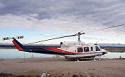


Yes, there is plenty of confusion...we operate regularly in the 'oil patch' as well and it often seems that some operators are still using 123.50 for the transition and then communicating on the ATF and UNICOMs frequently. In some cases still on 126.70....so not everyone is getting the message. Either that or they just ignore the rules.r22captain wrote: Seems to be bit a bit of confusion since this new airspace came out.


OIL SANDS AREA IN NORTH-EASTERN ALBERTA AIRSPACE CHANGES
NAV CANADA recently completed an aeronautical study as part of the review of the Oil Sands
area of north-eastern Alberta. The recommendations from this aeronautical study will result in the
following airspace changes:
The Control Area Extension (CAE) that is currently based above 12,500 ASL around the Oil
Sands will expand from 50 NM around CYMM to 60 NM;
The 25 NM CAE around Fort McMurray currently based at 2,200 AGL will be redefined to be
based at 3,500 ASL and expanded north to encompass the Oil Sands airports out to 60 NM. This
airspace is Class E and a transponder is required.
Class E (transponder required) controlled airspace will be provided at the following aerodromes
as follows:
Fort MacKay/Firebag: A control zone (CZ), surface to 3,500 ASL, rectangular in shape centered
on the runway centreline and extending 2 NM either side out to 7 NM (4 NM x 14 NM).
Fort MacKay/Albian: A CZ, surface to 3,500 ASL, rectangular in shape centred on the runway
centerline and extending 2 NM either side out to 5 NM (4 NM x 10 NM).
Transition areas on each end of the CZ based at 1,200 AGL and extending the width of the CZ for
a further 4 NM (each area 4 NM x 4 NM).
Fort MacKay/Horizon: A CZ, surface to 3,500 ASL, rectangular in shape centred on the runway
centerline and extending 2 NM either side out to 5 NM (4 NM x 10 NM).
Transition areas on each end of the CZ based at 1,200 AGL and extending the width of the CZ for
a further 4 NM (each area 4 NM x 4 NM).
Fort McMurray/Mildred Lake: A CZ, surface to 3,500 ASL, rectangular in shape centred on the
runway centerline and extending 2 NM on the SW side and 2.5 NM on the NE side out to 5 NM
(4.5 NM x 10 NM).
A transition area on the SE end of the CZ based at 1,200 AGL and extending the width of the CZ
for a further 4 NM (4.5 NM x 4 NM).
The UNICOM frequencies at the aerodromes within the air traffic advisory frequency will remain
in effect. It is recommended that pilots complete any necessary UNICOM communications prior
to entering the Oil Sands ATF Area on arrival, and prior to ground manoeuvring for departure.
123.3 – Albian UNICOM: All pilots arriving at, or departing from the Fort Mackay/Albian
aerodrome should contact Albian UNICOM for company messages and weather information. IFR
pilots must contact Edmonton Centre prior to departure.
122.8 – Firebag UNICOM: All pilots arriving at, or departing from the Fort Mackay/Firebag
aerodrome should contact Firebag UNICOM for company messages and weather information.
IFR pilots must contact Edmonton Centre prior to departure.
122.7 – Horizon UNICOM: All pilots arriving at, or departing from the Fort Mackay/Horizon
aerodrome should contact Horizon UNICOM for company messages and weather information.
IFR pilots must contact Edmonton Centre prior to departure.
123.2 – Mildred Lake traffic: All pilots arriving at, or departing from the Fort McMurray/Mildred
Lake aerodrome should contact Mildred Lake traffic for company messages. IFR pilots must
contact Edmonton Centre prior to departure.
123.2 – Muskeg Tower: All pilots arriving at, or departing from the Muskeg Tower aerodrome
should contact Muskeg fire tower for company messages.
Flight information service – en route (FISE) will continue to be provided by the Edmonton flight
information centre via the Fort McMurray RCO - 123.55 MHz.
All IFR pilots within controlled airspace should use the Fort McMurray PAL 135.7 MHz for ATC
communications. IFR pilots must contact Edmonton Centre prior to departure. Communication
coverage on the ground may not be possible on the PAL in which case pilots are to contact
Edmonton Centre via telephone to obtain a departure clearance (phone number: 780-890-8228).
All IFR pilots are to use the Fort McMurray altimeter setting when operating above at or above
4,000 ASL.
These changes will take effect 27 August 2009 at 09:01 Coordinated Time Universal (UTC)
with amendments to the appropriate publications.
For further information please contact
Brian Stockall
Manager, Level of Service & Aeronautical Studies – West
NAV CANADA
Edmonton ACC
PO Box 9867
Edmonton International Airport
Edmonton, AB T5J 2T2
Tel: 780-890-3024
Fax: 780-890-4341
Email: stockab@navcanada.ca

|
|


Use AvCanada's information at your own risk!
We reserve the right to remove any messages that we deem unacceptable.
When you post a message, your IP is logged and may be provided to concerned parties where unethical or illegal
behavior is apparent.
All rights reserved.
