Thought I'd start a discussion that hopefully develops into something that everybody can draw something from.
What are some scenario based training that you guys throw at your students instead of saying "ok, show me slow flight."
I'll start - you have encountered a lot of icing on your tail, what are you going to do? (to simulate this I give about 2.5 shots of trim forward in level flight, makes it very interesting when they power back for approach).
Hopefully we can get the ball rolling on this one!
What's wrong with just having them practice slow flight? Why do they need a confusing reason to do so? Why would only the tail ice up? What are the real reasons you need to be proficient in flying the aircraft in slow flight?
I am not sure that he meant the tail icing up was a segue into slow flight... at least I hope not.
Slow flight does not have to be anything other than to practice control, coordination, and limited maneuvers under more difficult circumstances. Some of the 'why' can be addressed in the PGI by explaining where we normally encounter slow flight, like takeoff and landing, or inadvertently allowing our airspeed to drop.
I compare slow flight to driving donuts in the parking lot. Neither has a practical application, but you learn how to handle and control each machine, as well as both are a great confidence and skill builder.
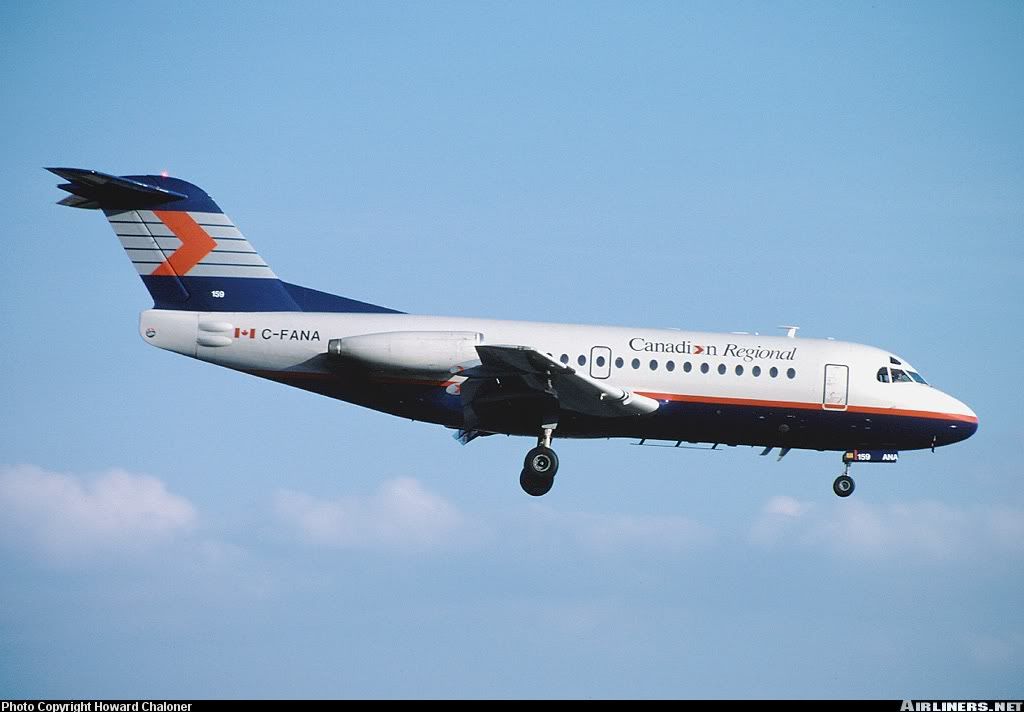
When I teach runaway stab I usually tell a story about a Canadian Regional F28 that had a stab runaway. The company actually made a CRM video. It was probably the best and most memorable of CRM discussions I ever took part in. Anyway this crew moved all the pax forward that they could. People were sitting on the floor in the forward galley and in the aisle. The F28 was 3 and 2 like a DC9 they had 4 and 5 in a row as well. This effectively shifted the CofG forward.
This crew really saved the day, front and back. It could have been awful.
In the sim I can change the CofG . So I simulate the cabin crew moving passengers.
You can feel the difference and the jet becomes more manageable, flyable.
I think that needs further discussion Trey. I suspect Dagwood did not mean the, "No practical application." he points out the application in the next part of the sentence.
I like the donut analogy, it's an excellent way to learn how to control a car in a skid. The point of doing slow flight is to learn how to control the plane in that phase of flight transitioning from approach to stall when the plane cannot fly. Then it touches down and you taxi it back to the hanger.
Now can you teach the student to work it into the landing sequence, or do they just need to practice until they work it out?
Just to clarify, by "no practical application" I mean a pilot usually doesn't wake up and say "I'm going to do slow flight today". It isn't fuel efficient, it is wear and tear on the engine, you don't get very far, it is challenging to do well... just like donuts.
The impractical practice at altitude will help the student when they encounter slow flight during every take off and landing.
Lets talk about what a student should learn about slow flight and where it is practical. It is very unfortunate that TC has made it a flight test standard that the plane must fly around on the hairy edge of the stall to demonstrate this part of the envelope. A well intentioned, but misguided requirement as it misses many of the important points.
a. The student shoul be fully briefed on lift/drag, and power/speed realtionships , and demonstrate a theoretical understanding of them before ever undertaking the upper air work.
b. Have the student set up the plane in level flight using the maintain altitude, reduce power a bit etc., and when well into the back side of the curve, make sure they see that additional power will only hold the plane in level flight as they slow down. do no rush them.
c. Now bring the plane back into the the front side of the curve, take off flap setting (if the plane is so equipped and has a requirement) and set up a climb at Vx. Have the student note the climb rate..Now raise the nose and contiune the climb at a slower speed. When you are close to stall speed have them note the climb rate again...The instructor should write bothe these numbers down for post flight briefing. Then have them put the nose back down to Vx and check it again.
What is the practial purpose of this..There are many many examples of pilots trying to outclimb terrain, and with the ground coming up the intuitive reaction is to raise the nose. In the post flight briefing it the numbers can be reviewed and it confirmed that the student understands that pitching up is not the solution , but actually may have to lower the nose a bit.
d. Now we have gained some altitude, bring the plane back to level flight, back of the curve, begin a descent and , if equipped. landing flap setting. Have the student try an overshoot without lowering ths nose. Depending on their level of training. allow them to go right though to the very edge of the stall. Now go back into a descent and have them do an overshoot by lowering the nose and gaining at least Vx/or Vy and then initiating the climb.
In the post flight brieifing advise them of the practical applictions of this if they get low and slow on an approach, of during the final short segment of landing, they must overshoot , the absolute necesity of not just raising the nose.
In the final upper air work segments of the PPL when they are doing flight test prep, they can do slow flight exercises to meet TC's requirement.
As to the icing on the tail thing...over the top.. I can only think this whole train by scenario is a result of the video game/flight sim culture where you "challange" yourself or someone else to try something. It is not instruction, and only properly belongs as an evaluation tool when the student is competent in the exercise..but quite frankly, a waste of time.
I want a pilot that understands how to get out of a bad slow flight situation that they might have slipped into by being distracted or by judgement error, and one that knows who to keep a VFR aircraft out of cloud, or, if entered inadvertently,knows how to do a 180...not slow fly with ice on the tail.
BTW. It has been a bit of a while since I flew smaller aircraft, but if I recall correctly, the usual procedure is to avoid icing conditions (not hard for a VFR pilot who avoids freezing rain), and in the event you do suspect icing, increase the speed, not slow fly around with it ....and I am sure as an istructor you understand catch rates, and the effect a high AOA and slow speed would have.
I sound like a grumpy old record here, but teach the bloody basics, and leave the scenarios for when you go back home and can get on the computer.
---------- ADS -----------
Accident speculation:
Those that post don’t know. Those that know don’t post
No I wasn`t talking about tail icing in slow flight. I was just wondering what you guys had to share about some scenarios you offer students in lieu of just asking them to show you an exercise. Like instead of `show me a soft field take off`talk about taking off on turf or something.
This could go for any exercise. Essentially just looking at different ways to increase pdm and if there are some good scenarios you guys use with your students.
Perhaps I misread your first post, but I thought you stated you put about 2.5 'shots' of aft trim. into it.
And what.. exactly is the objective of that, and exactly where in the flight test standards does it suggest that the student be expected to attempt to land an out or trim aircraft?
Besides, the student should just be able to trim it out...or are you now expecting the student to land the plane intentionally out of trim...for what purpose...to see what happens?
Show me.....whatever....!.Is an evaluation, not a teaching exercise. Such a simple thng, but so hard for many to understand.
If you want a student to demonstrate a short field take off after they have had theroetical, and practical gound briefings, had it demonstrated, and had the chance to practice and had positive advice with regard to becoming proficient...than why not ask them...show me a short field take off. Why do you have to add more to it?
I really dont understand the scenario. The engine and meter are running. Is the aim to see they are proficeint at short field take offs, or something else. If PDM is a part of that, what prior instruction have they being given in PDM..
If you want to see PDM, then , when you are back in post flight. Critique the take off, reinfoce any corrections and then ask....under what conditions would you attempt a short field take off in this plane. Specifics..distance, obstacles to clear, etc. At least here you can discuss things without the engine running,
I am going to repeat it again..You dont teach someone how to fly by testing. You test after they have the skills.
It is not flight sim where you dream up a challange and they attempt it.
---------- ADS -----------
Last edited by trey kule on Sun Sep 11, 2011 8:57 am, edited 1 time in total.
Accident speculation:
Those that post don’t know. Those that know don’t post
You dont teach someone how to fly by testing. You test after they have the skills.
It is not flight sim where you dream up a challange and they attempt it.
This is yet another reason why it's taking a lot of instructors 120 hours to finish a PPL...they don't stick to the basics.
Exactly! So when they get to the "Evaluation" phase of the learning module, what are some scenarios you guys throw at your students? I wasn't trying to attest to the fact that you teach by challenge; of course you start with the basics and have them work up the learning ladder.
Where I'm coming from by asking this question is that more and more often examiner's are requesting more scenario based training to be thrown at students so they come up with good pdm. The practicality of an exercise. Where are you most likely to for example find a full flap stall with power? Perhaps an overshoot. Great, when teaching it instead of saying, here's how you do a full flap power on stall, demo the item in a scenario where an overshoot has gone bad (walking them through each steps of warning signs they should of cued in to initiate a recovery before it got bad). Because no person in the right mind would intentionally go and put the plane in a full flap power on stall for fun.
For instance, you've flown for 3 hours and hit an area of turbulence, what should you do? Idea being slowing down to VA. Great! Now what is VA after 3 hours? Ahh yes, it's x kts.
Just seems like more and more instructors are teaching here's how you do an exercise, but aren't relating it to a practical application. This is where I thought we could get the ball rolling on some scenario based training that you guys use with your students.
Looks like some strong opinions against this type of training. Appreciate your insights however
I am a bit confused. In your original post you mentioned nothing about it being an evaluation. You did mention however that you threw in a couple 'shots' of aft trim. (I am not sure what 'shots' means as I have not flown a plane with a trim wheel that indicated shots) I am not sure exactly what that was intended to do except make the exercise a bit unsafe as it seems you allowed the student to get close to the ground and not rectify that situation with trim.
In any event. in general "scenarios" for evaluation purposes do not belong in the PPL/CPL program. There is a very good reason for including them in advanced type training where the aim is not only to test procedures (not basic skills), but to evaluate CRM. That type of training is not applicable to the ppl/cpl training where you are learning, or should be learning, the basic flying skills.
In flight tests, scenarios are kept simple, and never have I seen a professional instructor make a situation unsafe.
May I suggest you load the tail of the plane with some sandbags to put the C of G well aft of limit and then practice spin training that may result from an iced up tail..Maybe do it near the ground to make it more interesting.. And in the interest of safety, go up solo and practice it first.
---------- ADS -----------
Accident speculation:
Those that post don’t know. Those that know don’t post
In any event. in general "scenarios" for evaluation purposes do not belong in the PPL/CPL program.
Hit the nail on the head. Conducting such an evaluation is really the realm of the DFTE's job, not the instructor. Even the DFTE doesn't come up with such odd ball "scenarios" like the tail icing one presented. If you're putting a student of the PPL/CPL level through such a thing you're wasting time. If you're interested in such scenarios that get used, sit down with one of the examiners - any that they do use to evaluate are pretty basic, their job isn't to confuse the student. If your scenarios are more complex than theirs then you're going outside the scope of your training.
More complex scenario use really comes into play during advanced training like IFR or the instructor rating.
For the PPL, I am in the "keep it simple" camp especially for the air exercises. My experience is getting the foundation flying skills really solid is the best use of air time. However I am a big believer in PDM for the ground briefings. In general I think too much of most PGI's is in the "how" instead of the "why".
The short/soft field is a good example. For starters it should not be an either-or lessons but should IMO be treated as a continuum of difficulty from short/hard to long/soft to short soft. Second particularly at the PPL level I think it is important to have a discussion about what field length makes a runway "short" and how can you identify potential "soft" runways. I then go to the VFR chart supp and point the student towards a couple of pre selected interesting fields. We then have a discussion about when and why these fields could be used and conditions that would make it a poor idea to land. I want to show that a field that would be OK in a lightly loaded aircraft on a cool morning would be a potential accident with a heavy aircraft on a hot afternoon day, and that it is up to the pilot to know and understand the difference. Additionally what to look for when you are overhead the field is another point that doesn't seem to get addressed very often.
As for the slow flight piece, well the circuit and T/O and landing is where a student must have a practical understanding of slow flight and most importantly know when the aircraft has been allowed to inadvertently enter the slow flight regime. That IMO is where the emphasis should be placed. for the PPL.
For the CPL, I think the one of the best scenario based exercises is by emulating a 703 flight, including the required paperwork, W & B (requiring min fuel), weather (a challenging but not impossible scenario), route (planned for maximum operational efficiency) and then just as the student finishes the plan I as the passenger change everything and give him 15 mins to wheels up.
However I am a big believer in PDM for the ground briefings.
Its on the ground that really all this stuff belongs. Ground school is another place where one can spend a long divergence in a PDM discussion around a specific scenario. I like pulling out various accident reports for this use, its a good excersise to see where the discusion leads on what went wrong, where other choices could have been made. This stuff doesn't belong in the airplane while the prop's turning though. If you're in there outlining a scenario while you're turning fuel into noise then you're wasting the student's time, and worse, you're wasting airplane time and that's a precious commodity.