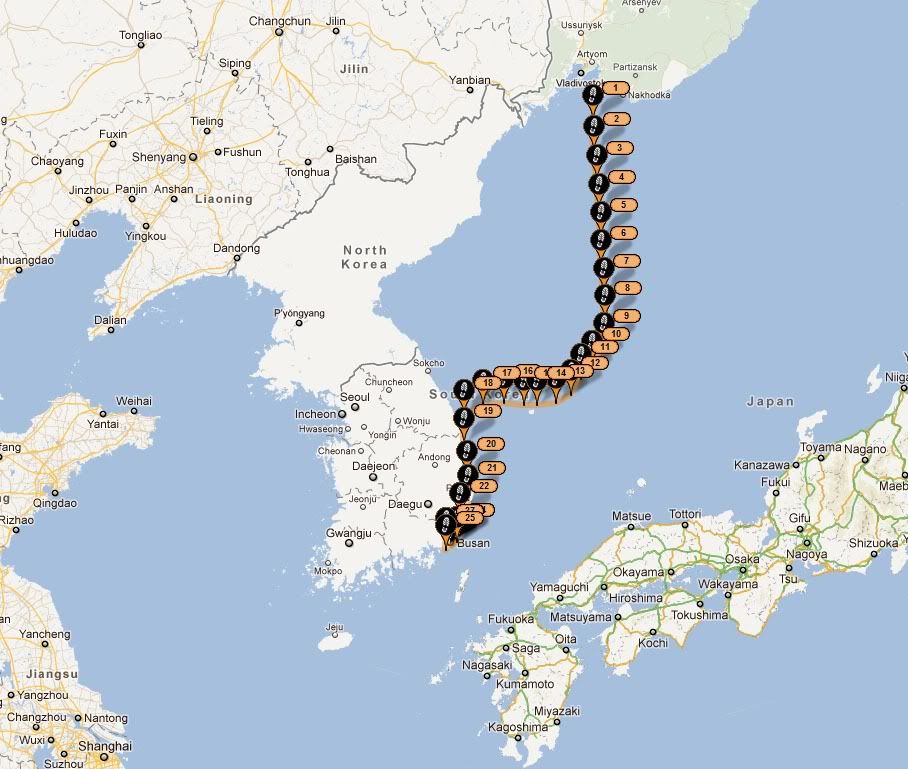
Well, Busan (RKPK) proved to be a very pleasant city, with a nice hotel and friendly and gracious people, but I just about had a heart attack when I saw the bill for ground handling in Busan. Let's just say that I have bought cars for less money. So, even though everything went very well in Busan, and we were very professionally handled there, I ain't going back simply because it is way too expensive a place to land. Perhaps I'll try Pyongyang in North Korea next time - maybe the new Kim that is running the show there might decide to have a sale on ground handling services to attract visitors to his country.
Seriously, though, the huge bill I got in Busan for ground handling reinforces a basic principle of ferry flight planning that I have always held dear but kind of neglected on this particular leg of the voyage: Always land at the smallest possible town! The smaller the town is, the less it is going to cost you for ground handling. When I go east across the Atlantic, I like to land in Churchill, MB, and then in Broughton Island (Qikiqtarjuaq) NWT. These are both small towns that offer really competent handling, all the services I could possibly want, only a 10 minute trip from the airport to the hotel, and they are not at all expensive (well, maybe the fuel is expensive up in CYVM, but it's not their fault, they have to barge the stuff in from down south). Similarly, when I land in Iceland, I always land at Akureyri (BIAR) up on the north side of the island, never at Reykjavík in the south. Akureyri is about a quarter the size of Reykjavík, and a quarter of the cost for the landing, parking, customs, handling, and hangar... not to mention that the hotel is only 5 minutes from the airport.
I've got to find a new place to land in South Korea - ideally some really small town with a 2,000 foot runway, customs services, and a jet fuel truck. If anyone knows a such good place, let me know, please!
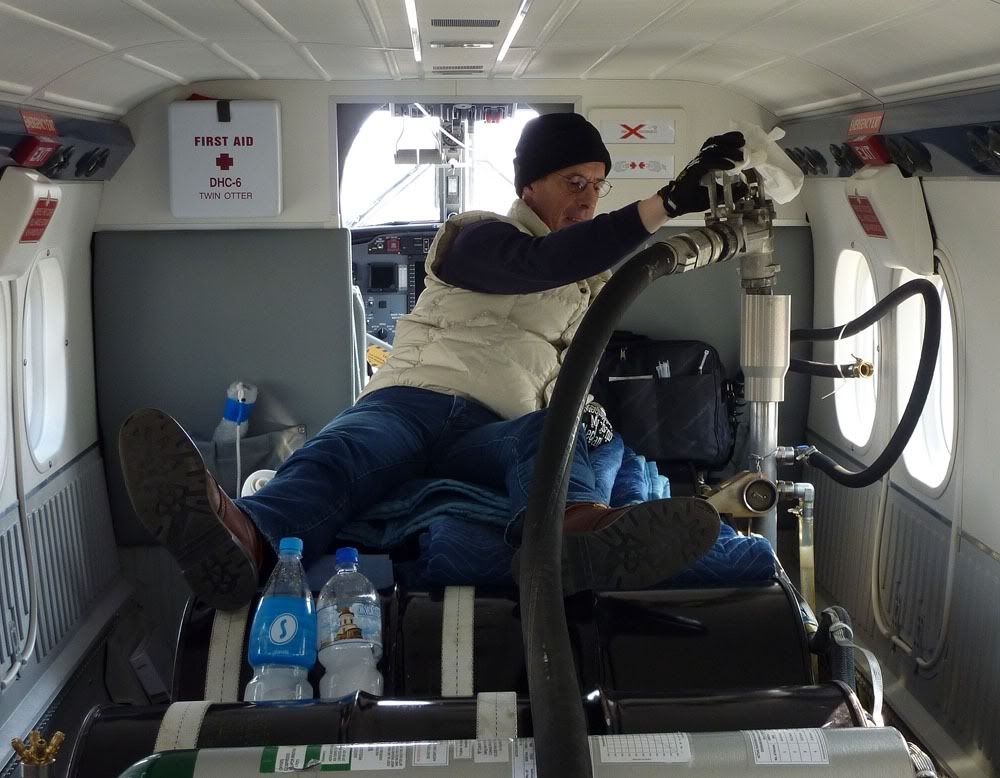
I left out one kind of funny picture from the post above about our stopover in Busan. This photo is kind of funny (to me, anyway) because it shows a couple of water bottles that still haven't thawed out from the -30° temperatures in Russia, even though we spent about 5 and a half hours flying from Vladivostok to Busan with the cabin heat on all the way. Mind you, Busan was no tropical paradise, but at least the temperature on the ground was above freezing when we landed. Note also the 'pilot uniform' - steel toed safety boots, jeans, and warm clothes. I never wear one of those costumes with the gold bars (my boss knows that if he ever wants to make me quit, all he has to do is start handing out pilot costumes). Contrary to popular myth, you don't need a fancy pilot costume to transit airport security, etc. Not to mention that the fuel guys (and girls) are a lot friendlier when you are wearing jeans, safety boots, and Mechanix gloves.
Long after leaving Siberia, the water bottles are still frozen
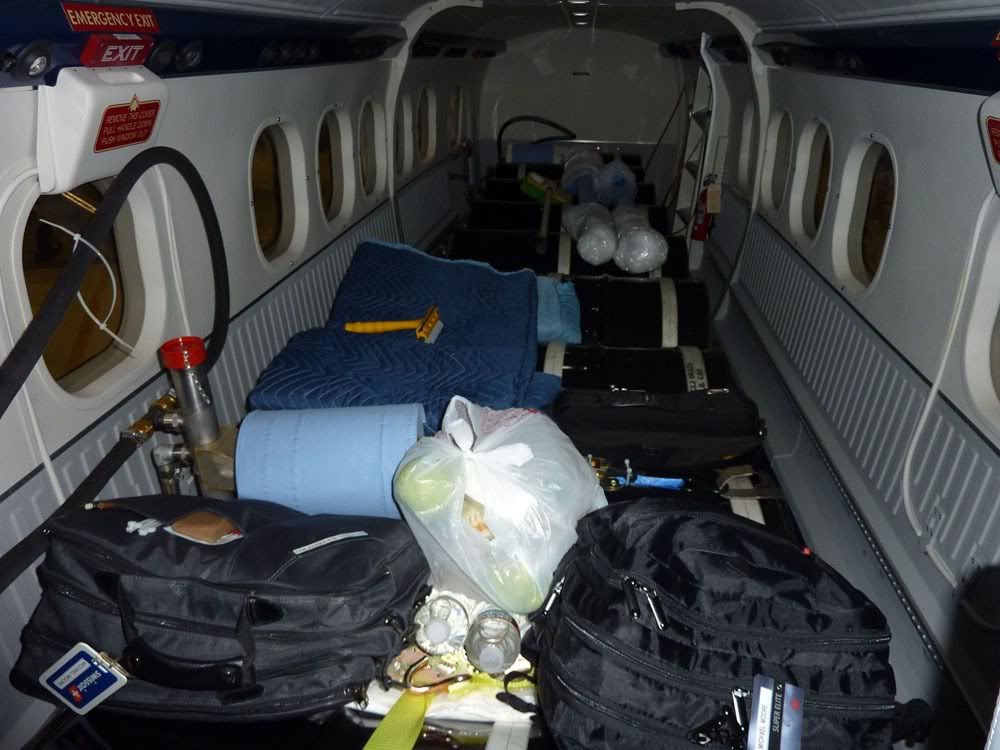
You can see our oxygen bottle in the very foreground at the bottom of the above photo. It is a huge (60 cubic feet) 'P-size' bottle that we purchased from
Aerox. I have learned the hard way, on many prior ferry flights, that there is not yet a 'universal' industry specification fitting used worldwide to fill oxygen bottles - the size of the connector on the bottle and the thread specification varies all over the world. This means that if you buy a bottle in North America, you can generally count on being able to fill it up again in North America, but all bets are off once you go to another continent.
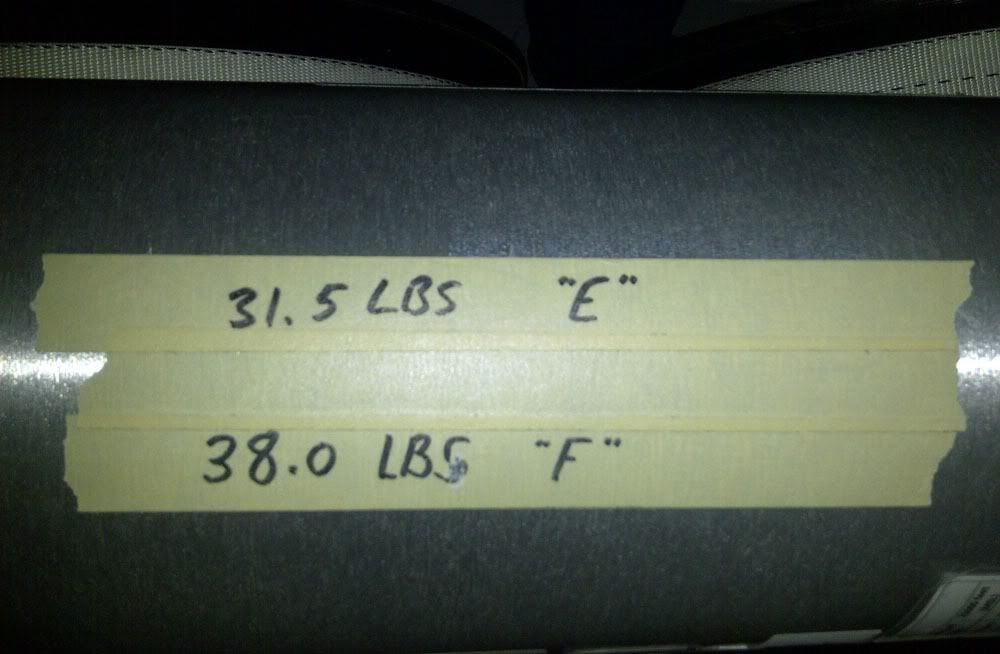
I didn't want any headaches (literally or figuratively) arising as a result of the oxygen bottle running out somewhere in Asia, so, I filled this thing up in Victoria, filled it up again in Anchorage, and knew I would have about 15 hours worth of oxygen inside it for the the two of us to make it all the way across Russia on oxygen, if that became necessary. Fortunately, we only used oxygen for about 4 hours during our flight across Russia, and for another few hours on the Vladivostok to South Korea segment. The pressure gauge on the bottle is not a very accurate way of determining what is left in it (I weigh the bottle whenever I want to know what is left in it). But, I don't carry a scale in the aircraft that is precise enough to let me weigh it while enroute. It is necessary to have a scale that is precise to a 10th of a pound to weigh the bottle with confidence.
Oxygen Bottle Weight marked on the side of the bottle (this is a P-size bottle, from Aerox)
The SIC on this flight, Frank Harlow, left us in Busan and headed back to Portland. I was then joined by Tony Skelton, the pilot from the company that purchased this aircraft. Tony will be responsible for supervising operation of this aircraft once it is put into service, and a ferry flight is a great way to familiarize a pilot with prior Series 300 Twin Otter experience with the new avionics on the Series 400 aircraft.
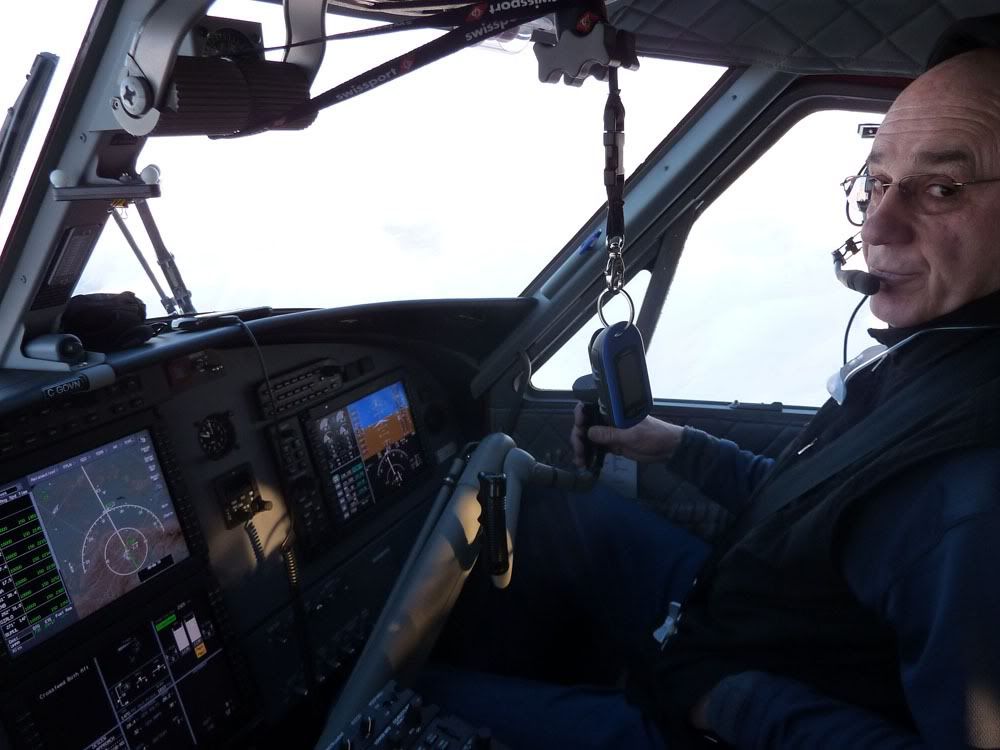
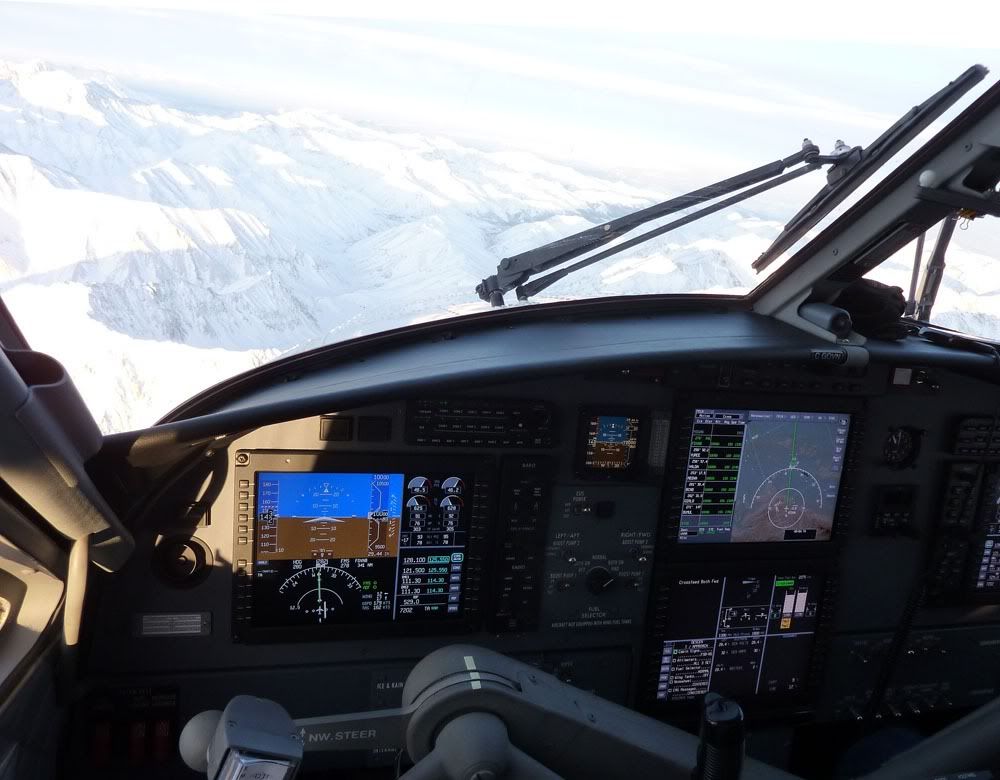
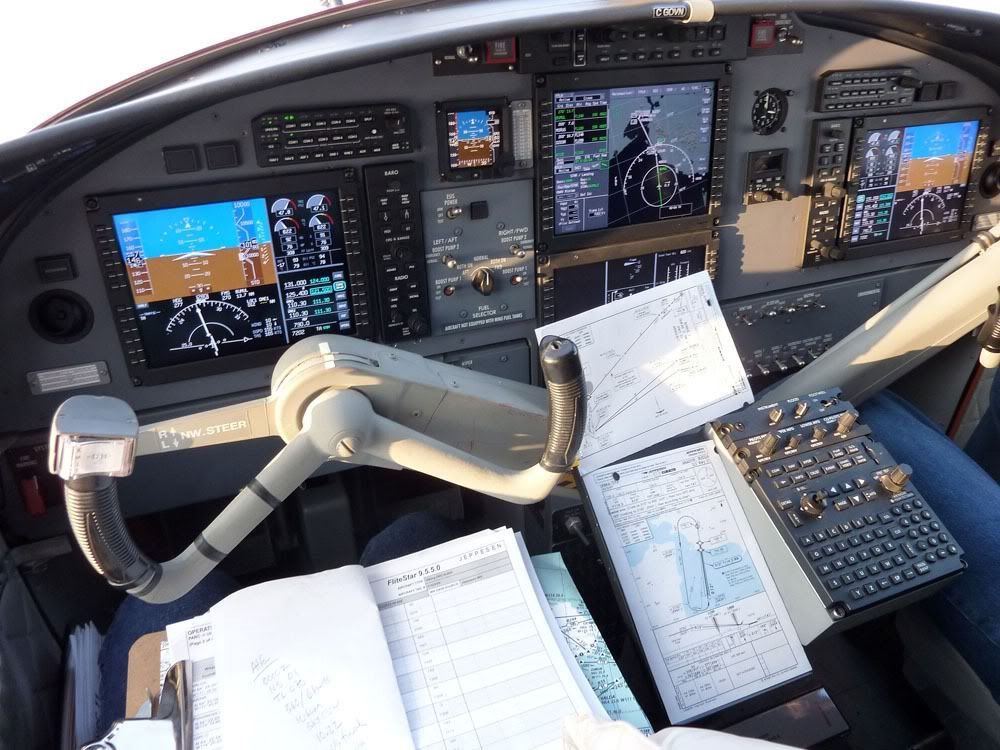
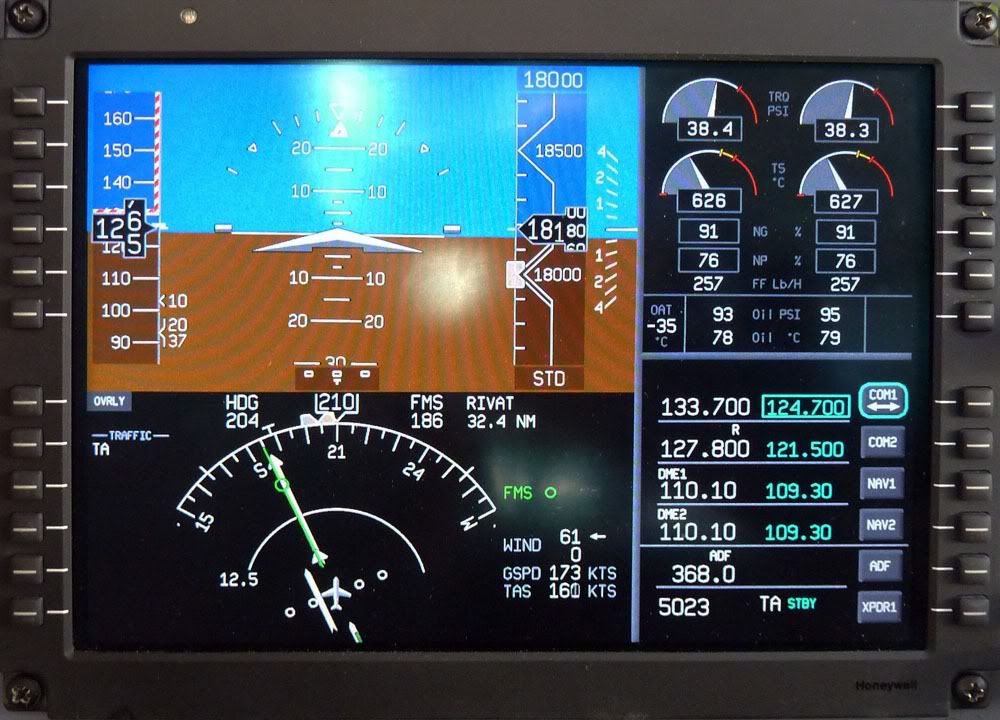
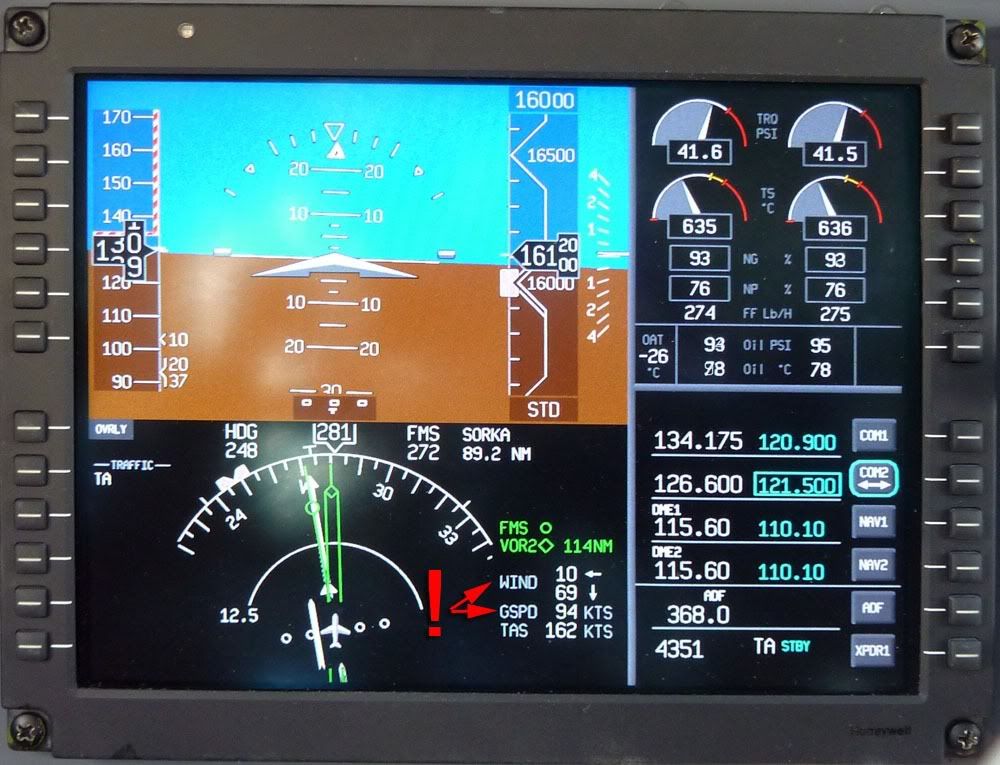
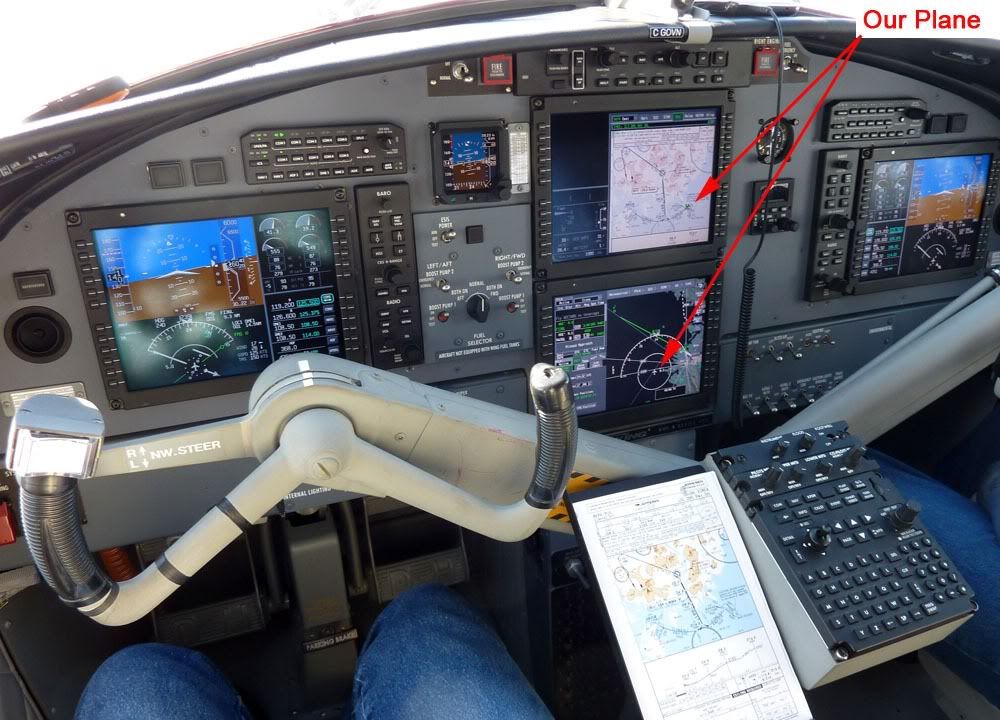
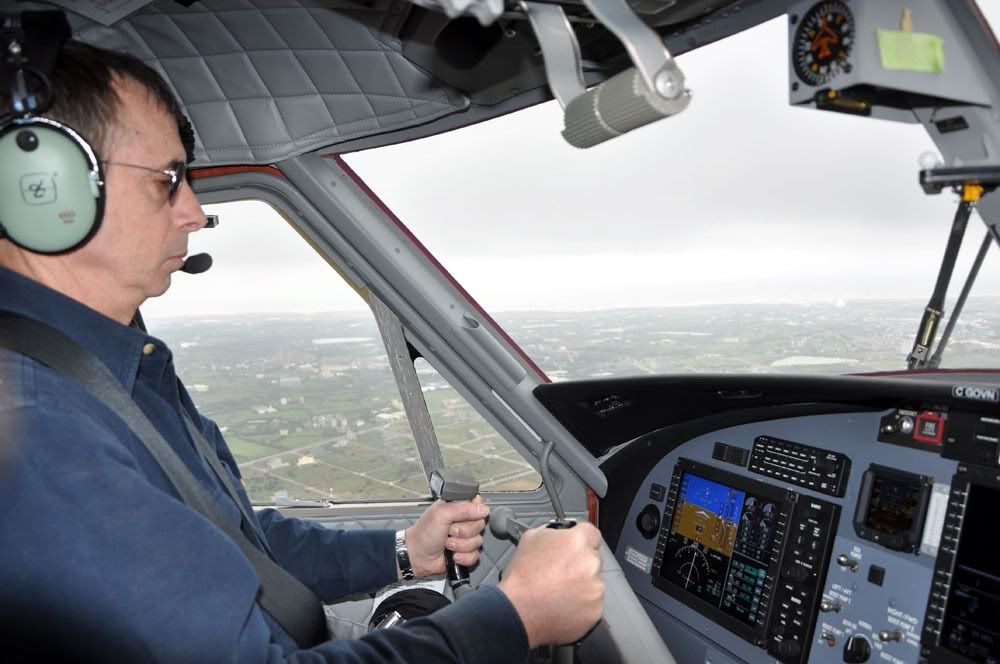
Heading out of South Korea, it was again possible for us to carry our cameras and camera-equipped cellphones in the cabin of the aircraft. The picture that Tony took (below) shows me driving, and also illustrates the quite substantial forward tilt (to reduce parallax error) of the Series 400 instrument panel. The glareshield on the Series 400 is much smaller than the glareshield on the legacy aircraft, and this greatly improves visibility out the front window. As you have probably guessed by now, this particular aircraft is not equipped with an autopilot.
Michael driving, heading out of South Korea to Taiwan
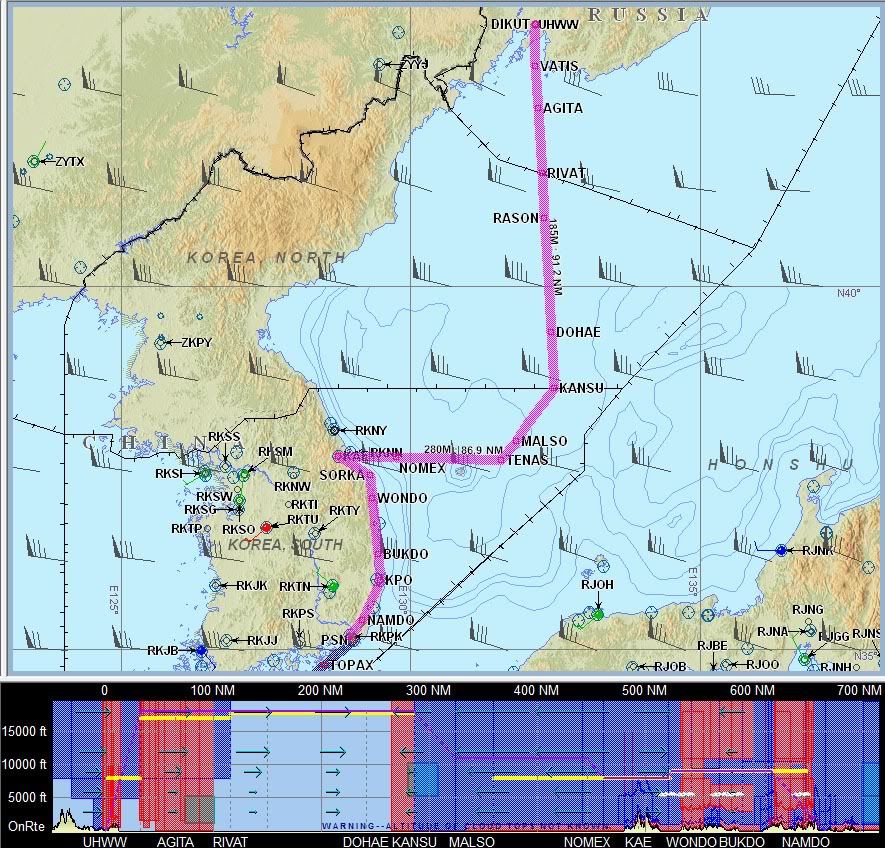
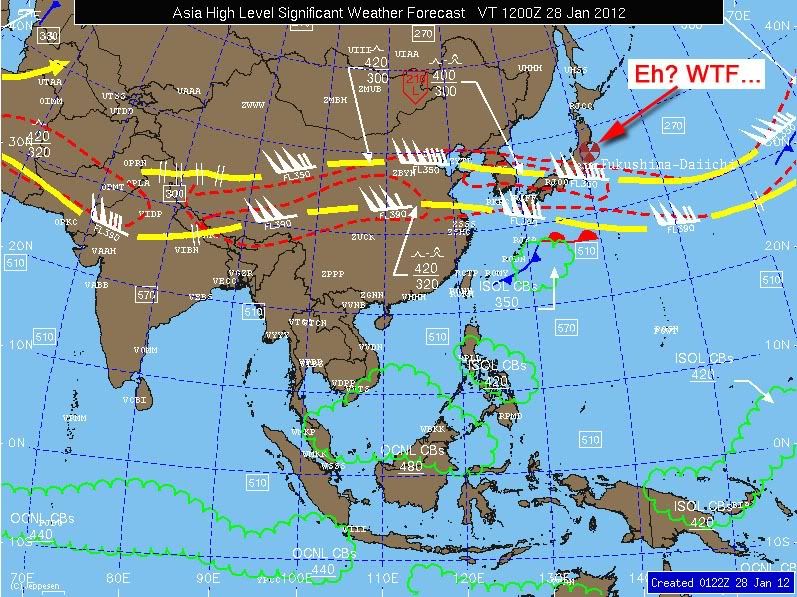
The journey across the South China Sea was quite uneventful, and we didn't get slowed down by the upper winds. We had a pretty strong crosswind all the way, but at least it wasn't a headwind. The significant weather analysis showed a 180 knot jetstream right above our route, so, we tried to stay as low as we could on this leg of the ferry. The radioactivity symbol in the upper left of the sigWX analysis is unique - that made me grateful that the wind was blowing east and not south.
No-one taught me this weather symbol when I did my ab-initio training
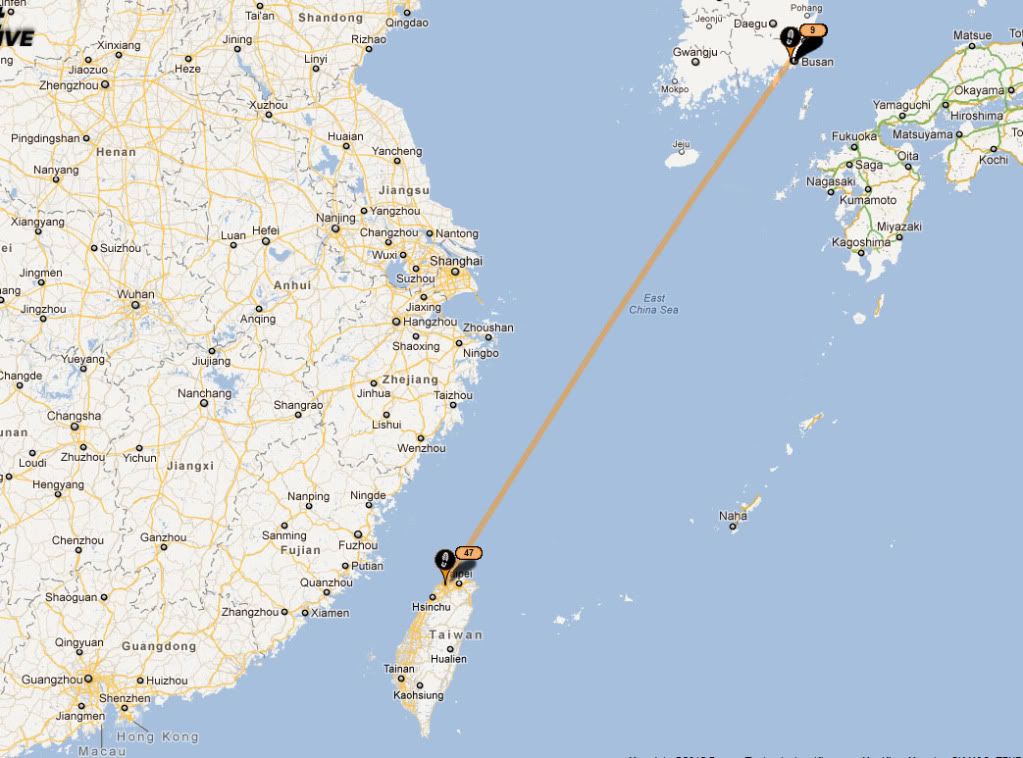
I forgot to turn off the SPOT tracking device when we took the day off in Korea, and it sat on the glareshield for about 36 hours, ticking away like the Energizer bunny. We were kind of worried that the batteries would not last for the remainder of the ferry, so, we only turned it on for a few minutes whilst taxiing at origin and departure, this to create a few track points so that the folks back home could tell where we were.
Track from Korea to Taiwan
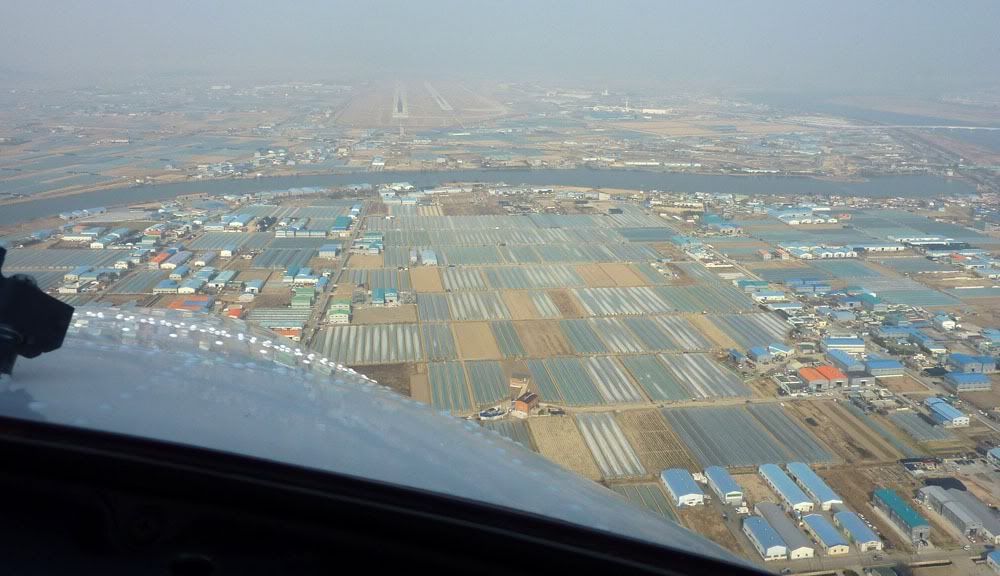
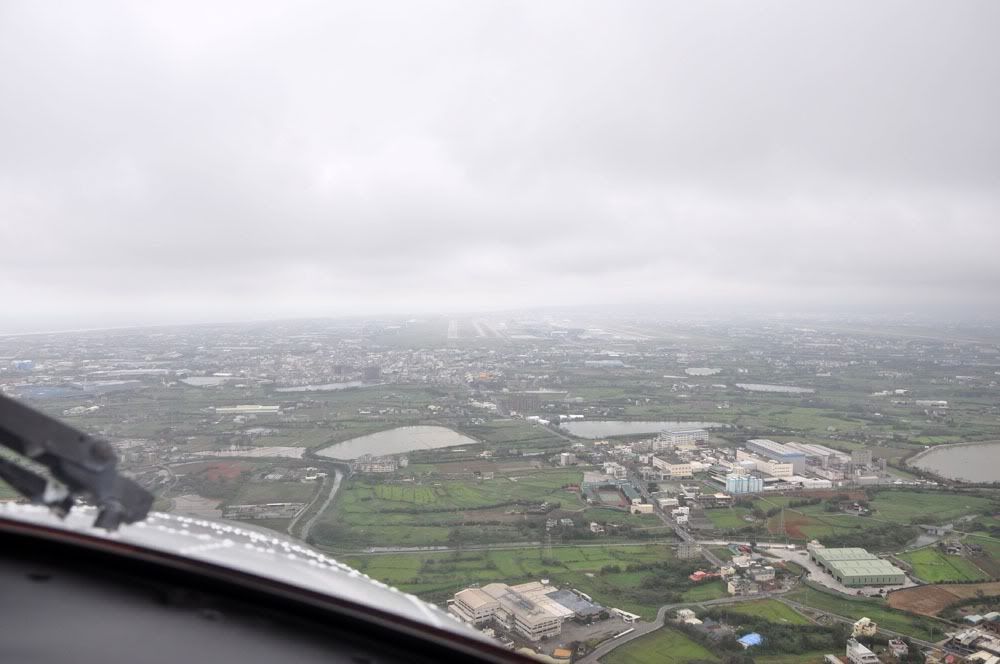
The weather at Taipei was worse than forecast when we arrived - lots of layers of cloud from about 6,000 feet down to about 800 feet, although the viz was pretty good once we got below the lowest layer. This was the first time we had encountered anything other than fine clear weather on this ferry. I guess that's the problem associated with flying when the air temperatures are above freezing - the darn moisture gets in there and contaminates the air and makes it difficult to see the surface of the earth. At least we didn't have to worry about icing, the freezing level was around 10,000 feet, and it was +18° when we landed. The two water bottles had still not thawed out from their trip through Russia, though.
Final Approach - Taipai
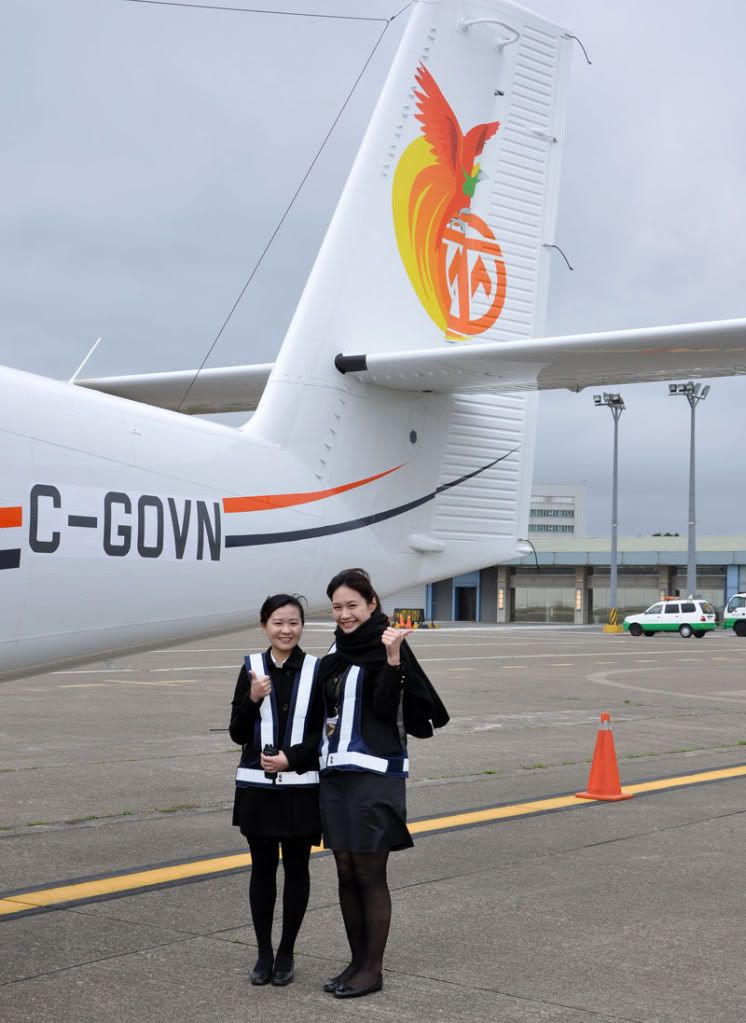
Handling in Taipai was first-class, everyone was very efficient and very helpful, and we were in the Novatel hotel (located right on the airport property, a stone's throw from our parking spot) about 20 minutes after we finished filling the fuel tanks. The ground handling bill in Taipai was one tenth the price of the Korea ground handling bill. So, pending review of the fuel bill when it arrives (you never know what the fuel costs until weeks after the flight) it looks like Taipai (RCTP) is a 'keeper' so far as future ferry flights are concerned.
Our Ground Handling Team from Sunrise Aviation in Taipai
The hotel is visible in the background, just behind the rudder. That's about the exact distance from the parking spot that you want the hotel to be.
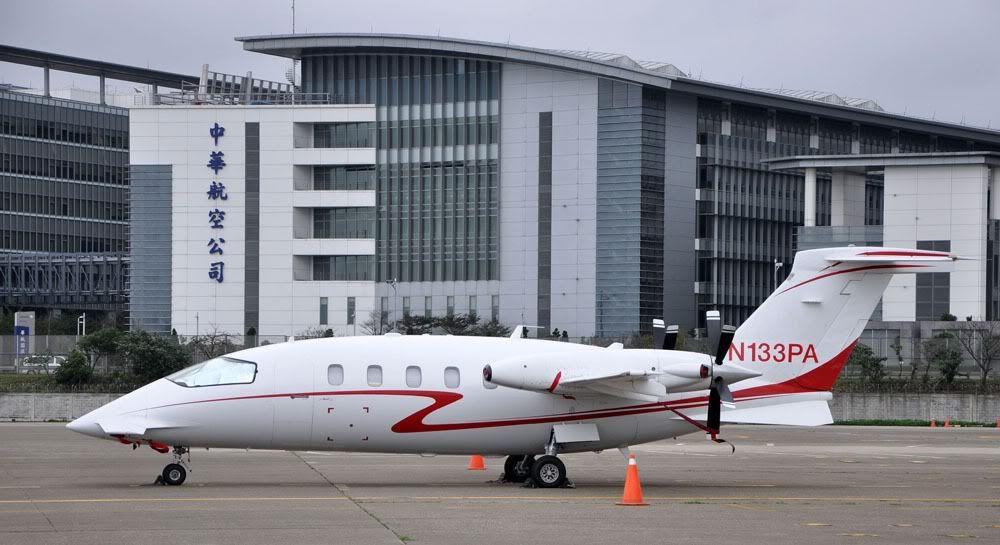
We were parked next to a rather unusual looking aircraft (it looks kind of like a bratwurst with wings on it) at Taipai. This was the first time since leaving Alaska that we had seen another aircraft that weighed less than 100,000 pounds. General aviation activity is quite uncommon at international airports in Asia. None of the airports we landed at in Russia, Korea, or Taiwan had FBOs at them.
It's a unique looking thing, that's for sure
Michael