
170V240 ... landing direction is 297T
accident starts miles before the runway
A Boeing 777 Has Crash-Landed At San Francisco International
Moderators: sky's the limit, sepia, Sulako, lilfssister, North Shore
-
SheriffPatGarrett
- Rank 4

- Posts: 205
- Joined: Sat Apr 10, 2010 5:11 pm
Re: A Boeing 777 Has Crash-Landed At San Francisco Internati
Yup! this exactly the kind of logic used by Airbus' conspiracy to push for full automation...replace real pilots by upper class inbred degenerate jackasses...after plenty of crashes proving pilots are dangerous, replace them with IT...Actually, you should be looking into the USGS and shifts in the San Andreas fault. Your windshear theory could have been due to the air being displaced by the subtle but recorded movement of the pacific plate pushing up on the NA plate precisely at the time of this incident.
Did you know that before WW II, large airplanes, certainly large military flying boats were commanded by Navy Officers right off the boats
that knew exactly zero about aviation...They were supposedly expert in "commanding"...the manhandling was done by Pilot-mechanics...the navigation by navigators
and the radios by...electronic technician and morse code operators...Until twenty years ago, the guy on the
right was still a straight mechanic on most French airplanes!
As the world turn, due to the real pilot's complete replacement with these aristocratic nobodies, because of the reaction to the disastrous consequences
we'll soon have an IT guy with coke bottle eyeglasses supervising two dozen pilotless airliners with a couple thousand passengers!
WANNA RIDE?

Re: A Boeing 777 Has Crash-Landed At San Francisco Internati
The accident most likely started the moment the PF disconnected the auto-pilot but did not disconnect the auto-throttles.pdw wrote:170V240 ... landing direction is 297T
accident starts miles before the runway
FYI... if there was a strong enough shear to cause this accident the 777 would have told the pilots about it well before hand.
... is the "w" in your nick short for "wind"?
Re: A Boeing 777 Has Crash-Landed At San Francisco Internati
If the video we were shown is real this plane must have had empty tanks or next to no reserve left.
We are shown it pitched up what 40 degrees, twisted, slammed down...and it wings are still intact. That's some spar! And not a drop of fuel alight even as starboard engine ripped off. The only fire damage a long time coming with about the roof damage you'd expect from a galley coffee post fire gone bad.
Ok...
Some mention the overhead shot post fire shows the ground is dirt. Yet the evac shots show 2-3 foot high grass.
And a cop tending to victims, wearing a solid wooden nightstick. Not since the 1990s have cops not used collapsible batons...
http://www.dailymail.co.uk/news/article ... liner.html
We are shown it pitched up what 40 degrees, twisted, slammed down...and it wings are still intact. That's some spar! And not a drop of fuel alight even as starboard engine ripped off. The only fire damage a long time coming with about the roof damage you'd expect from a galley coffee post fire gone bad.
Ok...
Some mention the overhead shot post fire shows the ground is dirt. Yet the evac shots show 2-3 foot high grass.
And a cop tending to victims, wearing a solid wooden nightstick. Not since the 1990s have cops not used collapsible batons...
http://www.dailymail.co.uk/news/article ... liner.html
Re: A Boeing 777 Has Crash-Landed At San Francisco Internati
Just saying it wasn't a headwind ... how negative was it ? They expected headwind 'at and to' the airport and didn't have it shortly prior. How much ? Nobody knows exactly. Does it matter ? I thought it did, at least as far as timing goes.
A visual approach, they were looking out the window and flying manually, so any power misadjusted due to misinformation will be under the microscope here. Expected 6kts on the nose (peanuts but something) ... instead gets 6knots 'negative' in the middle of the bay during VS reduction into more sunshine (just like they say). Later to push power ?
The airport is at 1010hPa station pressure at 11:28AM. The accident is at 1008hPa (aircraft station pressure where accident occurs).
certainly the auto throttle fiasco wasn't caught in time
A visual approach, they were looking out the window and flying manually, so any power misadjusted due to misinformation will be under the microscope here. Expected 6kts on the nose (peanuts but something) ... instead gets 6knots 'negative' in the middle of the bay during VS reduction into more sunshine (just like they say). Later to push power ?
The airport is at 1010hPa station pressure at 11:28AM. The accident is at 1008hPa (aircraft station pressure where accident occurs).
good questionslostaviator wrote:Is the airspeed indicator not one of the most important part of any basic scan? Isn't this what we are taught from the very beginning. A U/S auto throttle is a pretty lame excuse. Did they not have hands to reach the throttles?
certainly the auto throttle fiasco wasn't caught in time
Re: A Boeing 777 Has Crash-Landed At San Francisco Internati
Wind was a non-factor and the power wasn't "misadjusted" it was completely forgotten by 3 pilots until it was too late.pdw wrote: A visual approach, they were looking out the window and flying manually, so any power misadjusted due to misinformation will be under the microscope here.
-
Cat Driver

- Top Poster

- Posts: 18921
- Joined: Sun Feb 15, 2004 8:31 pm

-
Siddley Hawker
- Rank 11
- Posts: 3353
- Joined: Tue Aug 10, 2004 6:56 pm
- Location: 50.13N 66.17W
-
Joe Blow Schmo
- Rank 5

- Posts: 357
- Joined: Tue Jun 10, 2008 2:48 am
Re: A Boeing 777 Has Crash-Landed At San Francisco Internati
The accident most likely started the moment the PF disconnected the auto-pilot but did not disconnect the auto-throttles.FICU wrote:pdw wrote:170V240 ... landing direction is 297T
accident starts miles before the runway
Then I guess most 777 pilots start an accident on every flight since you don't normally disconnect the ATs when manually flying.
Re: A Boeing 777 Has Crash-Landed At San Francisco Internati
Unbelievable how they fought to survive that ... the teamwork (steering the Convair out of the spirals to attain 12000ft westbound above a Noreaster snow-storm after losing both generators) with only one magnetic compass and one flashlight. Here are the metars for this Jan 17 1956 departure/arrival: Departed KBOS RWY 33 at 1647 local 315@23KTS 998.9hPa 0.6degC snow. Landed KLGA rwy 31 no flap landing 20:32 local 315@21kts -1degc 1009HpA / clear.
Re: A Boeing 777 Has Crash-Landed At San Francisco Internati
Depends on SOP... our Boeing SOP, which I figure would be the norm, is to have the AT off when the AP is off which is also what the Boeing FCOM recommends... others may differ.Joe Blow Schmo wrote:Then I guess most 777 pilots start an accident on every flight since you don't normally disconnect the ATs when manually flying.
-
Joe Blow Schmo
- Rank 5
- Posts: 357
- Joined: Tue Jun 10, 2008 2:48 am
Re: A Boeing 777 Has Crash-Landed At San Francisco Internati
Would that be your 777 SOP or another Boeing model?FICU wrote:Depends on SOP... our Boeing SOP, which I figure would be the norm, is to have the AT off when the AP is off which is also what the Boeing FCOM recommends... others may differ.Joe Blow Schmo wrote:Then I guess most 777 pilots start an accident on every flight since you don't normally disconnect the ATs when manually flying.
Re: A Boeing 777 Has Crash-Landed At San Francisco Internati
FICU wrote:Depends on SOP... our Boeing SOP, which I figure would be the norm, is to have the AT off when the AP is off which is also what the Boeing FCOM recommends... others may differ.Joe Blow Schmo wrote:Then I guess most 777 pilots start an accident on every flight since you don't normally disconnect the ATs when manually flying.
From the 777 FCTM:
Autothrottle Use
Autothrottle use is recommended during all phases of flight. When in manual flight, autothrottle use is also recommended, however manual thrust control may be used to maintain pilot proficiency.
-
sky's the limit
- Rank Moderator

- Posts: 4614
- Joined: Sat Jan 22, 2005 11:38 am
- Location: Now where's the starter button on this thing???
Re: A Boeing 777 Has Crash-Landed At San Francisco Internati
I must admit, I'm beginning to fail to understand how the word "Pilot" applies in modern airliners anymore... I'm not actually being sarcastic here (strange, I know). The level of automation is ever increasing, and it's starting to feel like "maintaining proficiency" is about as likely as prohibiting the mandatory reading of the weather over the PA (Sarcasm, sorry).
In all seriousness, and coming from the perspective of one of the last areas of real hands-on, close to the ground flying left in aviation, I'm not sure the term is really applicable anymore. Language evolves, perhaps it's time we come up with something else to describe those who operate modern airliners?
In all seriousness, and coming from the perspective of one of the last areas of real hands-on, close to the ground flying left in aviation, I'm not sure the term is really applicable anymore. Language evolves, perhaps it's time we come up with something else to describe those who operate modern airliners?
-
Cat Driver
- Top Poster
- Posts: 18921
- Joined: Sun Feb 15, 2004 8:31 pm
Re: A Boeing 777 Has Crash-Landed At San Francisco Internati
Game boy masters?Language evolves, perhaps it's time we come up with something else to describe those who operate modern airliners?
Re: A Boeing 777 Has Crash-Landed At San Francisco Internati
That single line speaks volumes about the clash of cultures on this thread. And I don't mean the clash of any ethnic cultures like the aforementioned (and others) are still trying to push. I mean of the complete lack of understanding of the differences between large modern airlines and other aircraft in the industry.SheriffPatGarrett wrote: That a real pilotless airplane like CID is advocating, the nec plus ultra, captured by these Mullahs...wanna ride?
No, I did not advocate pilotless aircraft in this thread. Certainly not for current technology airliners. I did however strongly make the case for a high degree of automation in large commercial airliners. Unfortunately, Mr. Garrett, you don't seen to be able to wrap your mind around the difference.
Anyone flying an aircraft should not only be capable, but HIGHLY proficient in the operation of their aircraft. Especially if they are flying commercially. In comparison, I don't expect a low time guy who is building hours on his 152 to be "highly" proficient but he/she is arguably participating in a much lower risk activity.
Now comes to hard part for some of you old timers. If you can fly a 777 with a high level of proficiency, that doesn't mean you can fly an aerobatic circuit in a Pitts at an air show. It doesn't mean that you could fly a Twin Otter on a lake side esker in the arctic. It doesn't mean that you would have a clue about flying on floats or flying water bombers or know what to do when your piston twin loses an engine.
That may have been in the case in the past but you don't just "fly" a 777. You operate it. A 777 is one of the most capable airplanes in the world. By that I mean it can move a great deal of people, at a very high speed, over very large distances over very unforgiving environments. Crossing the north pole is a daily occurrence for many 777s. And it’s all done with two crewmembers. Obviously more to account for long crossings to account for fatigue and duty cycles.
To achieve all that, a great deal of technology is incorporated. A VERY high degree of automation is used to effectively reduce the work load to the capabilities of the flight crew. A VERY high degree of reliability for those systems is imposed so that the probability of a failure that would increase the workload to a level where the flightcrew would have difficulty handling is very low.
That is the automation angle that I brought to the discussion. These pilots are trained for the aircraft they are flying. Not a turbo-Otter, not a Cessna 172, not even a 737.
So how on earth could these pilot’s crash a perfectly serviceable aircraft and cause all this calamity? Based on the information at hand, it was caused by a mistake. A “pilot error” is what we usually call it. Not a “Korean” pilot error. Not an “Asian” pilot error. Simply “pilot” error.
Many accidents have been documented where pilot error resulted in deaths of passengers over the years. Many were flown by “white” pilots. I would hazard a guess that the majority of large airliner accidents over the years were piloted by “white” pilots. So why the whole “culture” thing?
Many of the remarks regarding culture come from good ol’ North American pilots who seem to have more difficulty with understanding the ethnic culture of the pilots they are hired to train than with what they are training them on. No Captain UAL, you are not training them to fly a Beech 1900 between Chicago and Springfield.
The bottom line is that it would be near impossible to operate an aircraft like the 777 with two crew members without a VERY HIGH degree of automation. And no…..automation does not equal “autopilot”. It’s much broader than that.
Another very simple statement that speaks volumes. Did you know that most “older” folks wouldn’t be able to operate a Gameboy? Back when VCRs were in vogue many older airline pilots couldn’t program them or even set the time. It’s nothing new. When TVs were introduced, there was a learning curve. Same with automobiles.Cat Driver wrote: Game boy masters?
How about FMCs? Many of those guys “let” the youngsters in the right seat program the FMC during their last few years until they could retire gracefully. It's very difficult to teach old dogs (and cats) new tricks. New systems and higher levels of automation all result in more training. Sometimes the training affects very fundamental long standing principals. Imagine all the angst felt by captains when CRM was introduced.
The “culture” is changing. It is constantly changing and will continue to change. Some can adapt, some can't. The 777 is not your grandfather’s airplane.
Re: A Boeing 777 Has Crash-Landed At San Francisco Internati
Depends on the model. Some auto-throttle systems are little more than cruise control and MUST be off below the prescribed altitude. Others are approved for operation from take-off to touchdown and roll out. The 777 has a full flight regime system that can stay on all the time. It's an awesome system for reducing workload in a busy cockpit.Depends on SOP... our Boeing SOP, which I figure would be the norm, is to have the AT off when the AP is off which is also what the Boeing FCOM recommends... others may differ.
I was actually on a Boeing that didn't have a full regime AT system and witnessed a very similar situation as the accident aircraft in this discussion. The pilot thought the AT was still on and the airspeed decayed. It got a little lower than was comfortable before the PF manually added power. There was a little delay in responding because of a coinciding distraction.
It happens. My experience turned out much more positively than the Asiana 777 however.
Although I see room for additional training, I see some holes in the automation here. The TAWS system wasn't very helpful because the glideslope wasn't in operation and many of the other TAWS modes were dormant due to their flight configuration and position. There is also the question of proper annunciation of AT engagement. It would be difficult for the current systems to account for a situation where the aircraft is configured to land and speed is decaying at about the correct geographical location. Should there perhaps be an automated airspeed callouts starting at 1000 AGL to replace the PNF's vocalizations during approach? Maybe they could be voiced right after the altitude callout. "FIVE HUNDRED....PLUS 20".
Yah I know....some pilots would say "awesome" and an equal number would lament how we got to this level of incompetence.

Re: A Boeing 777 Has Crash-Landed At San Francisco Internati
Thank you! After reading this painful thread I needed thatFICU wrote:Actually, you should be looking into the USGS and shifts in the San Andreas fault. Your windshear theory could have been due to the air being displaced by the subtle but recorded movement of the pacific plate pushing up on the NA plate precisely at the time of this incident.pdw wrote:Is there a surface analysis available for the hour of the accident ?
Nevermind sunshine, there still can be some windshear...
Re: A Boeing 777 Has Crash-Landed At San Francisco Internati
Interesting to see if that changes as a NTSB recommendation after this accident or if Boeing does it on it's own.RB211 wrote:From the 777 FCTM:Autothrottle Use
Autothrottle use is recommended during all phases of flight. When in manual flight, autothrottle use is also recommended, however manual thrust control may be used to maintain pilot proficiency.
Re: A Boeing 777 Has Crash-Landed At San Francisco Internati
I don't see why it should change unless it was a direct causal reason for the crash. Which I highly doubt.FICU wrote:Interesting to see if that changes as a NTSB recommendation after this accident or if Boeing does it on it's own.RB211 wrote:From the 777 FCTM:Autothrottle Use
Autothrottle use is recommended during all phases of flight. When in manual flight, autothrottle use is also recommended, however manual thrust control may be used to maintain pilot proficiency.
The system when used as designed and intended works just fine in my experience.
Mismanagement of an airplane and its energy can happen with or without the automatics. Improper procedures, procedures not followed, CRM issues, general skills weakness can all negate the safe design of an airplane.
In time we will learn what the primary and contributing factors of this crash were. In the mean time I am more than comfortable operating the airplane as Boeing has thus far directed.
Re: A Boeing 777 Has Crash-Landed At San Francisco Internati
Or perhaps a pilot lacking the required skills. I think there is no excuse for a pilot not to be able to hand fly a power on or power off landing in the type of aircraft they regularly fly. I recall three remarkably successful power off landings of large twin engined jetliners. In each case, I recall the pilot crediting his flying or gliding experience in lighter aircraft. Perhaps there is a message there.A “pilot error” is what we usually call it. ..... Simply “pilot” error.
No, I don't expect the 777 pilot to also be competent flying aerobatics in a Pitts. If there are, so much the better, but not required. Just be competent flying the type you fly. Being a pilot is like being a tree - there are all types, many very different to the others, and that's okay. They all do go up from the earth though! One pilot or tree cannot be all things.
That said, and with an admittedly poor knowledge of GA flying in Asia, I wonder if there are the same opportunities for GA flying as recreation (and skills freshener) for airline pilots in Asia. If there is little opportunity, that would affect the pilot's basic skills.
I opine that pilots who start directly into the "commercial" training stream may bypass the in depth training on light aircraft which homes these basic flying skills. Having never really learned it well anyway, and then with no opportunity to maintain those skills, and automated aircraft which do not normally demand them, a bad situation is perpetuated....
-
Cat Driver
- Top Poster
- Posts: 18921
- Joined: Sun Feb 15, 2004 8:31 pm
Re: A Boeing 777 Has Crash-Landed At San Francisco Internati
When I owned my advanced flying training business a lot of my clients were airline pilots.
Generally speaking they were a bit rusty in their basic manual airplane handling skills but quickly got back in the grove and combined with their airline training and their dedication to following SOP's and understanding the reason for SOP's they were excellent pilots.
Maybe someone should start a school for airline pilots that offers recurrent basic hands and feet flying along with recurrent sim training on the equipment they are flying for the airline.....in other words basic hands and feet flying in a basic aircraft should be part of recurrent training for airline pilots.
The cost for an airline would be minimal if the training were done at the bases where sim training is done.
Generally speaking they were a bit rusty in their basic manual airplane handling skills but quickly got back in the grove and combined with their airline training and their dedication to following SOP's and understanding the reason for SOP's they were excellent pilots.
Maybe someone should start a school for airline pilots that offers recurrent basic hands and feet flying along with recurrent sim training on the equipment they are flying for the airline.....in other words basic hands and feet flying in a basic aircraft should be part of recurrent training for airline pilots.
The cost for an airline would be minimal if the training were done at the bases where sim training is done.
Re: A Boeing 777 Has Crash-Landed At San Francisco Internati
I'll explain it in pictures and analogy for you:sky's the limit wrote:I must admit, I'm beginning to fail to understand how the word "Pilot" applies in modern airliners anymore...
If we were sailors, this would be your vessel:
- rush big brother.jpg (587.21 KiB) Viewed 2584 times
This would be the airliner:

This would be Cat Driver's Ship:
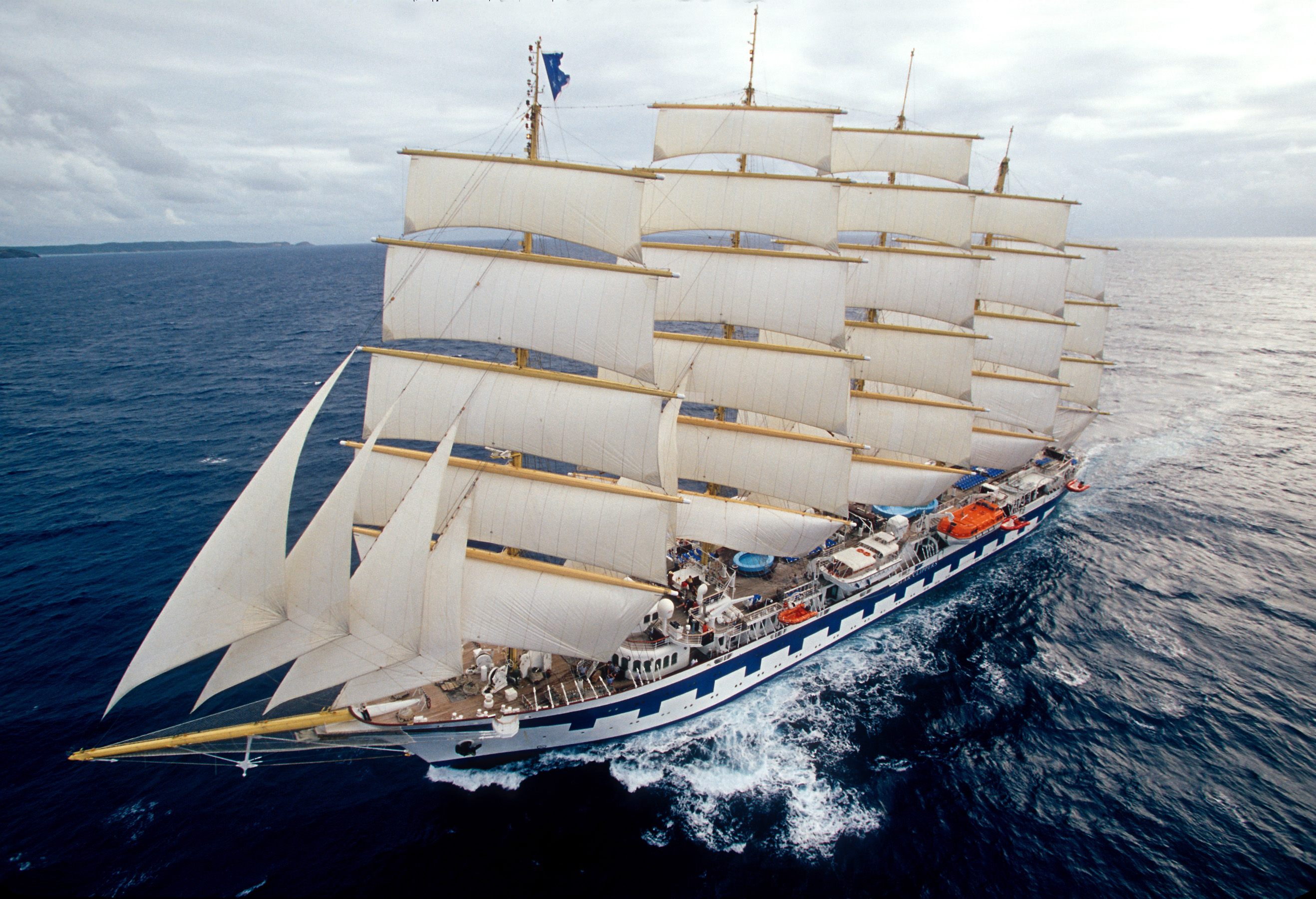
This would be Asiana:

There, fixed it for you.
Re: A Boeing 777 Has Crash-Landed At San Francisco Internati
I was originally going to go for something like that, but I figured what you fly had at least one engine to manage.There, fixed it for you.
-
sky's the limit
- Rank Moderator
- Posts: 4614
- Joined: Sat Jan 22, 2005 11:38 am
- Location: Now where's the starter button on this thing???
Re: A Boeing 777 Has Crash-Landed At San Francisco Internati
mcrit wrote:I was originally going to go for something like that, but I figured what you fly had at least one engine to manage.There, fixed it for you.
And therein lies the point: The number of engines has nothing to do with anything, it's all about understanding your environment, and some are touch more complex than others... the kayak gives me plenty of "managing...' No engine req'd.
Lots of people sail, not many run white water... Lots of people fly, not many are "pilots."


