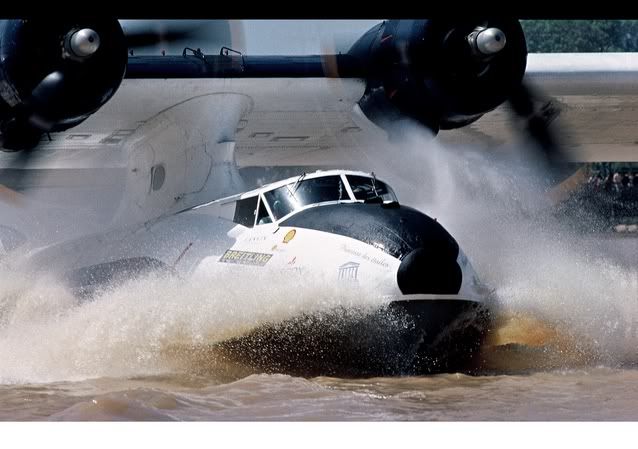
Alright Cat I am confused. I can't see how that photo can tell anyone anything about flap settings, unless I am somehow missing something in the point of your post. It is late, you know.Cat Driver wrote:For those of you who have difficulty figuring out how and when to use different flap settings here is the answer.
http://i43.photobucket.com/albums/e353/ ... f4e977.jpg
Problem solved, you will never have to worry about what flap setting to use.
The 40 Degree Flap Question
Moderators: sky's the limit, sepia, Sulako, North Shore, Rudder Bug

The great looking PBY in the picture isn't taxiing flaps-up, it's taxiing without flaps! When Consolidated designed the might PBY, they decided that it didn't need any flaps. Apparently, they were right; they don't seem to miss them! To quote Peter Ettinger, "Why would you want to slow one down"?!Still-in-YXL wrote:Alright Cat I am confused. I can't see how that photo can tell anyone anything about flap settings, unless I am somehow missing something in the point of your post. It is late, you know.Cat Driver wrote:For those of you who have difficulty figuring out how and when to use different flap settings here is the answer.
http://i43.photobucket.com/albums/e353/ ... f4e977.jpg
Problem solved, you will never have to worry about what flap setting to use.
Just because you're paranoid doesn't mean they're not after you!

As EDO touched earlier I remember that the Otter has an aileron droop of 15 degrees or so at full flap. If I remeber correctly the up travel of the aileron is only 16 degrees. That does not give you a lot of influence with that aileron. Albeit you are probably using more rudder.
The PBY picture reminds me of a few bevers with loads that have tried to takeoff without flaps. Makes a lot of noise and doesn't do much.
The PBY picture reminds me of a few bevers with loads that have tried to takeoff without flaps. Makes a lot of noise and doesn't do much.


The Walter is an awsome conversion, I got 700 or so hours on one. And OFF had the Baron Wing on it. You would have to brain dead to get into trouble with an Otter with that wing, although from what I understand, had nothing to do with that accident.
Too bad Dave took the easy route and went with the 45 degree max flap like Vazar. The Otter handles fine with the orginal 60 full flap under MOST conditions. But things are always certified for the lowest common denominator.
Too bad Dave took the easy route and went with the 45 degree max flap like Vazar. The Otter handles fine with the orginal 60 full flap under MOST conditions. But things are always certified for the lowest common denominator.
Rule #62 "Don't take yourself so damn seriously"
-
hotspur666
- Rank 1

- Posts: 28
- Joined: Sun Oct 30, 2005 5:33 pm
Let me take that back...Still, no commercial airplane can fly as slow as the Walter Otter.
This will fly BACKWARD in heavy seas,
to drop rafts to Japanese fishing boats in typhoon trouble.

If you look at the spray patterns, it's about
the Walter Otter airspeed...
I visited their airbase at Kadena...
They retire these navy patrol plane at 3,000 hours!
Just to keep their ShinnMeywa airplane factory open....
there was a shitload of them just parked there!
They have a fifth engine in the fuselage to suck in
the boundary layer over the wing...the job all these
rivets do on the Otter...
Not to speak of the synthetic vision projected onto the windshield...
(They can do their bidniss in the darkest night!!!)
One time, the fifth engine failed at low speed
and the big plane just turned into a rock and killed the crew.

The wheels are just beaching gear to go slowly
up a ramp.

It's a mod of the Martin Marlin, the "pig boat" of Viet Nam fame.
It had the big pratt corncob engines and twenty atomic bombs
behind each engines...

They where flying those in winter in the Aleoutians at
three feet off the deck to have the salt water sea spray melt
the airframe ice...
On the Twin I was told by an old First Air Capt that unless he really needed the full flaps, 30 was the max. When pushed for more info, he said that when they (the industry) started losing twins to flap rod failures that they demonstrated the ability to control the aircraft laterally with full flap retraction on one side and only 30 on the other.
Generally unless I'm offstrip 20 is the most I need and thats less than 30 so I'm guessing I'll be not too bad off if a rod pulled apart on landing.
Cheers,
ETTW
Generally unless I'm offstrip 20 is the most I need and thats less than 30 so I'm guessing I'll be not too bad off if a rod pulled apart on landing.
Cheers,
ETTW
1. The company pays me to make money for it.
2. If the company doesn't make money neither do I
3. I still hate simulators
2. If the company doesn't make money neither do I
3. I still hate simulators
-
just curious
- Rank Moderator

- Posts: 3592
- Joined: Mon Feb 23, 2004 9:29 am
- Location: The Frozen North
- Contact:
-
Rudder Bug

- Rank 10

- Posts: 2735
- Joined: Thu Jun 23, 2005 11:09 pm
- Location: Right seat but I own the seat
That plane is amazing. I remember the book's xwind limit at 30 kts, of course with full flapsBeechGuy wrote:I flew a Britten Norman Islander for awhile, landing flap on that airplane was 56 degrees. Gives a pretty short landing!!
Flying an aircraft and building a guitar are two things that are easy to do bad and difficult to do right
http://www.youtube.com/watch?v=3Yd_QppdGks
http://www.youtube.com/watch?v=3Yd_QppdGks

40 degreees.. bla bla bla
nada
Last edited by Darkhorse on Wed Aug 24, 2011 4:19 am, edited 1 time in total.
Maybe I'm missing something but when did the -2 manual change the flap use?
My copy says: Under Normal Landing - "~ flaps to landing or as desired." Then a 'Caution' stating "with flaps at landing, the power off approach produces a marked nose down attitude"
Then, under minimum landing run - "~ pilots familiar with the aircraft and experienced in short landing techniques...by using full flap..."
First rule I use is; "use only the flaps you require". I rarely go pass TO flap and that also aids in a go-around as the flaps are already set - better still if you only needed 'climb' flap. Time is money but you don't have to land at (on) the dock - you do have to allow for engine cooling.
I have, on mud holes, used full flap with max gross, obstacles and greased them on - yes more than once (but then again 3000+ hrs of my 6000+ is on the things). The key is POWER and AIRSPEED. You don't start dropping flap beyond climb on downwind. You don't make any large turns or pitch movements. Use them on final to short final only, and again watch the power. It will drop like a brick if you are not thinking ahead.
I suggest that, referring to the manual again, that it goes back "pilots familiar with and experienced" which in my book suggests too that training is not what it used to be.
How, whats this about the Cessnas not having more than 30 now?? Are they manufacturing safety because training is 'incomplete'?
Darkhorse, flaps better not be for "emergencies only" - from the sound of things that'd only make things worse.
My copy says: Under Normal Landing - "~ flaps to landing or as desired." Then a 'Caution' stating "with flaps at landing, the power off approach produces a marked nose down attitude"
Then, under minimum landing run - "~ pilots familiar with the aircraft and experienced in short landing techniques...by using full flap..."
First rule I use is; "use only the flaps you require". I rarely go pass TO flap and that also aids in a go-around as the flaps are already set - better still if you only needed 'climb' flap. Time is money but you don't have to land at (on) the dock - you do have to allow for engine cooling.
I have, on mud holes, used full flap with max gross, obstacles and greased them on - yes more than once (but then again 3000+ hrs of my 6000+ is on the things). The key is POWER and AIRSPEED. You don't start dropping flap beyond climb on downwind. You don't make any large turns or pitch movements. Use them on final to short final only, and again watch the power. It will drop like a brick if you are not thinking ahead.
I suggest that, referring to the manual again, that it goes back "pilots familiar with and experienced" which in my book suggests too that training is not what it used to be.
How, whats this about the Cessnas not having more than 30 now?? Are they manufacturing safety because training is 'incomplete'?
Darkhorse, flaps better not be for "emergencies only" - from the sound of things that'd only make things worse.
To bugspray, Cat Driver (as usual) twotter, and others I may be forgetting...
Thanks for the voice of reason. I must be an unnaturally gifted pilot (no...I don't actually think that, I'm just being sarcastic), but what is the debate here? In many, MANY hours in the Beaver, I have never, EVER felt uncomfortable using "landing" flaps. I'm pretty sure the designers at DeHavilland Canada are/were slightly more aware of the aircraft capabilities than the Grade 9 graduates that seem to be test-piloting them 60 years later.
In many, many MORE hours in the Twin Otter, full flaps never, ever, EVER presented a problem. I don't think I'm . Yeager, but I think a half-assed sense of hand-eye co-ordination and a ounce of common sense goes a long way.
Maybe flying a STOL aircraft is like firing a handgun or playing golf: thinking about it TOOOO much just makes it harder.
Thanks for the voice of reason. I must be an unnaturally gifted pilot (no...I don't actually think that, I'm just being sarcastic), but what is the debate here? In many, MANY hours in the Beaver, I have never, EVER felt uncomfortable using "landing" flaps. I'm pretty sure the designers at DeHavilland Canada are/were slightly more aware of the aircraft capabilities than the Grade 9 graduates that seem to be test-piloting them 60 years later.
In many, many MORE hours in the Twin Otter, full flaps never, ever, EVER presented a problem. I don't think I'm . Yeager, but I think a half-assed sense of hand-eye co-ordination and a ounce of common sense goes a long way.
Maybe flying a STOL aircraft is like firing a handgun or playing golf: thinking about it TOOOO much just makes it harder.
airturd wrote:To bugspray, Cat Driver (as usual) twotter, and others I may be forgetting...
Thanks for the voice of reason. I must be an unnaturally gifted pilot (no...I don't actually think that, I'm just being sarcastic), but what is the debate here? In many, MANY hours in the Beaver, I have never, EVER felt uncomfortable using "landing" flaps. I'm pretty sure the designers at DeHavilland Canada are/were slightly more aware of the aircraft capabilities than the Grade 9 graduates that seem to be test-piloting them 60 years later.
In many, many MORE hours in the Twin Otter, full flaps never, ever, EVER presented a problem. I don't think I'm . Yeager, but I think a half-assed sense of hand-eye co-ordination and a ounce of common sense goes a long way.
Just curious, but is this directed at those of us mentioned??
Maybe flying a STOL aircraft is like firing a handgun or playing golf: thinking about it TOOOO much just makes it harder.
-
Rudder Bug
- Rank 10
- Posts: 2735
- Joined: Thu Jun 23, 2005 11:09 pm
- Location: Right seat but I own the seat
Bugspray or Rudder Bug? Anyhow, I'm sure the other Bug thinks like we do with all the DH time he's got. Flaps are there to be used to their maximum benefits.To bugspray, Cat Driver (as usual) twotter, and others I may be forgetting...
I'll add, one of the beauties of STOL machines is they can get out of where they can't get in.
Cheers
The other other Bug
Flying an aircraft and building a guitar are two things that are easy to do bad and difficult to do right
http://www.youtube.com/watch?v=3Yd_QppdGks
http://www.youtube.com/watch?v=3Yd_QppdGks
Sorry about the last post, I was going to have a brilliant reply and then thought better of it. I guess I hit the submit button instead of the exit one..
Anyhow, the use of flaps is something that is not being taught properly anymore, this is why people are only using T/O flaps to land a beaver in normal conditions. There is a reason why it's called Landing flaps. This is where the flaps should be for a normal landing. This is how the performance data was generated.. Why would you want to land at a higher speed than necessary? This exposes you to more risk of hitting floating debris, rocks,etc.. On floatplanes anyhow. It is also inherently dangerous because if you have any yaw happening at the time of touchdown it will amplify it.. Let's think about it, are you more likely to dig a wing if you touch down a little sideways at 65 knots or at 45 knots??
I have always believed in using the max flaps available while considering the conditions. For example, with a -6 I will still use max flaps when landing with a 30kt X wind. With the -2 landing in the river at YVR with winds of 190@20G35 I might use between T/O and landing, but use the most you can and still maintain control of the airplane. As soon as you are on the ground or water, get rid of the flap ASAP to prevent a gust from getting you into trouble..
Just my opinion of course..
Anyhow, the use of flaps is something that is not being taught properly anymore, this is why people are only using T/O flaps to land a beaver in normal conditions. There is a reason why it's called Landing flaps. This is where the flaps should be for a normal landing. This is how the performance data was generated.. Why would you want to land at a higher speed than necessary? This exposes you to more risk of hitting floating debris, rocks,etc.. On floatplanes anyhow. It is also inherently dangerous because if you have any yaw happening at the time of touchdown it will amplify it.. Let's think about it, are you more likely to dig a wing if you touch down a little sideways at 65 knots or at 45 knots??
I have always believed in using the max flaps available while considering the conditions. For example, with a -6 I will still use max flaps when landing with a 30kt X wind. With the -2 landing in the river at YVR with winds of 190@20G35 I might use between T/O and landing, but use the most you can and still maintain control of the airplane. As soon as you are on the ground or water, get rid of the flap ASAP to prevent a gust from getting you into trouble..
Just my opinion of course..
-
Rudder Bug
- Rank 10
- Posts: 2735
- Joined: Thu Jun 23, 2005 11:09 pm
- Location: Right seat but I own the seat
Hello Twotter,I guess I hit the submit button instead of the exit one..
I do that all the time too, lol!
My humble opinion is that most of the kids beginning on Beavers do it on huge lakes in NWO and to those, I recommend T/O flaps for a normal landing. It makes it easy and forgiving. Why make a short landing on a 3 mile lake? Learn the plane, explore it for a couple thousand hours and find out with time...
Now, that airplane was designed to do the extreme stuff and it does it very well when it comes to offstrip, eskers or places with different winds at both ends, providing we know how to use its features.
I learned with time that before cutting someone lose on that so-called "easy" plane, we should make sure he/she can handle a go-around with Landing or even Full flaps setting without plummeting and rivetting. It's not that easy, for me at least, and I should practice it more often, I admit.
In my book, a Beaver will forgive anything with T/o flaps at 50 mph and up but more flaps and more specific use of the aircraft, it does require more training and more thinking.
The Beavers and the Otters are by far the easiest machines for a glassy water or a white-out, providing how much flaps we use, and not too much for instance. They can screw you up big time. We could write books about it...
STOL airplanes are easy but also a double-edge blade
Flying an aircraft and building a guitar are two things that are easy to do bad and difficult to do right
http://www.youtube.com/watch?v=3Yd_QppdGks
http://www.youtube.com/watch?v=3Yd_QppdGks
I'm with Rudderbug on this.
First - fly the airplane and understand it. Second, flaps are meant to be used. Third, proper training is required. I've actually heard companies tell their pilots "don't used any more than X flap" - is this in place of training?
As pointed out some aircraft don't even have flaps. Hitting debris at 65 won't do much less damage than at 75. Check the landing area first - how many CAP pages state "Verify runway unobstructed?". It's not so much speed on landing as it is attitude with enough speed to maintain control. A lot of aircraft manuals state "flaps as required".
Instead of running camp supplies to fill the 3 hours initial, try training. Same time has to be in the log, training will pay off more than not.
When I train floats on any airplane I run a routine in stages:
- normal empty wt circuits, into wind to get a feel for the aircraft, using TO flap on landing,
- next, on the same large lake, up to full flaps (empty) but describing a 'short' scenario; obstacle on approach land by that point, stop by that cabin,
- next with a load (this is what makes the difference), repeating TO to full flap,
- then introduce cross-winds, starting at 10 degrees off and working up to 30-40 degrees off both left hand and right hand, again running up to full flap,
- then I have them do some 0 flap landings - normal and short. (yeah, flaps fail sometimes and when they do their going up, usually),
- I do the same for glassy - 0 to full flap.
- I throw in an engine failure in the final of each stage. And I often include one down-wind landing (light breeze) to demonstrate the effects and why not to do it.
This goes back to my belief that instructors should be experienced and have a desire to instruct. Not kids with fresh float ratings, or new commercials with an instructor rating looking to build time for the airlines - we want to train pilots NOT robots, to learn from experience - and others mistakes - not from a walking 'manual'. Hell, even Ops managers, sitting in an office, require 3 years in the industry before hand, shouldn't we expect at least the same for instructors??
Next pet peeve, proper radio use...but thats another story (rant?)...
First - fly the airplane and understand it. Second, flaps are meant to be used. Third, proper training is required. I've actually heard companies tell their pilots "don't used any more than X flap" - is this in place of training?
As pointed out some aircraft don't even have flaps. Hitting debris at 65 won't do much less damage than at 75. Check the landing area first - how many CAP pages state "Verify runway unobstructed?". It's not so much speed on landing as it is attitude with enough speed to maintain control. A lot of aircraft manuals state "flaps as required".
Instead of running camp supplies to fill the 3 hours initial, try training. Same time has to be in the log, training will pay off more than not.
When I train floats on any airplane I run a routine in stages:
- normal empty wt circuits, into wind to get a feel for the aircraft, using TO flap on landing,
- next, on the same large lake, up to full flaps (empty) but describing a 'short' scenario; obstacle on approach land by that point, stop by that cabin,
- next with a load (this is what makes the difference), repeating TO to full flap,
- then introduce cross-winds, starting at 10 degrees off and working up to 30-40 degrees off both left hand and right hand, again running up to full flap,
- then I have them do some 0 flap landings - normal and short. (yeah, flaps fail sometimes and when they do their going up, usually),
- I do the same for glassy - 0 to full flap.
- I throw in an engine failure in the final of each stage. And I often include one down-wind landing (light breeze) to demonstrate the effects and why not to do it.
This goes back to my belief that instructors should be experienced and have a desire to instruct. Not kids with fresh float ratings, or new commercials with an instructor rating looking to build time for the airlines - we want to train pilots NOT robots, to learn from experience - and others mistakes - not from a walking 'manual'. Hell, even Ops managers, sitting in an office, require 3 years in the industry before hand, shouldn't we expect at least the same for instructors??
Next pet peeve, proper radio use...but thats another story (rant?)...
-
oldncold

- Rank (9)

- Posts: 1085
- Joined: Thu May 13, 2004 11:17 am
- Location: south of 78N latitude , north of 30'latitude
more than 40'
only time I used more than land flap in a beaver was landing on a river
that took a 60 bend and had rocks at the start of the bend landing long was not a option.
full flap and a short burst of power just before touchdown. worked out
great and had load of gear for a seismic crew would not want to take off with the crew though.

that took a 60 bend and had rocks at the start of the bend landing long was not a option.
full flap and a short burst of power just before touchdown. worked out
great and had load of gear for a seismic crew would not want to take off with the crew though.
-
Capt Pistolla
- Rank 0

- Posts: 10
- Joined: Thu Apr 20, 2006 5:36 am
Yup, started on the Twotter when all landings were 40 and all T/O's were 20. Sked work mostly.
Learned from the start so never was an issue...saw it start to become an issue with first timers that only did it or saw it occassionaly from the R/H seat and made it to L/H seat like that.
Just have to remember when not to use them, like strong or gust x-winds.
Learned from the start so never was an issue...saw it start to become an issue with first timers that only did it or saw it occassionaly from the R/H seat and made it to L/H seat like that.
Just have to remember when not to use them, like strong or gust x-winds.
-
Rudder Bug
- Rank 10
- Posts: 2735
- Joined: Thu Jun 23, 2005 11:09 pm
- Location: Right seat but I own the seat
Istp,
If it's the case, may I suggest you go for a good touch and go session, including full flap go-arounds with an instructor. Those flaps wll become your best friends, believe me. Just try and let us know of your impressions.
If it's the case, may I suggest you go for a good touch and go session, including full flap go-arounds with an instructor. Those flaps wll become your best friends, believe me. Just try and let us know of your impressions.
Flying an aircraft and building a guitar are two things that are easy to do bad and difficult to do right
http://www.youtube.com/watch?v=3Yd_QppdGks
http://www.youtube.com/watch?v=3Yd_QppdGks
-
. ._
- Top Poster

- Posts: 7374
- Joined: Fri Feb 20, 2004 5:50 pm
- Location: Cowering in my little room because the Water Cooler is locked.
- Contact:
Naaa.
But I am getting checked out on floats on Monday.
I'll just use the flaps the way I normally do. 10 degrees for takeoff. 30 for landing. Or 20 or none or 10 whatever. You just pull back when you think you're gonna crash. Flaps don't matter.
Incidentally, the float plane I'll be doing dual on is set for 30 degrees max.
HEEEEEERE COME DA PORPOISE! YEEEEEEEE HAWWW!!!
-istp
But I am getting checked out on floats on Monday.
I'll just use the flaps the way I normally do. 10 degrees for takeoff. 30 for landing. Or 20 or none or 10 whatever. You just pull back when you think you're gonna crash. Flaps don't matter.
Incidentally, the float plane I'll be doing dual on is set for 30 degrees max.
HEEEEEERE COME DA PORPOISE! YEEEEEEEE HAWWW!!!
-istp