Here is the link to the P&W pdf:
http://dl.dropbox.com/u/16541550/PWRadial.pdf
I think I finally got it.
Moderators: sky's the limit, sepia, Sulako, Right Seat Captain, lilfssister, North Shore

Re: I think I finally got it.
Question for CFIs here: how valuable is tailwheel and aerobatic experience for prospective instructors?
Re: I think I finally got it.
Extremely biased answer: very much so.
Tailwheel flying improves stick & rudder skills, and IMHO a flight instructor ought to be an above-average stick.
Aerobatic training means you never get nervous about being upside down again. No fear of spins or stalls. See Buffalo Colgan crash. A far greater depth of understanding is gained re: the importance of angle of attack, not airspeed.
As a class 1 instructor, I cannot imagine teaching a class 4 instructor candidate without him getting time in the Maule to get used to tailwheel, and some time in the Pitts to learn about AOA and upside down.
But that is merely my fetish. Many fine instructors are created without the benefit of either tailwheel or aerobatic airplanes.
I suspect I am somewhat of an unusual class 1 instructor. For example, if the class 4 candidate makes the mistake of taking his hand off the throttle below 500 AGL after takeoff, I pull it out all the way. They keep their hand on the throttle after that.
The other thing about passing on knowledge ... you must realize that I only write here perhaps 5% to 10% of what really happens, in a very watered-down version. If I wrote the bald truth, I would be tarred and feathered and ridden out of town on a rail then tossed in jail.
Look at what happened when I gently mentioned some opinions on the turnback after takeoff, minimum loss of altitude, etc. That would be nothing in comparison. Eric knows what I am talking about
Remember the incredible attacks when I tried to pass on a bit of knowledge about touching up paint? Or a sticky Bendix?
People aren't ready for the truth. Trust me on this. I spent 4 years in court once after what I thought was a pretty mild little aerobatic routine.
Tailwheel flying improves stick & rudder skills, and IMHO a flight instructor ought to be an above-average stick.
Aerobatic training means you never get nervous about being upside down again. No fear of spins or stalls. See Buffalo Colgan crash. A far greater depth of understanding is gained re: the importance of angle of attack, not airspeed.
As a class 1 instructor, I cannot imagine teaching a class 4 instructor candidate without him getting time in the Maule to get used to tailwheel, and some time in the Pitts to learn about AOA and upside down.
But that is merely my fetish. Many fine instructors are created without the benefit of either tailwheel or aerobatic airplanes.
I suspect I am somewhat of an unusual class 1 instructor. For example, if the class 4 candidate makes the mistake of taking his hand off the throttle below 500 AGL after takeoff, I pull it out all the way. They keep their hand on the throttle after that.
I will take that as a compliment, but a somewhat undeserved one. I am simply not in the same league as many of the senior aviators I have been privileged to learn from, such as Philip Boyd, Norm Hull, Bill Whaley, . . and Freddy Cabanas, to name a few.Not trying to seem selfish, but Hedley could probably do some writing as much as he's requested of Cat
The other thing about passing on knowledge ... you must realize that I only write here perhaps 5% to 10% of what really happens, in a very watered-down version. If I wrote the bald truth, I would be tarred and feathered and ridden out of town on a rail then tossed in jail.
Look at what happened when I gently mentioned some opinions on the turnback after takeoff, minimum loss of altitude, etc. That would be nothing in comparison. Eric knows what I am talking about
Remember the incredible attacks when I tried to pass on a bit of knowledge about touching up paint? Or a sticky Bendix?
People aren't ready for the truth. Trust me on this. I spent 4 years in court once after what I thought was a pretty mild little aerobatic routine.
-
Big Pistons Forever
- Top Poster

- Posts: 5960
- Joined: Wed Feb 18, 2004 7:17 pm
- Location: West Coast
Re: I think I finally got it.
I was fortunate enough to have both as a new instructor and also very valuable was the 10 yrs and couple of hundred hours of flying I had done as a PPL before I got my CPL and Instructor rating. This gave me some real world A to B flying experiences that allowed me to relate the training to the practical reality of aircraft operation outside of the FTU bubble. I also practically lived at the airport and got to ride along with several very experienced pilots. One in particular was a unassuming quiet retired guy who started out flying a Super Cub in the bush and finished as a airline widebody Captain. He owned his own airplane and liked some company when he went up. It turned out I was the first instructor that had shown any interest in flying that wasn't paid PIC time. Flying with him was watching a master in action and his tips and tricks were invaluable to my development as a pilot and instructor.mike123 wrote:Question for CFIs here: how valuable is tailwheel and aerobatic experience for prospective instructors?
However to answer your question directly, if you are doing a CPL and you had the choice between a guy with tailwheel and aerobatic experience but who had never flown outside the FTU, or an instructor with no aerobatic or tailwheel time but a couple of hundred hours of single engine 702/703 time.... I would go for the commercial experience
-
Shiny Side Up

- Top Poster
- Posts: 5335
- Joined: Tue Feb 17, 2004 5:02 pm
- Location: Group W bench
Re: I think I finally got it.
The decision that they were easier to train on was made a long time ago, well before I was even born. I've been trying to put together putting a taildragger on the line since I posted about it several month ago, but a good chunk of it just hasn't worked none of which have to do with the placement of its third wheel. The 170 vs 172 comment was aimed because the choices made back then have left us with what we have to play with now. If you are to put together a school, you do it with new planes or old planes. If you're going to go new its hard to beat the diamond product to make you money. If you're going to go old, get some old 172s. Its all about numbers today. If 170s would have outsold 172s back in '55 I'd be running 170s today. Right now I can't even get a hold of a 170 - they've become almost collector's items - or at least a 170 I can purchace for a price that I can make a go of it. You can't make the assessment that people are choosing nose draggers over taildraggers today simply because thre aren't any taildraggers in service in the line flight training service and haven't been for as long as I've been doing this. If I ever am able to put a 170 or other old taildragger on the line its going to cost people more, because its going to cost me more to run - parts and maintenance (nevermind MCM issues with adding a different airplane type) will sink it otherwise.Cat Driver wrote:Bandaid there are many reasons why tail wheel airplanes are difficult to find in flying schools, but my guess is they are easier to train on.
As an aside, I'm still pushing forward on that project, but has run into some unforseen stuff and a shift in direction. Someday.
Not meant to be insulting in either way, its merely a different point of view. If you don't agree with said opinon that's up to you. I simply don't agree with the opinon that pilots today are less skilled because they're stupid or lazy or want things to be easier. If they are unskilled its because there is no opportunity to get skilled, and that those opportunities were lost a long time ago. I'll agree they should be brought back.Reading this thread it is obvious the subject brings out a lot of opinions and a lot of condescending asinine comments from some of the posters here.
They went out of vogue a long time ago. Piper being the last to jump on the bandwagon shifted to nose draggers in the '60s after Cessna was running away with the market. Beech gave them the idea with the success of the Bonanza in '47. The three during that time did one hell of a marketing bit to convince people to buy new airplanes. Anyone remember the Cessna and Piper pilot centers? One thing that hasn't changed is new pilots have always wanted to train on new aircraft. Don't forget that these were also the days of the beginning of Jet air travel and the original pilot shortage myth. Pretty easy to convince the public on a better faster way to mass produce pilots. Piper especially made the claim that their low wing nose wheeled bird were closer to the airliner for experience for a new pilot (this still echoes today, I still hear people claim to be low wing only fliers).The subject is really not that important anyhow for the simple reason conventional gear airplanes are no longer in vogue in training.
Unfortunately we'll never be able to conduct that experiment, but one thing I do know is that the pilots who are driven, train often and have the best instructors will be able to convert either way no matter which aircraft they start on, and those who aren't will never master either type. The machine matters less than the person.As to the question concerning which type of airplane makes for better hands and feet students in the early stages of flight training the best way to find the answer to that is simple.
Take ten students trained on a nose wheel airplane to PPL standards, then take ten students trained on tail wheel airplanes to PPL standards.
Then without any check out on the other gear configuration just switch them around, put the nose wheel pilots in the tail wheel airplanes and the tail wheel pilots in nose wheel airplanes, then see who does best without a check out on the new type.
We can't stop here! This is BAT country!
-
Cat Driver

- Top Poster
- Posts: 18921
- Joined: Sun Feb 15, 2004 8:31 pm
Re: I think I finally got it.
The comment I made was not aimed at you S.S.U.Not meant to be insulting in either way, its merely a different point of view.
Well I personally would not give any tail wheel airplane to someone with no training on tail wheel airplanes, because I would be worried they would wreck it especially if there was a x/wind.Unfortunately we'll never be able to conduct that experiment, but one thing I do know is that the pilots who are driven, train often and have the best instructors will be able to convert either way no matter which aircraft they start on,

The hardest thing about flying is knowing when to say no
After over a half a century of flying no one ever died because of my decision not to fly.
After over a half a century of flying no one ever died because of my decision not to fly.
-
Cat Driver
- Top Poster
- Posts: 18921
- Joined: Sun Feb 15, 2004 8:31 pm
Re: I think I finally got it.
Exactly.A far greater depth of understanding is gained re: the importance of angle of attack, not airspeed.
Also a truly good flight instructor is one who instills confidence in the student, and that quality is something that can not be taught to someone, it is part of their natural ability.
Teaching flying is an art, it is not a robotic exercise.
The hardest thing about flying is knowing when to say no
After over a half a century of flying no one ever died because of my decision not to fly.
After over a half a century of flying no one ever died because of my decision not to fly.
Re: I think I finally got it.
There's good news and bad news.
The good news is that a really sharp tailwheel instructor can check out a nosewheel pilot with reasonable aptitude in a only a few lessons (caveat below)
The bad news is that there aren't many really sharp tailwheel instructors.
We have to do something to stem this disappearance of stick & rudder skills. I tell Eric and Raymond Cabanas that they are the museum curators - there aren't many kids 18 to 22 yrs old that are skilled at flying and maintaining tube & fabric / tailwheel / biplane / aerobatic / formation / radial engine airplanes. You know, the wonky stuff that inhabits my world.
When my generation is gone, they are going to be the very few people around that know how to operate this stuff. Even today, there aren't too many people comfortable jumping into a Stearman or Waco and checking themselves out. The clock is ticking.
Caveat from above: checking someone out in a Cub or Champ can be done in a few lessons. A Pitts is going to take a few more after that.
The good news is that a really sharp tailwheel instructor can check out a nosewheel pilot with reasonable aptitude in a only a few lessons (caveat below)
The bad news is that there aren't many really sharp tailwheel instructors.
We have to do something to stem this disappearance of stick & rudder skills. I tell Eric and Raymond Cabanas that they are the museum curators - there aren't many kids 18 to 22 yrs old that are skilled at flying and maintaining tube & fabric / tailwheel / biplane / aerobatic / formation / radial engine airplanes. You know, the wonky stuff that inhabits my world.
When my generation is gone, they are going to be the very few people around that know how to operate this stuff. Even today, there aren't too many people comfortable jumping into a Stearman or Waco and checking themselves out. The clock is ticking.
Caveat from above: checking someone out in a Cub or Champ can be done in a few lessons. A Pitts is going to take a few more after that.
Re: I think I finally got it.
Absolutely. Far, far too many low-time pilots go through the same confidence crisis - can I do this? My answer is "Hell, yes! Lots of people a lot stupider than you can do this!".a truly good flight instructor is one who instills confidence in the student
Remember, for every professional there was once an amateur who simply wouldn't quit. Persistence is a very valuable lesson to learn, and it applies to many other challenges you will face in life. Never, ever quit. Make them flunk you, and toss you out the door. You will be surprised how often that if you hang in there, you will succeed.
Another characteristic I like to see in a flight instructor - this might surprise you - is a great sense of humour. Life is too short to be miserable and serious. I really enjoy flying, and I have enormous fun doing it, and I hope other people do, too.
Re: I think I finally got it.
Yes, I am doing a CPL, but I am the one who wants to become Instructor, and perhaps Aerobatic Instructor at some point. What I really want to know is whether tailwheel and aerobatic experience would make me a more valuable candidate compared to other newly minted Class 4's. Or perhaps there are other more important qualifications that employers are looking for.However to answer your question directly, if you are doing a CPL and you had the choice between a guy with tailwheel and aerobatic experience but who had never flown outside the FTU, or an instructor with no aerobatic or tailwheel time but a couple of hundred hours of single engine 702/703 time.... I would go for the commercial experience
-
Cat Driver
- Top Poster
- Posts: 18921
- Joined: Sun Feb 15, 2004 8:31 pm
Re: I think I finally got it.
Mike the important thing to understand is the more skills you acquire the better pilot you become.
The hardest thing about flying is knowing when to say no
After over a half a century of flying no one ever died because of my decision not to fly.
After over a half a century of flying no one ever died because of my decision not to fly.
Re: I think I finally got it.
Two of the best post comments I have read...
Taildraggers or not, I remember quite well a lot of new CPLs from the 60's who couldnt fly well enough to save their life...relyd on luck, and when that held out for some of them for a few decades, it they imagined it was skill , and thus enabled them to offer advice.
I find this whole taildragger thing humerous. When I learned to fly there simply were no such discussions around. People flew taildraggers. The 172 did do a great deal of damage to the training industry because it is , well just to easy to fly and to forgiving of mistakes.
But it also, I think, probably has an excellent insurance rate. And if taught by an instructor who has time on other types and knows how to fly themselves, should be good enough. Lots of folks flying around in Cf18s and Boeings who did their licenses on a 172..and despite some of the posts, are doing it just fine.
I have checked out alot of CPL's on tailwheel aircraft. The good pilots adapt quickly. The poor ones dont, and I am not sure they ever will. Some simply just dont understand the basics of attitude and keeping the longitudal axis going the same way as the plane. It just isnt that big a deal like some people are trying to make it out to be. But as long as people buy into that belief it is going to, as has been said, become harder and harder to find pilots who are comfortable on type, and, more importantly, can instruct on them.. I have watched some instructors teaching tailwheel flying who not only were not conpetent themselves, but were just teaching some things completely wrong. Yet these were the same instructors who thought it was good "training" to run down 1/2 the tunway on one main and then over onto the other for the last portion...with a student that had about two touch and gos on type.
I think if many of us left our egos out of this, it would be almost a non issue.
I guess there is a segment of avcanada posters that find it impossible to conceive of the possibility that new commercial pilots could ever be as good as they were when they had a fresh CPL and few hundred hours total time. Nothing anyone says will ever change any minds so there doesn't seem much point in trying
and
One must admit that when it comes to tailwheel aircraft that those who fly them do their best to enhance the mystique of doing it
Hedley posted it well. Not much to check someone out in a champ or cub...a little more usually for a Pitts. So why would anyone use a Pitts as a standard for a CPL? The mystique, the mystique. And the belief that the Young pups today are simply not as good us we were...complete hogwash.
Taildraggers or not, I remember quite well a lot of new CPLs from the 60's who couldnt fly well enough to save their life...relyd on luck, and when that held out for some of them for a few decades, it they imagined it was skill , and thus enabled them to offer advice.
I find this whole taildragger thing humerous. When I learned to fly there simply were no such discussions around. People flew taildraggers. The 172 did do a great deal of damage to the training industry because it is , well just to easy to fly and to forgiving of mistakes.
But it also, I think, probably has an excellent insurance rate. And if taught by an instructor who has time on other types and knows how to fly themselves, should be good enough. Lots of folks flying around in Cf18s and Boeings who did their licenses on a 172..and despite some of the posts, are doing it just fine.
I have checked out alot of CPL's on tailwheel aircraft. The good pilots adapt quickly. The poor ones dont, and I am not sure they ever will. Some simply just dont understand the basics of attitude and keeping the longitudal axis going the same way as the plane. It just isnt that big a deal like some people are trying to make it out to be. But as long as people buy into that belief it is going to, as has been said, become harder and harder to find pilots who are comfortable on type, and, more importantly, can instruct on them.. I have watched some instructors teaching tailwheel flying who not only were not conpetent themselves, but were just teaching some things completely wrong. Yet these were the same instructors who thought it was good "training" to run down 1/2 the tunway on one main and then over onto the other for the last portion...with a student that had about two touch and gos on type.
I think if many of us left our egos out of this, it would be almost a non issue.
Accident speculation:
Those that post don’t know. Those that know don’t post
Those that post don’t know. Those that know don’t post


Re: I think I finally got it.
Well the only plane that I have ever flown was a tail dragger config. It was a Citabria that was used for towing gliders. I went up with the owner to take it out one winter day just to give it a run. He allowed me to take control for a flat turn (which he said I did perfectly probably because I had no idea what I was doing). All the times that I have flown that was the only time I ever took control. Kind of a sad day, I've alway wanted to fly but could never afford it.
Re: I think I finally got it.
Sounds to me like the most straightforward, reasonable thing posted so far on this thread. For my part, TT and proficiency may be limited, but I'll take every opportunity to improve.... And hope I continue to do so.... At some point, I think I'd like to do the instructor thing, but that's a few years off....Cat Driver wrote:Mike the important thing to understand is the more skills you acquire the better pilot you become.
Cheers,
-pez

Re: I think I finally got it.
I've been flying TW for about 6 months. I've got I think about 70 hours so far.
Before that I fit the exact model of the renter 172 driver, I had about 90hrs TT spread over almost 9 years! I kept getting bored and finding excuses for not wanting to go flying. I didn't go flying when the weather looked bad, or the wind was up.
I didn't feel able to deal with anything outside what a student pilot dealt with, and in total honesty my currency was at a much lower level then the average PPL student.
But of course I was "average".
All that has changed now.
I'm flying an airplane that challenges me every time I go flying. It demands perfection but won't bite unless I do something very stupid.
I can pick an airport on the map and take myself there.
I make my own weather minimums; I've stuck my nose out a little too far once or twice, this is especially true with wind.
Judging from the look on the flying club manager's face when I left in 28G40kts the other day, that was clearly past what they consider a maximum. After that flight I put my own personal maximum at 35kts with a 10kt gust differential. Taxiing with full opposite rudder and substantial brake was a tense experience.
Of course not everyone can afford to buy an aircraft, although if you go old and weird enough there are some real bargains
Before that I fit the exact model of the renter 172 driver, I had about 90hrs TT spread over almost 9 years! I kept getting bored and finding excuses for not wanting to go flying. I didn't go flying when the weather looked bad, or the wind was up.
I didn't feel able to deal with anything outside what a student pilot dealt with, and in total honesty my currency was at a much lower level then the average PPL student.
But of course I was "average".
All that has changed now.
I'm flying an airplane that challenges me every time I go flying. It demands perfection but won't bite unless I do something very stupid.
I can pick an airport on the map and take myself there.
I make my own weather minimums; I've stuck my nose out a little too far once or twice, this is especially true with wind.
Judging from the look on the flying club manager's face when I left in 28G40kts the other day, that was clearly past what they consider a maximum. After that flight I put my own personal maximum at 35kts with a 10kt gust differential. Taxiing with full opposite rudder and substantial brake was a tense experience.
Of course not everyone can afford to buy an aircraft, although if you go old and weird enough there are some real bargains
-
yousuckmonday
- Rank 0

- Posts: 11
- Joined: Thu Nov 18, 2010 10:01 am
Re: I think I finally got it.
Then who was it aimed at? Cause it seems like if you are going to step up and start out by sayingCat Driver wrote:Quote:
Not meant to be insulting in either way, its merely a different point of view.
The comment I made was not aimed at you S.S.U
then you are kinda firing one across the bow of commercial pilots and commercial pilot candidates, particularly any pilots in those two groups who aren't you. If your concern is taildragger vs. tricycle/ Cessna 140 vs. 150 then say that from the outset. It does a massive disservice to those with CPLs and CPLs in training to appear dismissive of their efforts. Many either trained or are training their collective bags off and to imply that they are any less skilled at what they do because they haven't jumped into a Sopwith Camel or a DC-3 is, at minimum, in poor taste. If you have an axe to grind with Transport Canada's training standards take it up with them, not CPL candidates and pilots that have worked to achieve this level.Cat Driver wrote: My expectations that all commercial pilot candidates should have the hands and feet skills to easily fly any certified tail wheel airplane in the class they are being trained on is flawed, badly flawed it seems.
I am finally learning to accept the modern mindset that as long as a pilot gets the airplane off the ground and back on the ground without losing complete control they are commercial grade pilots and as long as they stick to SOP's and all the other alphabet soup acronyms that cover every possible scenario everything is golden.
Thanks to S.S.U and others in this thread that recognized this and stepped up to the plate to respond.
Re: I think I finally got it.
Gonna cut that off at the knees. The Pitts is just another tailwheel aircraft, with two differences:a Pitts as a standard for a CPL? The mystique, the mystique
1) it touches down faster than a cub. A lot faster
2) it has no forward visibility in the landing attitude
#1 I can gradually teach up to. If someone can land a cub or champ it generally possible to crank up the volume and people can get up to speed
#2 is the big problem for a lot of people. The Pitts is merely very much pre-WWII in it's configuration. This can be a hard one for people to live with.
I once had the rare privilege of flying in the Pitts with someone could pretty much land it, first time, without me on the controls. It was Mike Potter, whom at the time had an ATPL and 3,000TT. He commented that his Waco actually had slightly worse visibility! I coached him on maintaining 100 mph in the descending-U base-to-final, and he flared at 3 feet, which didn't hurt the aircraft in the least.
Here's a secret for ya: if the bungees are in good shape, you cannot hurt a Stearman or Pitts if you drop it in, as long as you keep it straight. Everyone fusses over a greaser. Forget about it.
Anyways, back to Mike. He was one of those rare, experienced individuals who had considerable experience on pre-WWII configuration airplanes, where the norm was to be blind forward in the landing attitude. There aren't many people around like that.
The Pitts is merely blind out the front, with a very fast touchdown speed.
I think what . is getting at, is that if you can land a Pitts, you can pretty much land anything. Rick Volker said something similar in the IAC magazine, recently - he recommended the economical S-1S for the warbird guys, as an economical way to polish their stick & rudder skills.
. merely has high standards. I'm not sure that's a bad thing. I have very high standards, too - vastly exceeding the Transport minimums. Any student of mine is going to experience tailwheel, aerobatics and formation. To me (and .) those are just a normal part of aviation.
They might not be, for you. And you're probably right - you can fly a Boeing without any tailwheel, aerobatic or formation experience.
But you might recall that the B737 had a very nasty problem with shock-cooling the rudder actuator, which resulted in rudder reversal. This killed a lot of people. I find it interesting that some of the flight crews could not cope with this problem, and everyone died. But some of the flight crews could cope with the problem, and their pax lived.
Is that an irrelevant consideration?
Also, the Colgan Buffalo crash is another poster child for weak stick & rudder skills. That guy could probably fly a 172 ok. Did he have the stick & rudder skills to be flying professionally? . and I would probably say, "Hell, no!", at the risk of hurting some feelings.
-
Cat Driver
- Top Poster
- Posts: 18921
- Joined: Sun Feb 15, 2004 8:31 pm
Re: I think I finally got it.
I was clear at the outset in my comment.then you are kinda firing one across the bow of commercial pilots and commercial pilot candidates, particularly any pilots in those two groups who aren't you. If your concern is taildragger vs. tricycle/ Cessna 140 vs. 150 then say that from the outset.
The wording was specific, I clearly identified the type of airplane that I feel all CPL pilots should have the skills to fly.
My expectations that all commercial pilot candidates should have the hands and feet skills to easily fly any certified tail wheel airplane in the class they are being trained on is flawed, badly flawed it seems.
any certified tail wheel airplane in the class they are being trained on
My comment did not include the Sopwith Camel or the DC3, I clearly said certified airplanes in the class they are being trained on.
It does a massive disservice to those with CPLs and CPLs in training to appear dismissive of their efforts. Many either trained or are training their collective bags off and to imply that they are any less skilled at what they do because they haven't jumped into a Sopwith Camel or a DC-3 is, at minimum, in poor taste.
Light aircraft are certified to be flown safely by the average pilot, there are no restrictions in the AFM that states the pilot must have a type rating to fly any light tailwheel airplane in the certified category.
Yet many here feel my expectations are unfair and I am by inference being unfair to those pilots who feel their skills are not sufficient to fly a light tail wheel airplane, no problem I can deal with that but it does not change my opinion.
As a matter of fact I have taken it up with TC flight training standards on many occasions and it was like talking to the mentally deficient.If you have an axe to grind with Transport Canada's training standards take it up with them,
So who should I discuss this issue with the local stamp collecting club?not CPL candidates and pilots that have worked to achieve this level.
The hardest thing about flying is knowing when to say no
After over a half a century of flying no one ever died because of my decision not to fly.
After over a half a century of flying no one ever died because of my decision not to fly.
Re: I think I finally got it.
I am not sure if I did not make it clear as to my intent, Hedley, but there was no need to "cut that one off at the knees" I was stating the exact same thing.
The point was that the use of Pitts as a reference standard tells more about the poster who would use it as an example than the standard itself.
As someone else posted, the implication by some that the standard is to low, is , to be fair, maybe a bit exaggerated as pilots are simply not crashing planes on a daily basis because of a lack of stick and rudder skills. But it is an area you can criticize and state ancetodal evidence that is (yes irrelevant) as if it is meaningful. My anecedotal reference, which also if irrelevant as it pertains to taildraggers, is that I have witnessed some pilots who were escellent stick and rudder pilots go to pieces in an emergency, and others who were so so get right throught them. A reversed rudder is one of those situations where factors, other than basic skills come into play.
The original post was derogatory and painted all commercial pilots with a wide brush. I can see nothing positive by that kind of post or the continual implication by some that their standards are so much higher. To those that post those kind of comments .
a. Unless you know comparatively your standards are higher than mine or anyone elses, you are just being argumentative (a nice phrase for the one that I should be using) and b. start demonstrating where, as a result of lack of skills there is a problem with todays commercial pilots...and not just one of two incidents..anyone can do that.
Cat, it is not the message that people particularily disagree with. You just dont kick someone in the groin and then tell them you are here to share you knowledge and help....just saying.
The point was that the use of Pitts as a reference standard tells more about the poster who would use it as an example than the standard itself.
As someone else posted, the implication by some that the standard is to low, is , to be fair, maybe a bit exaggerated as pilots are simply not crashing planes on a daily basis because of a lack of stick and rudder skills. But it is an area you can criticize and state ancetodal evidence that is (yes irrelevant) as if it is meaningful. My anecedotal reference, which also if irrelevant as it pertains to taildraggers, is that I have witnessed some pilots who were escellent stick and rudder pilots go to pieces in an emergency, and others who were so so get right throught them. A reversed rudder is one of those situations where factors, other than basic skills come into play.
The original post was derogatory and painted all commercial pilots with a wide brush. I can see nothing positive by that kind of post or the continual implication by some that their standards are so much higher. To those that post those kind of comments .
a. Unless you know comparatively your standards are higher than mine or anyone elses, you are just being argumentative (a nice phrase for the one that I should be using) and b. start demonstrating where, as a result of lack of skills there is a problem with todays commercial pilots...and not just one of two incidents..anyone can do that.
Cat, it is not the message that people particularily disagree with. You just dont kick someone in the groin and then tell them you are here to share you knowledge and help....just saying.
Accident speculation:
Those that post don’t know. Those that know don’t post
Those that post don’t know. Those that know don’t post
-
Shiny Side Up
- Top Poster
- Posts: 5335
- Joined: Tue Feb 17, 2004 5:02 pm
- Location: Group W bench
Re: I think I finally got it.
The point wasn't that there is some special mystique about the aircraft, but that many would have you believe so. The old fire-breathing dragon story. Personally I can't stand to feed people that bullshit line, but lord knows how many times someone's tried to feed it to me, and sometimes with the tamest of aircraft. You know its not a fire breathing dragon, and I know, but that's not the problem.Gonna cut that off at the knees. The Pitts is just another tailwheel aircraft, with two differences:
Here's an experiment to try. Go to an airport that the people there aren't familiar with you. When you see a group of pilots hangin out around an airplane go up to them and strike up a conversation. Explain to them you're either just learning your PPL or just finished your CPL or some level of piloting in between. Ask them what its like to fly their airplanes, then put your goggles on. In most cases the more exotic the airplane in question seems to be the bigger the bullshit you'll get. I suspect some pilots live to tell these stories. Either way, one can see how a neophyte might be dissuaded, or put off from trying to get into such an activity, which in my books is a rotten turn. Missed opportunites to pass on vital knowledge to the next generation of pilots. I know probably as many bullshit stories about airplanes as I've heard facts.
Neither would I, but once upon a time people had just that opportunity, go out and give it a go. These were the budding days of aviation though when wrecking airplanes was considered acceptable in the course of training pilots. Well maybe it was never considered "acceptable" but was significantly less frowned upon. I have a book somewhere that lists how many Harvards, Yales, Fleets, Cornells, Ansons and Tiger Moths (among others) were expended during the BCATP, I don't have it handy, but suffice to say its really amazing any of them (the airplanes) survived until this day. You read the memoirs of almost anyone who became a notable pilot from that time and there's at least one ground loop story or training incident. Even then it was very apparent that some of them got to be fighter pilots, some flew bombers, some ended up flying transports (I know people won't like to hear this but chances are if you were flying a C-47 during the war you were at the bottom percentile of your training group) and others washed out and got to be gunners. The pint of the matter is that there are people out there who could readily jump into the seat of an airplane and probably figure it out, learn from any mistakes they've made and turn out to be the best pilots in the world. There will also be people who will never learn to do it well no matter what airplane they are trained on and how much time is invested in them.Cat Driver wrote:Well I personally would not give any tail wheel airplane to someone with no training on tail wheel airplanes, because I would be worried they would wreck it especially if there was a x/wind.
We can't stop here! This is BAT country!
-
Cat Driver
- Top Poster
- Posts: 18921
- Joined: Sun Feb 15, 2004 8:31 pm
Re: I think I finally got it.
Cat, it is not the message that people particularily disagree with. You just dont kick someone in the groin and then tell them you are here to share you knowledge and help....just saying.
Fair comment.
It is also fair to point out that over the years I have shared a lot of knowledge and tried to help a lot of pilots on Avcanada.
Just a few months ago I posted an in depth description on how to judge height during the latter part of the approach and the actual landing, maybe someone received some value from my effort?
Where I generally run into trouble is here in this forum which is devoted to flight instruction and it is evident that I frequently get into problems here, therefore I am content to admit my thoughts on the subject are frequently at odds with a lot of Canadian flight instructors.
Maybe my vision of how to teach flying is blurred because I hold qualifications to teach on three continents ( Australia, Europe, North America. ) and I get confused?
Over the years I often take a vacation from the flight training forum just to let things cool down, maybe its time for another vacation?
At least most of the dissatisfaction with my attitude is because my standards are seen to be to high
The hardest thing about flying is knowing when to say no
After over a half a century of flying no one ever died because of my decision not to fly.
After over a half a century of flying no one ever died because of my decision not to fly.
-
Posthumane
- Rank 7

- Posts: 651
- Joined: Sat May 09, 2009 6:16 pm
Re: I think I finally got it.
I don't think anybody is criticizing Cat or anyone else for having high standards. High standards are great, and I'd love to fly with either . or Hedley one of these days to improve my skills. I think some people get offended when someone says "here is the box that I expect good pilots to fit into, and you don't quite fit into this box you must be total utter crap who isn't fit to sit behind the control stick of an aircraft." Which is somewhat understandable. Luckily, since I'm not a commercial pilot I don't see anything targeted at me, so i don't get offended either way.  After all, I'm just a low time PPL, so I *know* my skills aren't up to par.
Anyway, back to the topic at hand. I have to agree with Shiny and others who said that taildraggers are not that accessible to some people even when they want to train on them. Before I started my flight training I had read all the horror stories about how taildraggers will bite you in the ass the second you give them the chance, and that you must be a superhuman pilot to control one. I didn't believe them and decided to give it a try myself (admittedly I may have just taken these stories as more of a challenge). Btw, most of these stories came out of the US where a separate endorsement is required to fly tailwheel.
So, I started looking around at flight schools, and not surprisingly very few had taildraggers available. Of those that did, many were significantly more expensive for the privilege. I ended up going with an ultralight instructor teaching on his homebuilt tube and fabric taildraggers and found that, unsurprisingly, it was fairly simple to handle. I ended up moving away though and had to switch schools, and the only FTU in my area flew 172's so I had little choice. Fast forward to after I got my PPL, and was shopping for an airplane. My requirements included a descent cruise (90+ kts), enough useful load for myself, the GF, and the dog at the time (her stipulation), and had a fairly strict price cap. I looked at a few Pacers and such, but the only thing that was in good shape that met my requirements and budget was, lo and behold, a 172.
There is a Piper Vagabond at my home airport which I really want to try (it belongs to the estate of a gentleman who died just over a year ago) but the only person who flies it now is my friend and ex-flight instructor, and he never seems to have money or time to do anything so it's almost impossible to get him out for a flight (wife + 2 young kids). The only other tail draggers I've seen on the field include a single seat homebuilt, and an RV who's owner I've never seen.
After all, I'm just a low time PPL, so I *know* my skills aren't up to par.Anyway, back to the topic at hand. I have to agree with Shiny and others who said that taildraggers are not that accessible to some people even when they want to train on them. Before I started my flight training I had read all the horror stories about how taildraggers will bite you in the ass the second you give them the chance, and that you must be a superhuman pilot to control one. I didn't believe them and decided to give it a try myself (admittedly I may have just taken these stories as more of a challenge). Btw, most of these stories came out of the US where a separate endorsement is required to fly tailwheel.
So, I started looking around at flight schools, and not surprisingly very few had taildraggers available. Of those that did, many were significantly more expensive for the privilege. I ended up going with an ultralight instructor teaching on his homebuilt tube and fabric taildraggers and found that, unsurprisingly, it was fairly simple to handle. I ended up moving away though and had to switch schools, and the only FTU in my area flew 172's so I had little choice. Fast forward to after I got my PPL, and was shopping for an airplane. My requirements included a descent cruise (90+ kts), enough useful load for myself, the GF, and the dog at the time (her stipulation), and had a fairly strict price cap. I looked at a few Pacers and such, but the only thing that was in good shape that met my requirements and budget was, lo and behold, a 172.
There is a Piper Vagabond at my home airport which I really want to try (it belongs to the estate of a gentleman who died just over a year ago) but the only person who flies it now is my friend and ex-flight instructor, and he never seems to have money or time to do anything so it's almost impossible to get him out for a flight (wife + 2 young kids). The only other tail draggers I've seen on the field include a single seat homebuilt, and an RV who's owner I've never seen.
"People who say it cannot be done should not interrupt those who are doing it." -George Bernard Shaw
-
Shiny Side Up
- Top Poster
- Posts: 5335
- Joined: Tue Feb 17, 2004 5:02 pm
- Location: Group W bench
Re: I think I finally got it.
No one has problems with high standards, but don't assume that because your standards are high that others aren't, especially when it seems based mostly upon them just not having the same opportunities. Just because someone learned on a nose dragger doesn't automatically make him/her a bad pilot or that their standards are low for their performance. I'm convinced that if a majority of pilots were given the chance they'd take any type of extra they could get that would make them a better pilot, whether that be tailwheel time, aerobatic time, float time, multi time, turbine time and not just to put the hours in the book, but to learn a new skill, or improve an old one. Hell even if there was the opportunity for them just to fly more would make a world of difference. I won't say all pilots are ace pilots, that's never been true since Kittyhawk, but I will say a majority of them are striving to be better and that's what really counts.At least most of the dissatisfaction with my attitude is because my standards are seen to be to high
We can't stop here! This is BAT country!
Re: I think I finally got it.
+1a majority of them are striving to be better and that's what really counts
The most important characteristic a good pilot has is not eyes like a hawk, or reflexes like a cat. It's a compulsive, nearly OCD dissatisfaction with their current skills, performance and knowledge, and the burning desire to become better. If you have that, everything else will follow. Just try not to die in the process.
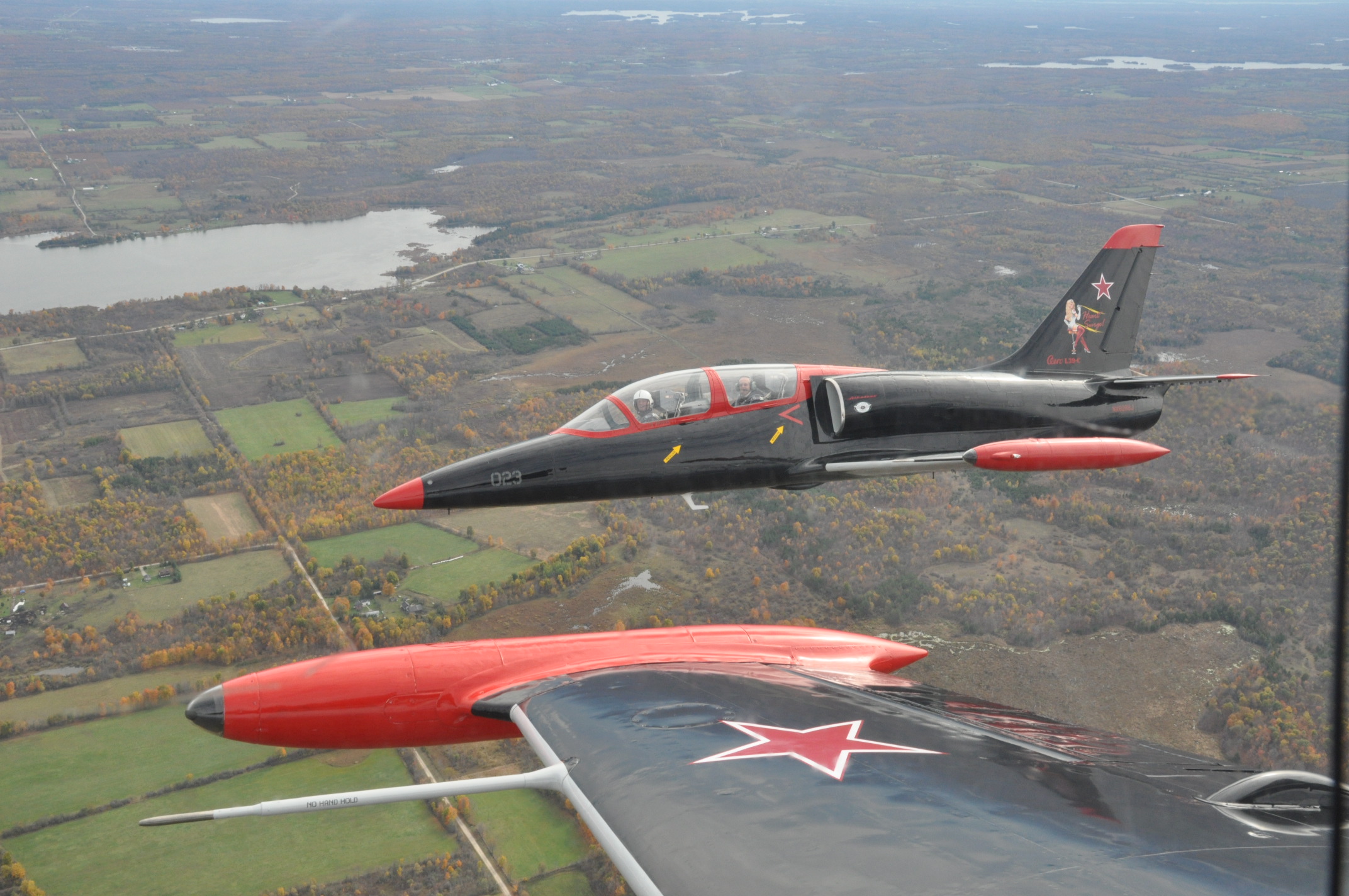
I do some tailwheel, aerobatic and weird type training, generally to people who hunt me down. I don't advertise - I am 'way too busy already. But for those people who care enough to hound me into going flying, I take pleasure in increasing their knowledge, sharpening up their skills, and giving them some really unique experiences, which are simply unavailable at any FTU.
http://www.pittspecials.com/images/maule.jpg
http://www.pittspecials.com/images/eric_form.jpg
http://www.pittspecials.com/images/stearman_form5.jpg
http://www.pittspecials.com/images/L39_tim_form.jpg
For me, my family and friends, tube & fabric / tailwheel / formation / aerobatic / biplane / radial engine / multi-engine / jet is just what we do. Can't imagine living any other way.
-
Beefitarian

- Top Poster
- Posts: 6618
- Joined: Wed Dec 01, 2010 10:53 am
- Location: A couple of meters away from others.
Please? My license says it's ok.Shiny Side Up wrote:Neither would I, but once upon a time people had just that opportunity, go out and give it a go. These were the budding days of aviation though when wrecking airplanes was considered acceptable in the course of training pilots. Well maybe it was never considered "acceptable" but was significantly less frowned upon.Cat Driver wrote:Well I personally would not give any tail wheel airplane to someone with no training on tail wheel airplanes, because I would be worried they would wreck it especially if there was a x/wind.
Should tail wheel be a rating? Floats are.