Lycoming starters are exposed, at the front of
the engine. They engage a flywheel which is
bolted on between the prop and the engine. A
pretty simple arrangement. You can replace
both the starter and the flywheel pretty easily
and cheaply in the field.
TCM starters have this hideously expensive
90 degree drive adapter which costs the earth.
If the starter motor does not correctly disengage
from the adapter, damage can result. New
aftermarket TCM starters advertise better
engineering wrt disengagement from the starter.
Winter & Piston Engines
Moderators: sky's the limit, sepia, Sulako, lilfssister, North Shore, I WAS Birddog
-
Colonel Sanders

- Top Poster

- Posts: 7512
- Joined: Sun Jun 14, 2009 5:17 pm
- Location: Over Macho Grande
-
Big Pistons Forever
- Top Poster
- Posts: 5959
- Joined: Wed Feb 18, 2004 7:17 pm
- Location: West Coast
Re: Winter & Piston Engines
Ideally the prop should rotate at a fair speed. The inertia of the prop turning helps keep everything rotating in the correct direction. If the battery is very weak the prop will stop, or nearly stop as it hits every compression point. This puts more torque on the starter adapter as it alone has to overcome the compression resistance without help from the prop inertia. Also if the prop comes to a stop just as the engine fires it may turn backwards. This is absolute death for the very expensive and not very robust, starter adapter.pelmet wrote:From TCM "Caution:Attempting to start your engine with a partially discharged aircraft battery may result
in damage to the starter relay, possible engine kick-back resulting in a broken starter
adapter clutch spring."
Could someone explain the details of why.
Thanks
On area that seems to elicit mixed emotions is the idea of "limbering" a cold engine. That is turning over by hand a few times to move the oil film inside around and make the engine easier to crank, observing all the usual precautions of course and never turning the prop backwards. Personally I think it is a good idea but others think it is stupid, so I am interested in other peoples opinion on this.
-
Beefitarian

- Top Poster
- Posts: 6610
- Joined: Wed Dec 01, 2010 10:53 am
- Location: A couple of meters away from others.
-
Big Pistons Forever
- Top Poster
- Posts: 5959
- Joined: Wed Feb 18, 2004 7:17 pm
- Location: West Coast
Re:
The vanes inside the dry style vacuum pumps are made of a brittle carbon material and beveled in the direction of rotation. Turning the prop backwards can cause the vanes to shatter, ruining the pump.Beefitarian wrote:I probably should not be asking questions today but. Why should you never turn the engine slowly backwards?
-
Beefitarian
- Top Poster
- Posts: 6610
- Joined: Wed Dec 01, 2010 10:53 am
- Location: A couple of meters away from others.

-
Colonel Sanders
- Top Poster
- Posts: 7512
- Joined: Sun Jun 14, 2009 5:17 pm
- Location: Over Macho Grande
Re: Winter & Piston Engines
A very good idea. It is absolutely required for radial engines"limbering" a cold engine. That is turning over by hand a few times
to avoid blowing the bottom jugs off, and even on flat engines
I like to pull them through to avoid fuel hydraulicking - which
has bent connecting rods in the past, causing them to fail -
and to check the compression.
It's a cultural thing. For a pilot that is used to hand-propping
this comes naturally. For newer pilots that have been taught
that to touch the prop is death, not so much.
I remember a few years back, seeing a Seneca College Bonanza
forced-landed on a road, after the engine came to pieces. You
know, connecting rod failure. They were all posing with the aircraft
in their white shirts ties and gold bars, high-fiving.
I remember thinking at the time that if they didn't over-prime their
IO-520's, they probably wouldn't be bending connecting rods which
break later, resulting in all the heroics in the newspapers.


Re: Winter & Piston Engines
Out of curiosity, what makes you so sure it was a connecting rod failure?
Re: Winter & Piston Engines
According to TCM "Over priming can cause a flooded intake resulting in a "hydraulic lock" event and subsequent engine malfunction or failure. If you over prime, or flood your engine, make certain that all fuel has drained from the intake manifold and/or cylinder prior to attempting engine starting."Colonel Sanders wrote: I remember thinking at the time that if they didn't over-prime their
IO-520's, they probably wouldn't be bending connecting rods which
break later, resulting in all the heroics in the newspapers.
What is your procedure for ensuring this?
-
Colonel Sanders
- Top Poster
- Posts: 7512
- Joined: Sun Jun 14, 2009 5:17 pm
- Location: Over Macho Grande
Re: Winter & Piston Engines
Pulling the prop through a compression stroke
for every cylinder. NOT with the starter.
Pilots don't care about this, though. They are
happy to overprime and bend their connecting
rods, so that they can land on roads after they
break and high-five each other.
https://dl.dropboxusercontent.com/u/165 ... Radial.pdf
And Ctrl F this:
hydraulicking
for every cylinder. NOT with the starter.
Pilots don't care about this, though. They are
happy to overprime and bend their connecting
rods, so that they can land on roads after they
break and high-five each other.
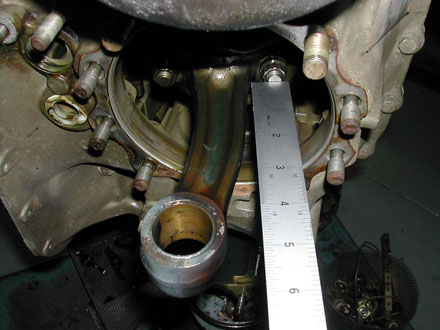
Click on this:A bent connecting rod from a Continental TSIO-520-E engine in a Cesnna 402. Over-priming caused a Hydraulic Lock and the bent connecting rod.
https://dl.dropboxusercontent.com/u/165 ... Radial.pdf
And Ctrl F this:
hydraulicking

Re: Winter & Piston Engines
Probably this: viewtopic.php?f=54&t=45984&start=75#p441773JigglyBus wrote:Out of curiosity, what makes you so sure it was a connecting rod failure?
-
Colonel Sanders
- Top Poster
- Posts: 7512
- Joined: Sun Jun 14, 2009 5:17 pm
- Location: Over Macho Grande
-
Beefitarian
- Top Poster
- Posts: 6610
- Joined: Wed Dec 01, 2010 10:53 am
- Location: A couple of meters away from others.
-
Colonel Sanders
- Top Poster
- Posts: 7512
- Joined: Sun Jun 14, 2009 5:17 pm
- Location: Over Macho Grande
Re: Winter & Piston Engines
OK, good advice but I have read that when it comes to a hydraulic lock, the only proper way to remove fluid is to remove spark plugs and drain. It is said in some articles that pulling through by hand can create enough force to damage a connecting rod. Sounds the same as oil.Colonel Sanders wrote:Pulling the prop through a compression stroke
for every cylinder. NOT with the starter.
Any opinions?
Re: Winter & Piston Engines
Correct, the pull through is not to clear it, its to check for it. On the Vintage Wings radials, of which we have many, the procedure is turn in normal rotation direction to check for lock, if its encountered do not turn backwards as that just pushes the liquid into the intake where it will simply reemerge when you try to start. Pulling bottom plugs and turning normal direction is the SOP to clear.
OK, good advice but I have read that when it comes to a hydraulic lock, the only proper way to remove fluid is to remove spark plugs and drain. It is said in some articles that pulling through by hand can create enough force to damage a connecting rod. Sounds the same as oil.
Re: Winter & Piston Engines
The extra hole in the breather tube is typically covered by the AMM or by AD as is the case with most light Cessnas. Not exactly new information but a good reminder. If your 172 doesn't have the hole, the C of A isn't in force.
With respect to taking your radios out in the winter, it's a good idea if your airplane remains outside. Extreme cold and temperature cycling can seriously reduce the life of electronics. Temperature cycling can eventually cause condensation. Radios that are left outside over the winter sometimes have tell-tale signs of that condensation in trails of salt and corrosion on component leads.
The more expensive avionics are much more resistant to the effects of temperature cycling.
As far as messing up the connectors, they are generally idiot proof so if someone managed to break them by simply removing and installing radios, well......
With respect to taking your radios out in the winter, it's a good idea if your airplane remains outside. Extreme cold and temperature cycling can seriously reduce the life of electronics. Temperature cycling can eventually cause condensation. Radios that are left outside over the winter sometimes have tell-tale signs of that condensation in trails of salt and corrosion on component leads.
The more expensive avionics are much more resistant to the effects of temperature cycling.
As far as messing up the connectors, they are generally idiot proof so if someone managed to break them by simply removing and installing radios, well......
-
Colonel Sanders
- Top Poster
- Posts: 7512
- Joined: Sun Jun 14, 2009 5:17 pm
- Location: Over Macho Grande
Re: Winter & Piston Engines
I would worry more about the avionics being damaged
by the heat, parked out in the summer, than the cold
from being parked out in the winter.
And no one ever removes their radios when they cook
them in the summer.
Connector problems are amazingly common with avionics.
First thing I do with a misbehaving radio, is push hard on
the edges to reseat the connectors. Works an amazingly
high percentage of the time. See above sentence.
by the heat, parked out in the summer, than the cold
from being parked out in the winter.
And no one ever removes their radios when they cook
them in the summer.
Never underestimate the ingenuity of idiots.As far as messing up the connectors, they are generally idiot proof
Connector problems are amazingly common with avionics.
First thing I do with a misbehaving radio, is push hard on
the edges to reseat the connectors. Works an amazingly
high percentage of the time. See above sentence.
-
Beefitarian
- Top Poster
- Posts: 6610
- Joined: Wed Dec 01, 2010 10:53 am
- Location: A couple of meters away from others.
I am suggesting someone over-priming will impede starting the cylinder by wetting the spark plugs well before getting that much pumped in.Colonel Sanders wrote:Liquids don't compress very well, either.
How fast does that volume accumulate? Are guys turning on the pump and doing the walk around/going for a coffee/getting rid of their last coffee?
Priming is good over-priming is even better?
Re: Winter & Piston Engines
I'm not against re-discussion of topics at all. I'm just too lazy to type much today, so I pulled up the thread where we talked about this last year under alternative spelling:
Hydrolocking
Hydrolocking
-
Beefitarian
- Top Poster
- Posts: 6610
- Joined: Wed Dec 01, 2010 10:53 am
- Location: A couple of meters away from others.
Re: Winter & Piston Engines
The last time I merged some threads, there was no high-fiving... plus, I had to go buy a brand new nut and bolt.
-
Beefitarian
- Top Poster
- Posts: 6610
- Joined: Wed Dec 01, 2010 10:53 am
- Location: A couple of meters away from others.
Re: Winter & Piston Engines
Nah.. I'm blaming it on previously existing galling, probably caused by improper technique used by the guy that took things apart. Unfortunately, that would also have been me.
-
Beefitarian
- Top Poster
- Posts: 6610
- Joined: Wed Dec 01, 2010 10:53 am
- Location: A couple of meters away from others.
-
Big Pistons Forever
- Top Poster
- Posts: 5959
- Joined: Wed Feb 18, 2004 7:17 pm
- Location: West Coast
Re: Winter & Piston Engines
Actually the correct term in this context would be "fretting" not "galling"GyvAir wrote:Nah.. I'm blaming it on previously existing galling, probably caused by improper technique used by the guy that took things apart. Unfortunately, that would also have been me.



