
I would love to hear from anyone that is currently in or has been (recently) in the airforce. I'm very curious what the general concensus is on life in the airforce, including things like relocating, living in remote communities, relationships (pretty important one), times spent over seas/in times of war, the actually flying aspect, the people (what kind of people surround you? etc.), typical day (8 hour day, training etc) and any other things you can think of. Thanks very much.
P.S. If any of you are now involved in civilian flying, could you talk about the difference of life between the military and civilian life while flying.
Life in the Airforce????
Moderators: sky's the limit, sepia, Sulako, lilfssister, North Shore, I WAS Birddog
-
flystraightin
- Rank 3

- Posts: 175
- Joined: Tue May 30, 2006 6:28 pm
- Location: not YYC
- Contact:


I'll tell you as soon as you tell me all about civilian flying in Canada. I'm joking of course, but your question is that broad.
Just like civie street, some like it and stay; some don't and leave. Some get their military flying proficiency and excitment in the beginning and relax with airline work in later years.
The military is a profession. The biggest difference is the unlimited liaibility. You would be hard pressed to find the same sense of comradrie in any other organization.
Your questions can be best answered during many hours over beers. Seek out some military pilots at their watering hole in your locality.
Just like civie street, some like it and stay; some don't and leave. Some get their military flying proficiency and excitment in the beginning and relax with airline work in later years.
The military is a profession. The biggest difference is the unlimited liaibility. You would be hard pressed to find the same sense of comradrie in any other organization.
Your questions can be best answered during many hours over beers. Seek out some military pilots at their watering hole in your locality.
The probability of survival is dependent on the angle of arrival.
airforce life
It seems any time i ask a question, i always get atleast one person commenting on the broadness of the question. Well, it may be a broad question, but thats because I have NO idea what life in the Air Force is! I can always ask bits and pieces of my question individually in single posts, but then there'd be a lot of freaken posts! I understand each person has a different experience, and the airforce is not for everyone (it depends on the person), but im trying to hear these individual experiences! So if there is anyone out there that would like to try and share their experiences etc in the airforce, that would be awesome. For those of you who are just bored and feel like cratiquing other peoples questions, dont! Thank you.
-
monkeyspankmasterflex
- Rank 7

- Posts: 517
- Joined: Tue Jul 19, 2005 1:12 pm
Great question, I've been meaning to ask this too. Perhaps from those in the forces what we'd like to hear is a brief description of your career/life. Where'd you live? What did you fly? How did your personal life go while in the forces and after leaving? (i.e. did you buy a house, get married, have kids, get divorced, or what)
I realize it could be a sensitive question with tough answers but for those of us who consider the forces as a career option it's one of the least-discussed aspects; it's therefore a major cause of anxiety as you're weighing the decision to commit 10 years of your life.
I realize it could be a sensitive question with tough answers but for those of us who consider the forces as a career option it's one of the least-discussed aspects; it's therefore a major cause of anxiety as you're weighing the decision to commit 10 years of your life.
It is a very broad topic. And I agree with all of you in that airforce life is a very important aspect, and it isn't discussed much.
I'll throw some brief points out there...
Starting off with relocating/living in remote areas. Myself, I'm relatively new. I've been relocated 4 times, and its been pretty easy each time. There is a relatively hassle-free system put in place for moving, totally cost free.
Remote postings, ya theres definately a possibility of being somewhere 'remote.' Its all in what you make of it, just like in the civilian world I suppose. The people you meet, the things you do in your spare time make up for it. Theres a good chance, no matter what airframe you're going to fly, that you'll be somewhere kind of remote. At the same time, there are some pretty P I M P postings in the forces. Halifax, Comox, Bagotville, Edmonton, Winnipeg... keep an open mind I guess.
Relationships can work, they can also fail miserably... but thats the same for any job. The days can be long, you WILL be away from home, no matter what you fly, a lot (minus the SAR guys I guess?) It all comes down to the individual relationships. Theres no one answer. So far, for myself, smooth sailing (knock on wood.)
Can't talk much to the going to war part, like I said, I'm kind of new to the game. But you will be away a lot on exercise. Whether its RIMPAC in Hawaii or Clean Hunter in Denmark, chances are you'll be away from home a good 1/3 of the time in the first part of your career.
The people we work with rock. I can honestly say that all the people I work with want to be there. The men and women who maintain the aircraft have a great attitude, and if you treat them well, they treat you like gold. We couldn't do our jobs without their dedication.
The actual flying aspect, well, its a bit different I guess than the civilian side of the house I suppose. How you learn to fly in the military is a bit different that the civilian side. If we're told to level off at 5000', it isn't 5000' +/- 200', you always strive to be perfect, and don't accept 5100', if you do, you'll be debriefed extensively on that.
It can be a 9-5 job, Monday to Friday... but there are times in each respective community when you're called upon to work, who knows when and who knows where. For me, thats all part of the fun of being in the military.
Typical day, get to work at 7:00, brief at 8:30 for a 11:00 flight. Get down, debrief for a couple hours, done that by 2 or 3 in the afternoon... could head to the gym, get some extra work done at the squadron, or go flying again if theres something going on. There are an infinite variations on that, but thats the broadest example I could think of.
Now, the training part. This can't be sugar coated too much because there are enough people on this forum who are going through the process right now. Yes you will wait. Period dot. I had to, people before me had to.. I always wanted to be a military pilot, so it was worth it for me. From Moose Jaw to being on Squadron, 3 years. Don't know how its going now, but there are always hiccups along the road.
Anywho, those with questions feel free to PM me.
S.
I'll throw some brief points out there...
Starting off with relocating/living in remote areas. Myself, I'm relatively new. I've been relocated 4 times, and its been pretty easy each time. There is a relatively hassle-free system put in place for moving, totally cost free.
Remote postings, ya theres definately a possibility of being somewhere 'remote.' Its all in what you make of it, just like in the civilian world I suppose. The people you meet, the things you do in your spare time make up for it. Theres a good chance, no matter what airframe you're going to fly, that you'll be somewhere kind of remote. At the same time, there are some pretty P I M P postings in the forces. Halifax, Comox, Bagotville, Edmonton, Winnipeg... keep an open mind I guess.
Relationships can work, they can also fail miserably... but thats the same for any job. The days can be long, you WILL be away from home, no matter what you fly, a lot (minus the SAR guys I guess?) It all comes down to the individual relationships. Theres no one answer. So far, for myself, smooth sailing (knock on wood.)
Can't talk much to the going to war part, like I said, I'm kind of new to the game. But you will be away a lot on exercise. Whether its RIMPAC in Hawaii or Clean Hunter in Denmark, chances are you'll be away from home a good 1/3 of the time in the first part of your career.
The people we work with rock. I can honestly say that all the people I work with want to be there. The men and women who maintain the aircraft have a great attitude, and if you treat them well, they treat you like gold. We couldn't do our jobs without their dedication.
The actual flying aspect, well, its a bit different I guess than the civilian side of the house I suppose. How you learn to fly in the military is a bit different that the civilian side. If we're told to level off at 5000', it isn't 5000' +/- 200', you always strive to be perfect, and don't accept 5100', if you do, you'll be debriefed extensively on that.
It can be a 9-5 job, Monday to Friday... but there are times in each respective community when you're called upon to work, who knows when and who knows where. For me, thats all part of the fun of being in the military.
Typical day, get to work at 7:00, brief at 8:30 for a 11:00 flight. Get down, debrief for a couple hours, done that by 2 or 3 in the afternoon... could head to the gym, get some extra work done at the squadron, or go flying again if theres something going on. There are an infinite variations on that, but thats the broadest example I could think of.
Now, the training part. This can't be sugar coated too much because there are enough people on this forum who are going through the process right now. Yes you will wait. Period dot. I had to, people before me had to.. I always wanted to be a military pilot, so it was worth it for me. From Moose Jaw to being on Squadron, 3 years. Don't know how its going now, but there are always hiccups along the road.
Anywho, those with questions feel free to PM me.
S.
-
Cat Driver

- Top Poster

- Posts: 18921
- Joined: Sun Feb 15, 2004 8:31 pm
" The actual flying aspect, well, its a bit different I guess than the civilian side of the house I suppose. How you learn to fly in the military is a bit different that the civilian side. If we're told to level off at 5000', it isn't 5000' +/- 200', you always strive to be perfect, and don't accept 5100', if you do, you'll be debriefed extensively on that. "
This is as it should be.
Sloppy flying is just that..sloppy flying.
This is as it should be.
Sloppy flying is just that..sloppy flying.
The hardest thing about flying is knowing when to say no
After over a half a century of flying no one ever died because of my decision not to fly.
After over a half a century of flying no one ever died because of my decision not to fly.
-
superiorwhore
- Rank 3
- Posts: 155
- Joined: Fri Jul 07, 2006 10:19 pm
Skosh made some excellent points. Based on the interest in the topic, I will try to add to Skosh’s response. In the military, a pilot learns to be a follower and a leader. Having the maturity to be both without losing your cool is determined at basic training. That is the first step.
There aren’t many generalizations in the CF. Everyone has different opportunities and different career paths. We get to fly different missions and do different jobs. For me, not stagnating is one of the major attractions. The military has evolved significantly since early 90s and continues to develop at a fantastic rate. What was true then is not necessarily the same now and definitely will not be the same in the future.
Remote communities: Biggest factor about remote communities is whether you’re married or not. The target environment can be small for singles whereas most remote communities are excellent for raising young children. A Toronto debutante may not survive in Yellowknife or Greenwood – know your significant other very well before you bring them into the military world.
Postings: A buddy of mine has spent his entire 20 years on one base – I have moved every 3 – 4 years. He is not complaining; neither am I. We both have done a variety of jobs; flown different aircraft and missions. Family life has been positive. Some of our friends in similar circumstances have not faired as well.
Time away: Depends on the role. SeaKing and Tactical Helo pilots spend a fair bit of time deployed. Herc crews used to fly missions lasting up to about two weeks every once in a while but are now rotating through the sandbox theatre every couple of months. Occasional deployed ground tours in the sandbox is six months. Again, singles can have the time of their lives whereas a weak relationship will be strained. SAR crews do spend more time at home but any single callout can result in two-weeks away – pack accordingly; pay your bills accordingly.
Flying: Standards are high. Operational flying demands an ability to fly to the edges of the envelope vice the smaller “recommended” circle. Success rates between basic training and wings graduation are higher now; they used to be around 33%. The demand to progress after wings remains high with serious consequences for failure to upgrade. An instructional tour will give you an incredible background in the intricacies of aviation – and provide you with a solid background for anything else you may fly or do later. Trash hauling will take to parts of the country and the world you’ll never see in civilian life. Think it is tough knowing CARs; your mission planning will cover regs of every FIR you’ll cross. SAR will place life-and-death demands on your decision-making. Variety? Best example I have is dropping SAR equipment at 150 ft over Gimli one week and standing in the Red Square in Moscow the next.
Ground jobs: Nobody asked, but this an important aspect in the CF. Everyone takes professional development courses. They range from military topics like staff procedures and war principles, to flying subjects like safety, instrument flying standards and accident investigation. Some you attend, some you do on your own time – not everyone does all of them. Secondary duties range from publications officer at junior levels to Sqn training and standards at experienced levels. You may also find yourself as an entertainment or sports rep at the Officers' Mess. As you progress in rank, you assume greater responsibilities. You may find yourself in charge of subordinates’ flying and career development or the conduct of Sqn operations. Occasionally, you will be posted to non-flying tours. They may relate to flying or not. These generally broaden your perspective of the greater CF in preparation for higher rank and responsibilities.
People you work with: CF pilots are typically highly motivated, high achieving type A personalities. That does not mean that you will not see the full range of characters you see in any other civilian flying organization. We depend on each other and support each other on or off the job. Some types of flying allow more time to interact than others. Mon to Fri Sqns meet at TGIFs at the Mess. Transport crews party on the road. In large transport Sqns, it was not unusual not to see a newcomer until he had been on Sqn for several months.
Typical Day: There isn’t one. Schools, Mon-Fri about 0730 until you’ve flown your two or three 1.5 hr missions plus brief/debrief; or taught in the simulator; or taught ground school classes. Trash hauling, Did your mission planning over the past day or week; depart ready to handle a 16 to 18-hr crew day; crewrest anywhere from minimum 10 hrs (rarely) to normal 14 or perhaps even have couple of days off after some long days. SAR, 24 hrs off ready to fly 15 – 18 hours on 2-hr notice outside of working hours or 30-min notice during working hours. If not called out, you plan and fly training scenarios with your crew. This is my favourite part – you get handed the keys to a Herc, Buff, Cormorant or Griffon at 0730 with the deal to return the bird back home around 1600.
Where to live: Choices range from single quarters, normally a one bedroom affair with your own or communal showers and eat at the mess or galley, to Public Married Quarters or living on the economy (civilian community). PMQs are gov’t run (CF Housing Authority) housing allocated based on the size of your family. They range from two to four bedroom homes. The relatively inexpensive rental rates are matched to housing available on the economy. Prices being what they are today, almost everybody lives off-base primarily because rental and mortage rates are so similar, and one can’t afford not to be in the real-estate market early enough to have their homes paid off by retirement years.
This description still barely scratches the surface of what happens in CF pilots’ careers. It reflects my personal background in training, transport and SAR. It is not meant recruit, nor is it meant to scare anyone off. One thing the CF is very good at is training people for the duties they perform. The suggestion for talking (vice typing) about this topic is still recommended.
There aren’t many generalizations in the CF. Everyone has different opportunities and different career paths. We get to fly different missions and do different jobs. For me, not stagnating is one of the major attractions. The military has evolved significantly since early 90s and continues to develop at a fantastic rate. What was true then is not necessarily the same now and definitely will not be the same in the future.
Remote communities: Biggest factor about remote communities is whether you’re married or not. The target environment can be small for singles whereas most remote communities are excellent for raising young children. A Toronto debutante may not survive in Yellowknife or Greenwood – know your significant other very well before you bring them into the military world.
Postings: A buddy of mine has spent his entire 20 years on one base – I have moved every 3 – 4 years. He is not complaining; neither am I. We both have done a variety of jobs; flown different aircraft and missions. Family life has been positive. Some of our friends in similar circumstances have not faired as well.
Time away: Depends on the role. SeaKing and Tactical Helo pilots spend a fair bit of time deployed. Herc crews used to fly missions lasting up to about two weeks every once in a while but are now rotating through the sandbox theatre every couple of months. Occasional deployed ground tours in the sandbox is six months. Again, singles can have the time of their lives whereas a weak relationship will be strained. SAR crews do spend more time at home but any single callout can result in two-weeks away – pack accordingly; pay your bills accordingly.
Flying: Standards are high. Operational flying demands an ability to fly to the edges of the envelope vice the smaller “recommended” circle. Success rates between basic training and wings graduation are higher now; they used to be around 33%. The demand to progress after wings remains high with serious consequences for failure to upgrade. An instructional tour will give you an incredible background in the intricacies of aviation – and provide you with a solid background for anything else you may fly or do later. Trash hauling will take to parts of the country and the world you’ll never see in civilian life. Think it is tough knowing CARs; your mission planning will cover regs of every FIR you’ll cross. SAR will place life-and-death demands on your decision-making. Variety? Best example I have is dropping SAR equipment at 150 ft over Gimli one week and standing in the Red Square in Moscow the next.
Ground jobs: Nobody asked, but this an important aspect in the CF. Everyone takes professional development courses. They range from military topics like staff procedures and war principles, to flying subjects like safety, instrument flying standards and accident investigation. Some you attend, some you do on your own time – not everyone does all of them. Secondary duties range from publications officer at junior levels to Sqn training and standards at experienced levels. You may also find yourself as an entertainment or sports rep at the Officers' Mess. As you progress in rank, you assume greater responsibilities. You may find yourself in charge of subordinates’ flying and career development or the conduct of Sqn operations. Occasionally, you will be posted to non-flying tours. They may relate to flying or not. These generally broaden your perspective of the greater CF in preparation for higher rank and responsibilities.
People you work with: CF pilots are typically highly motivated, high achieving type A personalities. That does not mean that you will not see the full range of characters you see in any other civilian flying organization. We depend on each other and support each other on or off the job. Some types of flying allow more time to interact than others. Mon to Fri Sqns meet at TGIFs at the Mess. Transport crews party on the road. In large transport Sqns, it was not unusual not to see a newcomer until he had been on Sqn for several months.
Typical Day: There isn’t one. Schools, Mon-Fri about 0730 until you’ve flown your two or three 1.5 hr missions plus brief/debrief; or taught in the simulator; or taught ground school classes. Trash hauling, Did your mission planning over the past day or week; depart ready to handle a 16 to 18-hr crew day; crewrest anywhere from minimum 10 hrs (rarely) to normal 14 or perhaps even have couple of days off after some long days. SAR, 24 hrs off ready to fly 15 – 18 hours on 2-hr notice outside of working hours or 30-min notice during working hours. If not called out, you plan and fly training scenarios with your crew. This is my favourite part – you get handed the keys to a Herc, Buff, Cormorant or Griffon at 0730 with the deal to return the bird back home around 1600.
Where to live: Choices range from single quarters, normally a one bedroom affair with your own or communal showers and eat at the mess or galley, to Public Married Quarters or living on the economy (civilian community). PMQs are gov’t run (CF Housing Authority) housing allocated based on the size of your family. They range from two to four bedroom homes. The relatively inexpensive rental rates are matched to housing available on the economy. Prices being what they are today, almost everybody lives off-base primarily because rental and mortage rates are so similar, and one can’t afford not to be in the real-estate market early enough to have their homes paid off by retirement years.
This description still barely scratches the surface of what happens in CF pilots’ careers. It reflects my personal background in training, transport and SAR. It is not meant recruit, nor is it meant to scare anyone off. One thing the CF is very good at is training people for the duties they perform. The suggestion for talking (vice typing) about this topic is still recommended.
The probability of survival is dependent on the angle of arrival.
-
Sparkfarmer
- Rank 1

- Posts: 40
- Joined: Mon Jun 26, 2006 8:17 am
Is there anyone on the board who has flown for both the Forces and a Civilain operation or two? I'm really interested to hear about the differences from someone who has experienced both.
Also, for those in the Forces, do you have any close friends or family that had/have a serious problem with the military? (i.e. liberals with very major reservations about any sort of military activity). I'm not too worried about the extreme hippie who calls you a "baby-killer", because in my mind that opinion is founded in complete ignorance. On the other hand, I do have family with serious, legitimate concerns about the military. I am personally comfortable with what could be asked of me, but they aren't. (I'm not just talking about the possibility that you will be put in harm's way during your service, though that's certainly a part of it too.)
Also, for those in the Forces, do you have any close friends or family that had/have a serious problem with the military? (i.e. liberals with very major reservations about any sort of military activity). I'm not too worried about the extreme hippie who calls you a "baby-killer", because in my mind that opinion is founded in complete ignorance. On the other hand, I do have family with serious, legitimate concerns about the military. I am personally comfortable with what could be asked of me, but they aren't. (I'm not just talking about the possibility that you will be put in harm's way during your service, though that's certainly a part of it too.)

On the maintenance side of things I spent 11 years as an Avionics Tech with SAR during the 90's. After wading through the selection board I spent over a year in school at both Kingston and Borden learning the trade, get good marks and you may get your choice of postings. Got posted to the west coast and spent my whole career there...kinda settled down into the west coast lifestyle and found it hard to accept a posting to Cold Lake, can ya blame me!!! Apprenticeship is not unlike the civvy side, 4 years of OJT and schooling upgrades...aircraft type courses and tech upgrades. Get your Corporals then and a huge increase in pay, move out of the single quarters and get some wheels. You may end up in a component shop, lab, flight line or periodic maintenance crew depending on the need and your skill level. Usually spent a couple of years in each department learning and upgrading as you go, best place was on the flight line...more trips away and most interesting jobs. After about 8yrs in you may get promoted to Master Corporal and be put in charge of a crew or get a desk job, have to write reports on crew members and conduct interviews etc. The higher you get in rank the farther away from the flight line you'll get and the deeper into paperwork you'll find yourself. Lifestyle is good but not for everyone, pay is decent starting around 30K and topping out around 80. A good stepping stone in life but if you have a lot of ambition or initiative to go far I wouldn't recommend it...the learning curve flattens out after about 10 years and the career becomes just another job!
Differences I found....
-Job description.....when I flew civvy, I was a pilot and nothing more (I'm a pielot, I fly plane). Military, you're much more (secondary duties....from pubs O to flight commander)....it can certainly be frustrating at times, there are days when you wish you were back in the 206 with little cares (enthonio??), but there are other times when it is quite rewarding.
-No two days are the same (especially in SAR)....you'll never be doing the same sched over and over and over....
-There is plenty of opportunity for training, courses and travel (and not just on a deployment) that you'd either a. never get or b. pay alot for outside the military. Ie. survival courses (land and sea), underwater egress training, chamber rides, Neijmegan march, service flights, sim training in Europe etc etc etc
-If one desires, they can potentially stay with the CF for a long time and rise to a higher level. I guess that would be job security (though until you're operational, that can be questionable at times!!).
-good pay, good benefits, good pension, good gyms etc etc
-As 32A mentioned, you will not find comraderie on this level anywhere else.....although I can personally vouch for one group that is the exception, it is rare.
Remote postings....with the exception of Gander and Goose (and Gander's not really all that bad), we don't have too many bad postings. Greenwood isn't the best if you're single and looking for action, nor is Cold Lake, but all in all, it's not bad (I mean, it's no Norman Wells or anything...). Sure you may move every 3-5 years, but lots of people do in civvy land too. Plus, you're move is fully covered and relatively easy (exceptions of course)....and you're guaranteed a job.
Family....I had one family member with serious reservations, but it was lack of knowledge of who we are and what we do. They thought the CF was about brainwashing a bunch of kids into doing what the CF wanted, that's it that's all (excuse me while I go shine my boots....ok back now). Once they saw the type of people I spent my time with (this was 4 years later at my wings parade), what I had accomplished and what it meant to so many people (esp the instructors), their outlook changed completely. Oh, and IA Birdog was pissed too....but that's just cause he was going to miss me!!
Anyways, after 6 years, I certainly have no regrets on making the switch.
-Job description.....when I flew civvy, I was a pilot and nothing more (I'm a pielot, I fly plane). Military, you're much more (secondary duties....from pubs O to flight commander)....it can certainly be frustrating at times, there are days when you wish you were back in the 206 with little cares (enthonio??), but there are other times when it is quite rewarding.
-No two days are the same (especially in SAR)....you'll never be doing the same sched over and over and over....
-There is plenty of opportunity for training, courses and travel (and not just on a deployment) that you'd either a. never get or b. pay alot for outside the military. Ie. survival courses (land and sea), underwater egress training, chamber rides, Neijmegan march, service flights, sim training in Europe etc etc etc
-If one desires, they can potentially stay with the CF for a long time and rise to a higher level. I guess that would be job security (though until you're operational, that can be questionable at times!!).
-good pay, good benefits, good pension, good gyms etc etc
-As 32A mentioned, you will not find comraderie on this level anywhere else.....although I can personally vouch for one group that is the exception, it is rare.
Remote postings....with the exception of Gander and Goose (and Gander's not really all that bad), we don't have too many bad postings. Greenwood isn't the best if you're single and looking for action, nor is Cold Lake, but all in all, it's not bad (I mean, it's no Norman Wells or anything...). Sure you may move every 3-5 years, but lots of people do in civvy land too. Plus, you're move is fully covered and relatively easy (exceptions of course)....and you're guaranteed a job.
Family....I had one family member with serious reservations, but it was lack of knowledge of who we are and what we do. They thought the CF was about brainwashing a bunch of kids into doing what the CF wanted, that's it that's all (excuse me while I go shine my boots....ok back now). Once they saw the type of people I spent my time with (this was 4 years later at my wings parade), what I had accomplished and what it meant to so many people (esp the instructors), their outlook changed completely. Oh, and IA Birdog was pissed too....but that's just cause he was going to miss me!!
Anyways, after 6 years, I certainly have no regrets on making the switch.
Most of it's been covered, but one thing about the flying. Dude there is so much more interesting stuff to do. As an example, for a graded mission later on in training, you only have one mark for "domestics", which pretty much encompasses most of what you would do in civilian flying (takeoffs, landings, instruments approaches, formation work, etc). Meanwhile there are about 20 other things you're being graded on from advanced manoeuvres to tactics. It's very cool to be excited to go into work every morning at 6am for a 12 hour day, because you know you're going to be learning something neat. Anyways dude if you'd like any more insight PM me
-
Sparkfarmer
- Rank 1
- Posts: 40
- Joined: Mon Jun 26, 2006 8:17 am
Welcome, dude.
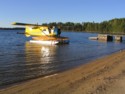
BTW, I'm a civvy now floggin a floatplane for a living and have no regrets...don't miss the Airforce one iota. They helped me get started in my new career and I even managed to do my CPL while working nites on the flight line, one of the many perks and I thank them for that.
BTW, I'm a civvy now floggin a floatplane for a living and have no regrets...don't miss the Airforce one iota. They helped me get started in my new career and I even managed to do my CPL while working nites on the flight line, one of the many perks and I thank them for that.

If I can comment on this. As a civvy trained pilot in my previous life with the Regulator and later on to the Service Provider, I had the pleasure to work with many fine CF pilots who joined TC/NC. Very good people indeed, quite knowledgeable and very well trained and I had some of my better times quaffing down beers with them 

